
Resources
React Native App Development in Australia: What to Know
The Australian mobile app landscape, realistic cost, remote delivery across AEDT, Privacy Act compliance for apps, and how to choose the right development partner.

Prem Kumar
Mobile Engineer, Devity Technologies
Australia's mobile app market continues to grow briskly, and founders building for it face a specific combination of considerations that generic mobile development content, written for a UK or US audience, rarely addresses directly. This guide covers the Australian app landscape, realistic cost, how remote delivery genuinely works across the AEDT timezone, Privacy Act compliance for apps handling personal data, and how to choose the right development partner.
The Australian App Landscape
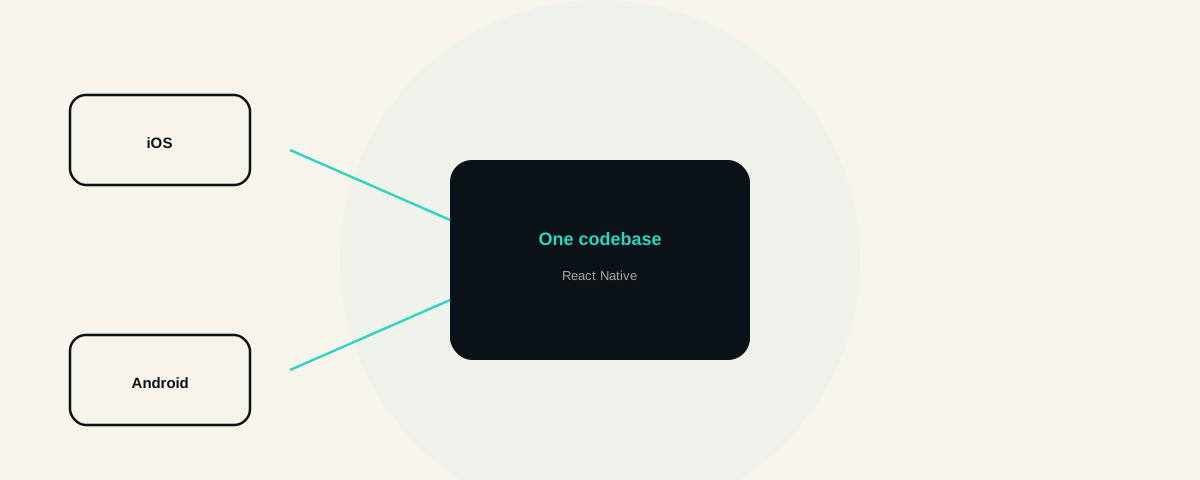
Mobile-first behaviour is deeply established across the Australian market, and the expectation for a genuinely native-feeling app experience, fast, reliable, well-designed, is high regardless of company size. Cross-platform development, specifically React Native, is the right default for the large majority of apps targeting this market, one codebase covering both iOS and Android from day one, which matters directly since reaching both platforms simultaneously is typically the actual goal, not a nice-to-have added later.
Australian users expect apps that work reliably across genuinely varied connectivity, from dense metro coverage to considerably patchier regional and rural signal, a real consideration for any app whose user base extends meaningfully beyond capital cities.
For apps genuinely serving users across regional or remote areas, offline-first architecture, covered in more depth in our dedicated guide to offline-first apps, deserves specific consideration during scoping rather than being treated as an edge case, since a meaningful share of the Australian population genuinely experiences the kind of connectivity gaps that make offline behaviour a real product requirement, not a nice-to-have.
Cost
Development cost is driven by engineering effort and complexity, not by the client's specific market, which means most development partners, ours included, quote in GBP or USD regardless of where a client is based. A lean, properly scoped mobile MVP typically falls in the same range covered in our complete guide to mobile app development, worth converting to AUD at the current exchange rate for direct budgeting purposes, since the underlying engineering cost does not change based on currency, only the number you see on the invoice does.
The same scoping discipline applies regardless of market too, a tightly scoped MVP focused on validating one core hypothesis costs meaningfully less than an attempt to build a fuller product vision from day one, covered in more depth in our guide to building a mobile app MVP.
Remote Delivery in AEDT
A genuine, practical concern for Australian founders considering an offshore or remote development partner is whether real-time collaboration is actually possible given the distance and time difference involved.
Structured overlap windows make this genuinely workable in practice. A team deliberately structuring part of its working day around AEDT-adjacent hours can provide real, live collaboration during a meaningful part of an Australian business's own working day, not purely asynchronous, delayed back-and-forth that slows a project down.
Written communication discipline carries the rest of the collaboration outside that direct overlap window, clear, structured updates and documentation keep a project moving productively even when a live conversation isn't immediately possible, meaning distance affects the mechanics of collaboration without necessarily affecting the pace or quality of the work itself.
The Privacy Act
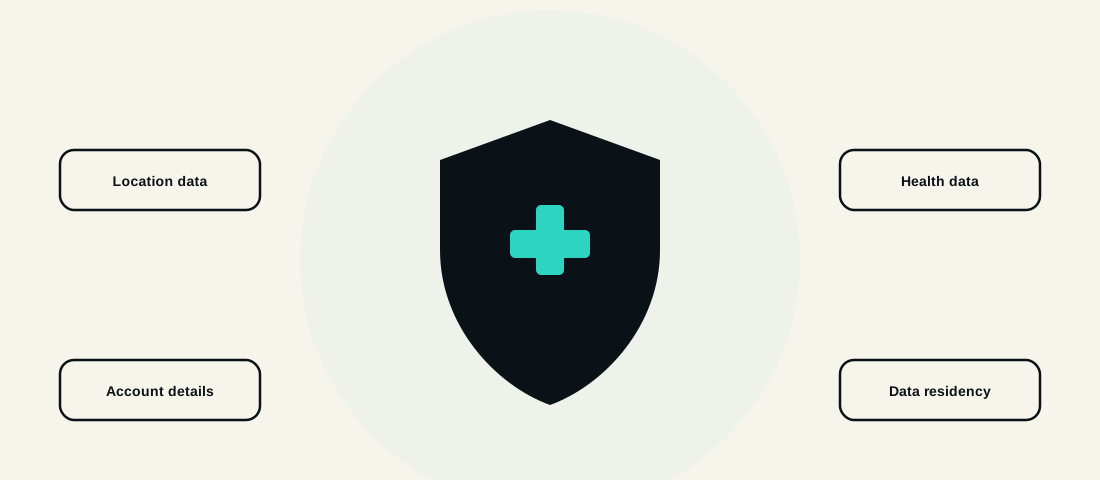
If your app collects personal information from Australian users, location data, contacts, health or fitness data, account details, the Australian Privacy Principles under the Privacy Act 1988 apply directly, regulated by the Office of the Australian Information Commissioner.
Recent reforms have specifically strengthened transparency and consent requirements relevant to how an app handles user data, particularly around any automated processing or profiling based on that data, worth checking directly against your app's specific functionality rather than assumed to be a formality. We cover the current state of these reforms in more depth in our guide to AI automation and the Privacy Act, much of which applies directly to how a consumer-facing app should handle personal data too.
Data residency is worth confirming explicitly with any backend or third-party service your app relies on, some services process data by default on infrastructure outside Australia, and confirming this upfront avoids a compliance surprise discovered only after launch.
A clear, accessible privacy policy within the app itself, not just published on a website, matters directly for both compliance and genuine user trust, particularly for any app handling location, health, or financial data where users are reasonably more cautious about what they share.
Choosing a Partner
The same fundamentals that matter when choosing any mobile development partner apply directly here, verifiable, live apps you can actually download and use, a genuine discovery process, and real technical judgement about native versus cross-platform for your specific app, covered in full in our guide to choosing a mobile app development company.
For an Australian project specifically, two additional things are worth confirming directly, genuine familiarity with the Privacy Act obligations relevant to your app, and a realistic, honest plan for timezone-spanning collaboration, not a vague assurance that "we'll make it work" without a concrete structure behind it.
In Practice
We work AEDT-adjacent hours specifically to support genuine, real-time collaboration with Australian clients, and treat Privacy Act compliance as a real architectural consideration from discovery onward, not a policy document addressed after launch. Our mobile application development service covers this kind of build directly, with the same engineering rigour and remote-delivery discipline regardless of which market a client is building for.
The Australian founders who build well are rarely the ones who defaulted to whichever team was geographically closest, they are the ones who verified real technical quality, confirmed a genuine plan for collaboration across the distance, and treated Privacy Act compliance as a real requirement from the very first conversation.
FAQ
Questions, Answered.
Read next
More on Mobile Applications
App Store Optimisation and Launch Strategy for New Apps
The real ASO basics, how to build a listing that converts, managing reviews, a genuine launch plan, and how post-launch iteration actually drives growth.

Designing Mobile UX That Keeps Users Coming Back
Real mobile UX practices that drive genuine retention, onboarding, performance, navigation, accessibility, and what actually keeps users coming back.
From Web App to Mobile App: When and How to Make the Leap
Real reasons to go mobile, how much code and logic you can actually reuse, honest cost, and how to phase the transition from a web product to mobile properly.