
Resources
Offline First Apps: Why They Matter and How to Build Them
A technically deep explainer on offline-first architecture, real use cases, sync and conflict resolution strategies including CRDTs, the actual engineering approach, and cost.

Prem Kumar
Mobile Engineer & Growth Lead, Devity Technologies
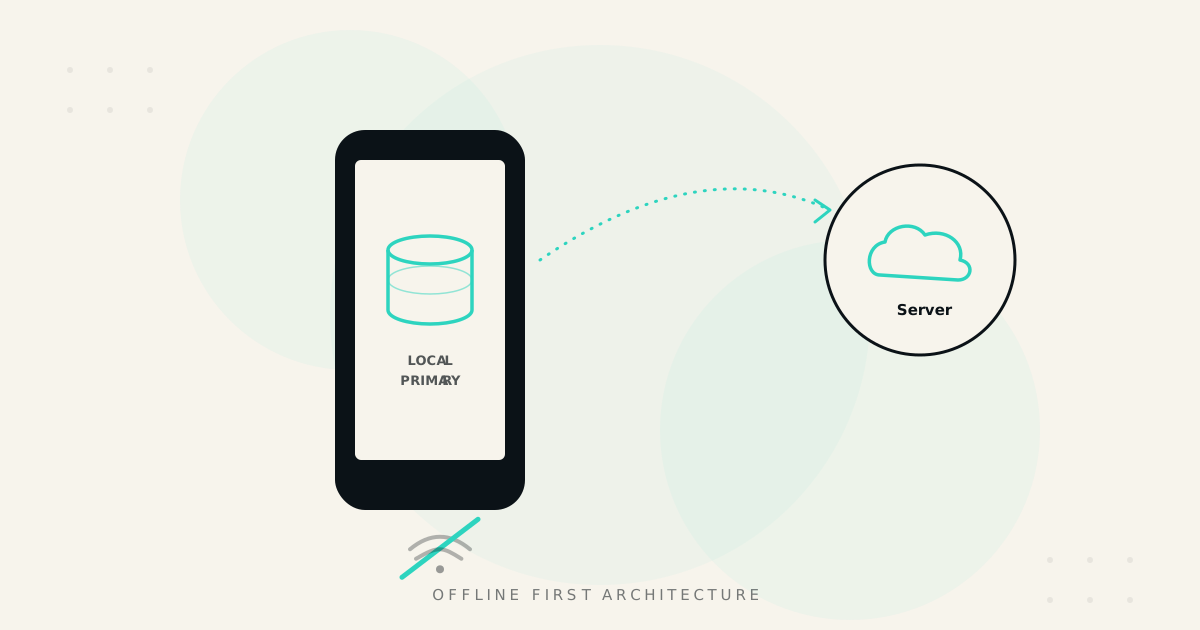
Most apps quietly assume a network connection is always available, and fail, freeze, or lose data the moment it is not. Offline-first is a genuinely different architectural approach, one where local storage is the primary source of truth, not a fallback. This is a Devity differentiator specifically because most agencies bolt on basic caching and call it offline support, rather than building the real local-primary architecture and sync engine offline-first actually requires. This guide leads with the technical depth, what offline-first actually means, real use cases, sync and conflict resolution, the engineering approach, and what it costs.
Offline-First, Explained Properly
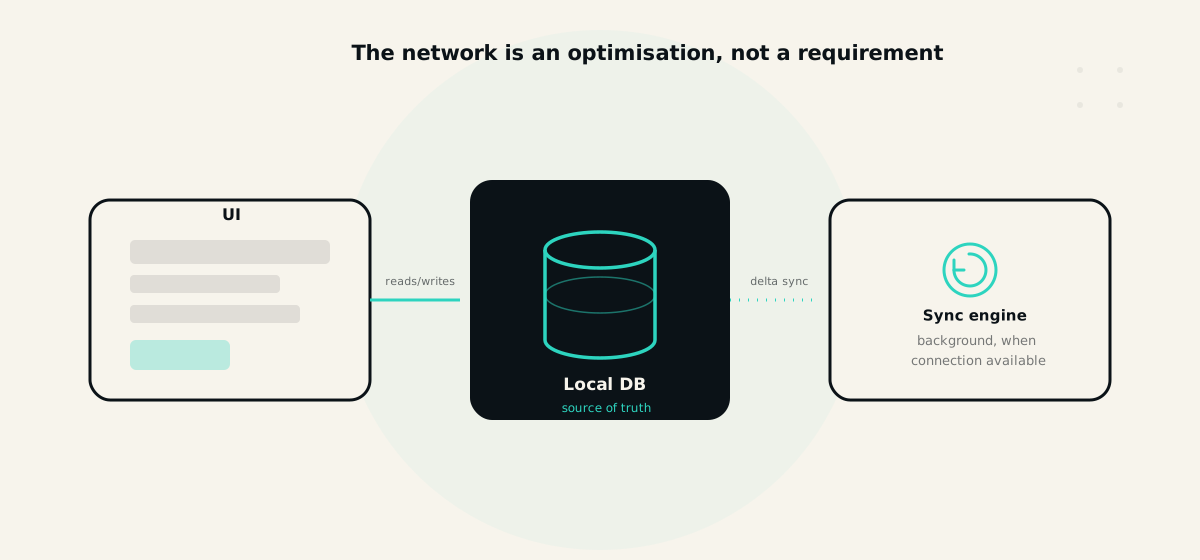
Offline-first flips the standard assumption in mobile architecture. In a conventional app, the server is the source of truth, and the local device holds a temporary cache that is only as good as the last successful network call. In an offline-first app, the local database, typically a structured on-device store like SQLite, Room, or Realm, is the primary source of truth the app actually reads from and writes to, immediately, with no network round trip required for the app to function.
A background sync engine then reconciles that local state with the server whenever a connection becomes available, pushing local changes up and pulling remote changes down, without the user ever needing to think about connectivity as a precondition for using the app. The network becomes an optimisation layer for keeping data current across devices, not a requirement for the app to work at all.
Real Use Cases
Offline-first architecture earns its added engineering cost specifically where connectivity genuinely cannot be assumed, not as a default for every mobile app.
Field service and logistics apps used by technicians and drivers in basements, rural areas, or dense urban environments with unreliable signal need to keep working through a job, a delivery, or an inspection regardless of connection, syncing everything once signal returns.
Healthcare tools used in clinical settings where connectivity is genuinely inconsistent need the same reliability, a care record or observation cannot simply fail to save because a hospital's signal dropped for thirty seconds.
Collaborative and shared-data apps, where multiple users may edit the same underlying data from different devices without a constant connection between them, need offline-first specifically because the alternative, an app that simply refuses to function offline, is unacceptable for the actual way people use it.
Any app used in transit, on the underground, on a plane, in an area with genuinely patchy coverage, benefits directly, since the difference between an app that keeps working and one that stalls is exactly the difference a user notices and remembers.
Sync and Conflict Resolution
This is where genuine engineering depth actually shows, and where most offline implementations that stop at basic caching fall short.
Delta sync, transmitting only what has actually changed rather than the full dataset on every sync, keeps the process fast and respects the user's data and battery budget, a genuine engineering requirement, not an optimisation to add later.
Versioning fields on every entity from day one, tracking when a record was last modified and by which device, is what makes conflict detection possible at all. Retrofitting this after launch, once real data already exists without it, is significantly more painful than designing it in from the start.
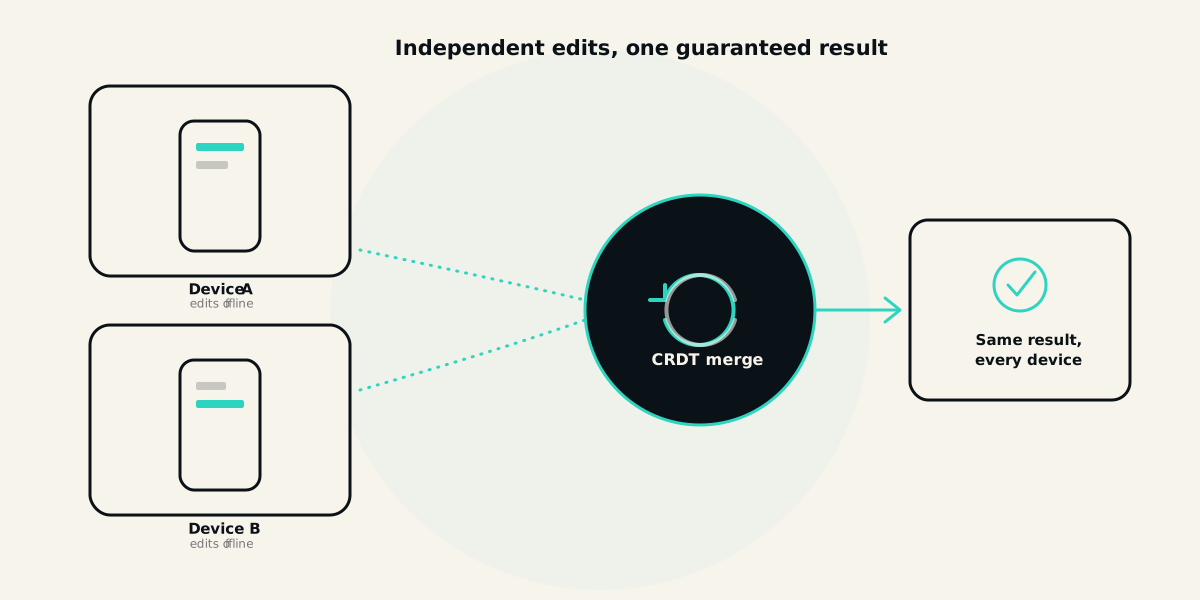
Conflict resolution strategy should match the data, not use one blanket rule. Last-write-wins, comparing timestamps and keeping the most recent edit, is simple and genuinely appropriate for fields where "most recent" is unambiguously correct, a user's current location, for instance. Field-level merging, combining non-overlapping changes from two edits automatically, suits records where different fields were changed independently. For genuinely collaborative or shared data, where two people may meaningfully edit the same value at the same time, CRDTs (Conflict-free Replicated Data Types) are the correct tool, data structures mathematically designed so that any set of independent edits merges into the same final result regardless of the order they arrive in, with no central server needing to arbitrate whose edit was correct. Counters merge by summing, sets merge by union, this determinism is what makes real offline collaborative editing possible without silent data loss.
| Strategy | How it works | Best for |
|---|---|---|
| Last-write-wins | Compare timestamps, keep the newest edit | Fields where "most recent" is unambiguous, like location |
| Field-level merge | Combine non-overlapping changed fields automatically | Records where different fields were edited independently |
| Manual resolution | Surface a choice to the user directly | Genuinely critical or ambiguous conflicts |
| CRDTs | Mathematically guaranteed deterministic merge | Collaborative, shared data edited by multiple users |
An event-first approach is increasingly the more robust pattern for complex offline apps, the client records immutable operational events representing user intent, rather than just a final data value, giving the sync process enough context to resolve a conflict meaningfully rather than blindly picking one version over another.
The Technical Approach
A properly built offline-first app follows a consistent architectural shape: a local-primary database the UI reads from directly, a background sync engine handling delta updates and retry logic, a deliberate conflict resolution strategy chosen per data type rather than applied uniformly, and a caching and retention policy that balances storage against how long different kinds of data actually need to persist locally, user-generated content typically retained far longer than transient feed data, for example.
A realistic retention policy differentiates by content type rather than applying one blanket rule: user-generated content worth keeping indefinitely, or at minimum for a substantial period after successful sync, feed and list data cached for a much shorter window since it goes stale quickly and is cheap to refetch, and media handled with aggressive thumbnail caching while reserving full-resolution storage for recently viewed or explicitly saved items. A well-tuned local cache targets a high hit rate for frequently accessed data while keeping total on-device storage within a sensible range, a genuine engineering trade-off, not an afterthought once storage complaints start arriving from real users.
This is genuinely more engineering than a standard, always-online app requires, and it is the reason offline-first should be a deliberate architectural decision made early, covered in the context of the wider native-versus-cross-platform decision in our complete guide to mobile app development in the UK, not a feature retrofitted after the fact once real users have already hit the gaps a standard architecture leaves.
Cost
Offline-first architecture costs meaningfully more than a standard, always-online build, reflecting the genuine additional engineering, a local database layer, a real sync engine, and deliberate conflict resolution design specific to your data model. This investment is justified specifically when your use case genuinely depends on reliability in poor or absent connectivity, a field service, logistics, or healthcare app, and is not something to default into for every app regardless of whether users actually need it.
In Practice
This is exactly the kind of architecture we build as standard where a client's use case genuinely requires it, not bolted on as an afterthought once basic caching has already proven insufficient. Our mobile application development service treats offline-first as a deliberate architectural decision made during discovery, not a feature request handled during a later sprint. If your app genuinely needs to keep working when connectivity does not, that conversation is worth having properly, with the sync and conflict resolution strategy scoped before development starts, not discovered as a gap after launch.
The apps that handle offline well are not the ones that added a loading spinner and a retry button, they are the ones where local-primary storage, genuine sync, and conflict resolution were architectural decisions made deliberately from day one, not patched in once real users in the real world proved a simple cache was never going to be enough.
FAQ
Questions, Answered.
Read next
More on Mobile Applications
App Store Optimisation and Launch Strategy for New Apps
The real ASO basics, how to build a listing that converts, managing reviews, a genuine launch plan, and how post-launch iteration actually drives growth.

Designing Mobile UX That Keeps Users Coming Back
Real mobile UX practices that drive genuine retention, onboarding, performance, navigation, accessibility, and what actually keeps users coming back.
From Web App to Mobile App: When and How to Make the Leap
Real reasons to go mobile, how much code and logic you can actually reuse, honest cost, and how to phase the transition from a web product to mobile properly.