
Resources
App Store Optimisation and Launch Strategy for New Apps
The real ASO basics, how to build a listing that converts, managing reviews, a genuine launch plan, and how post-launch iteration actually drives growth.

Prem Kumar
Mobile Engineer, Devity Technologies
Building a genuinely good app and having it actually get discovered are two different problems, and far too many launches solve only the first one. This guide covers the real ASO basics, how to build a listing that actually converts, managing reviews properly, a genuine launch plan, and how post-launch iteration is where most of the real, compounding growth actually happens.
ASO Basics
App Store Optimisation improves two connected things, how easily your app is found in search, and how many people who find it actually go on to install it. Apple's own data shows the large majority of App Store downloads follow a keyword search, which makes keyword and metadata optimisation the single highest-leverage ASO activity for most apps, not a secondary concern behind paid acquisition or a polished icon.
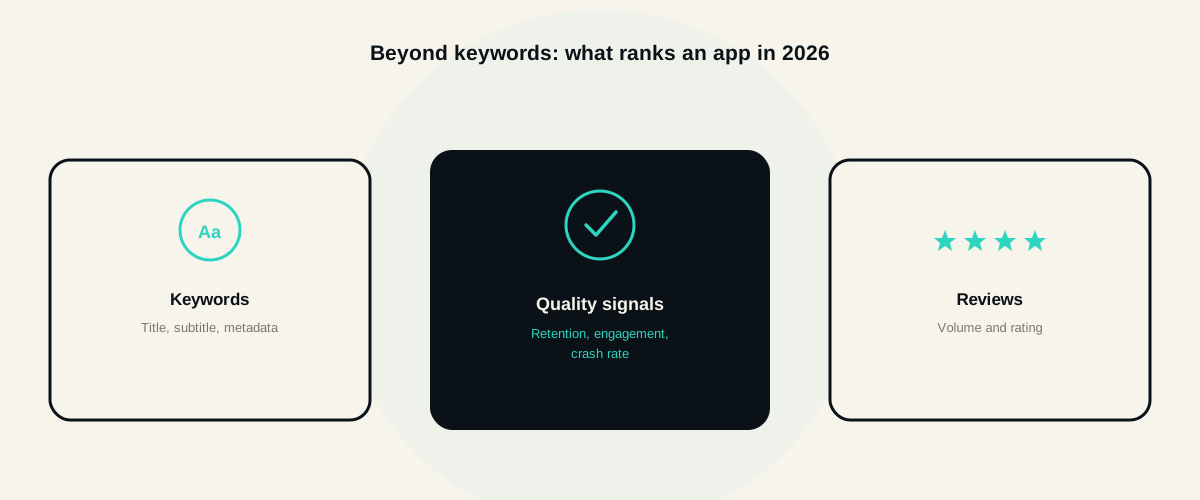
Ranking algorithms have moved well beyond simple keyword matching. By 2026, both major stores weigh genuine quality signals directly, retention, engagement, crash rates, and uninstall rates, alongside your metadata. This is worth understanding clearly, since it means ASO and actual product quality are no longer separable, a poorly retained app with perfect keywords cannot out-optimise its way to strong, durable rankings.
Google Play's evolution toward intent-based discovery is worth knowing specifically, Guided Search increasingly lets users type a goal rather than a specific keyword, with the algorithm sorting apps into relevant categories. Optimising purely for exact-match keyword strings is becoming less sufficient than genuinely aligning your listing with the actual problems and goals users are searching around.
Worth knowing directly: Apple's own transparency reporting shows redownloads now outpacing new downloads by more than two to one. This has a real, practical implication for ASO strategy, retention and re-engagement matter as much as first-time discovery, since a meaningful share of the store's total activity is existing or lapsed users returning, not solely new users finding an app for the first time. A listing and update cadence built purely around acquiring new users, with no thought given to why a lapsed user might come back, is optimising for a shrinking share of actual store activity.
The Listing
Your store listing is doing real conversion work, not just sitting there as a formality between discovery and install.
Title and subtitle carry the heaviest keyword weight of any listing element, and should lead with your app's core value proposition in plain language, not just a list of keywords stuffed together, which both looks unprofessional and can actually violate store guidelines.
Screenshots and video are frequently under-invested in relative to their actual conversion impact. The first two or three screenshots matter disproportionately, since many visitors never scroll further, they should communicate your core value immediately, not just show generic interface screens with no context.
Custom Product Pages, a feature that has grown substantially in importance, with the number of variants a listing can maintain roughly doubling in recent updates, let you tailor different versions of your listing to different traffic sources or audience segments. This has shifted from a niche paid-traffic tool into a genuine, mainstream part of ASO strategy, worth planning for from launch rather than retrofitting later.
Localisation for major markets beyond your primary language meaningfully expands both keyword reach and relevance, launching globally with only English metadata leaves real, addressable search volume on the table in every other market your app is actually available in.
A few specific, avoidable mistakes worth naming directly: including a version number or year in your app title, which looks unprofessional and directly violates Play Store guidelines. Launching globally with no localised metadata at all, rather than at minimum covering your largest addressable markets. And a rushed, low-effort translation with no consideration of how people in that market actually search, which can produce awkward, irrelevant metadata that actively alienates the exact users it was meant to attract.
Reviews
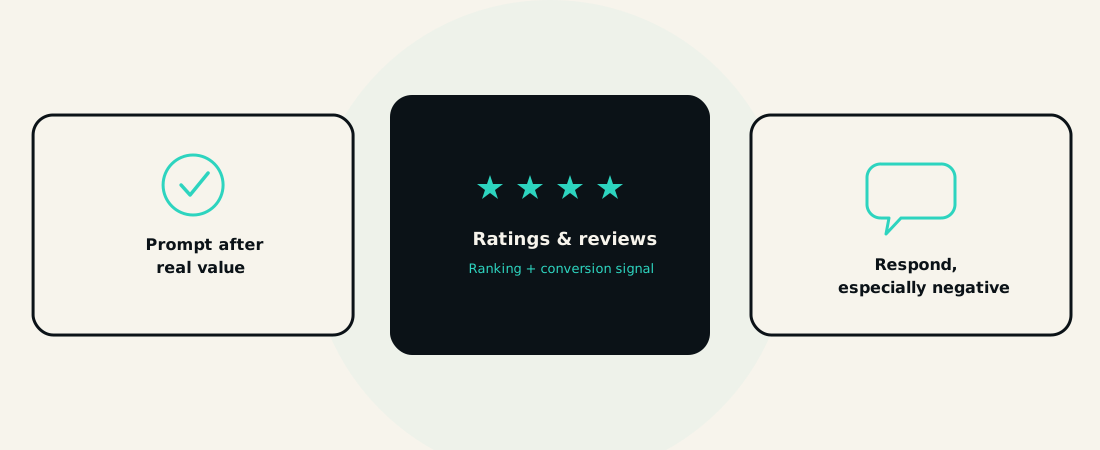
Reviews function as both a ranking signal and a direct conversion signal, a visitor deciding whether to install weighs recent reviews heavily, and both stores' ranking algorithms weigh review volume and rating directly too.
Prompting for reviews at the right moment matters more than prompting frequently, asking immediately after a user has experienced genuine value, completing a meaningful action, reaching a milestone, produces far better results than a generic prompt shown on first open before the app has proven anything.
Responding to reviews, especially negative ones, signals active, engaged development to both future visitors reading the review and to the platform's own quality signals. A pattern of unanswered negative reviews looks worse than the negative reviews themselves.
A Launch Plan
A genuine launch plan treats launch as a coordinated moment, not just the point where the build happens to finish.
ASO fundamentals in place before submission, not scrambled together after the app is already live, title, keywords, screenshots, and an initial review-generation plan should all be ready before the first real user ever sees the listing.
Timing awareness, some evidence suggests new or recently updated apps briefly surface in dedicated "new and updated" discovery sections on some platforms, a real, if temporary, visibility window worth having a genuinely strong listing ready to capitalise on from day one, not something to improve after the moment has already passed.
A coordinated first-week push, aligning any PR, social, or paid activity with launch day itself, concentrates early downloads and reviews into a tighter window, which tends to produce a stronger initial signal to the store's own ranking algorithms than the same activity spread thinly over a longer period.
Post-Launch Iteration
This is where most of the real, compounding ASO value actually accumulates, and where too many launches quietly stop paying attention.
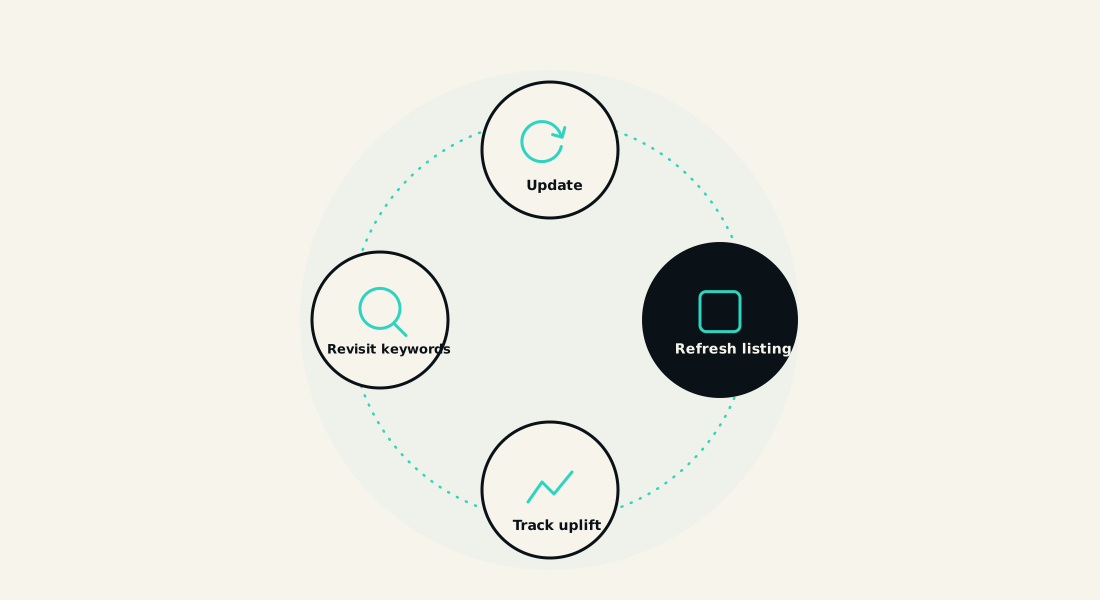
Treat ASO as a continuous discipline, not a one-time setup. A listing that was well optimised at launch drifts out of date as market trends, competitor listings, and the algorithms themselves continue to evolve, updating metadata only once, at launch, and never again is one of the most common, avoidable mistakes.
Use every app update as an ASO opportunity, refreshing screenshots to reflect new features, revisiting keywords as search trends shift, rather than treating a version update purely as a technical release with no bearing on the listing itself.
Track organic uplift specifically, whether organic installs increase during and after any paid campaign or PR push, not just total downloads, since a genuine sign of compounding ASO health is organic growth increasingly carrying more of the weight over time, not permanent dependency on paid acquisition to sustain download volume.
In Practice
This is exactly the kind of support we mean when we talk about building an app properly, the work does not end the moment the code ships. Our complete guide to mobile app development in the UK covers the technical side of getting an app built well, and our mobile application development service extends that support through submission, launch, and the ongoing ASO iteration that actually determines whether a well-built app gets found.
The apps that grow sustainably are rarely the ones with the most polished launch day, they are the ones where ASO was treated as an ongoing discipline from day one, kept current through every update, and never left to quietly go stale once the initial excitement of launch had passed.
FAQ
Questions, Answered.
Read next
More on Mobile Applications

Designing Mobile UX That Keeps Users Coming Back
Real mobile UX practices that drive genuine retention, onboarding, performance, navigation, accessibility, and what actually keeps users coming back.

From Web App to Mobile App: When and How to Make the Leap
Real reasons to go mobile, how much code and logic you can actually reuse, honest cost, and how to phase the transition from a web product to mobile properly.
How Much Does It Cost to Build an App in the UK
Real GBP cost ranges for building a mobile app in the UK, what actually drives the price, MVP versus full build, platform choice, and ongoing costs after launch.