
Resources
From Web App to Mobile App: When and How to Make the Leap
Real reasons to go mobile, how much code and logic you can actually reuse, honest cost, and how to phase the transition from a web product to mobile properly.

Prem Kumar
Mobile Engineer, Devity Technologies
Expanding from a successful web product into mobile is a genuine, common next step, and one worth making deliberately rather than assumed as an automatic requirement for growth. This guide covers real reasons to go mobile, how much you can actually reuse, honest cost, and how to phase the transition properly.
| Backend structure | What it means for mobile expansion |
|---|---|
| Clean, API-first, separated from web frontend | Mobile app consumes the same API, minimal extra backend work |
| Business logic cleanly separated | Transfers directly to mobile |
| Tightly coupled to web-specific assumptions | Real rework needed, unrelated to mobile itself |
Reasons to Go Mobile
Real, demonstrated user behaviour is the clearest signal, users accessing your web app disproportionately through a mobile browser, explicit user requests for an app, or a genuine use case that benefits meaningfully from mobile-specific capability, offline access, push notifications, camera integration, that a web app cannot fully replicate.
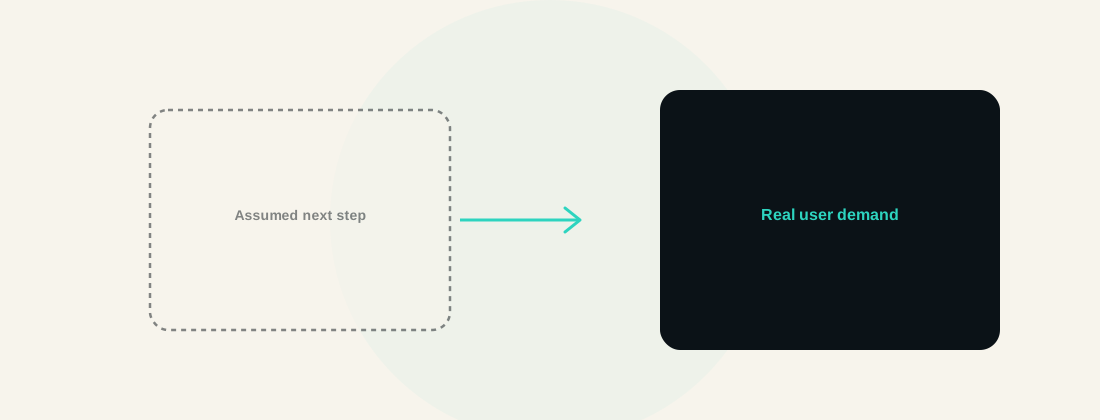
Growth ambition alone is not a sufficient reason. A mobile app built because it feels like the expected next step, without a specific, demonstrated need behind it, is a genuinely common and expensive mistake, real user signal should drive this decision, not an assumption about what a maturing product is supposed to do next.
Reuse and Shared Code
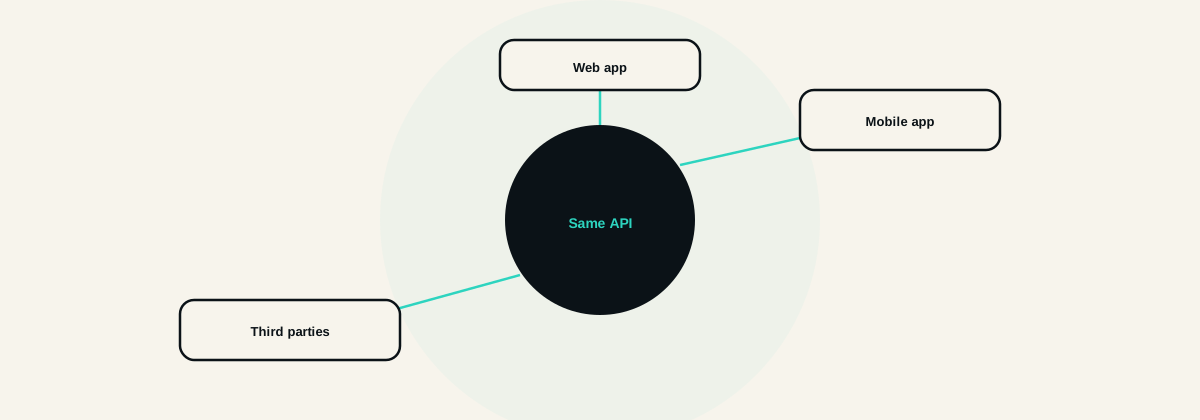
A well-built, API-first backend is one of the most valuable things to carry forward. If your web product's backend was built with genuine separation from its presentation layer, covered in more depth in our guide to API-first architecture, a mobile app can consume that same API with minimal additional backend work.
Business logic reuse depends on how it was originally structured. Logic genuinely separated from the web frontend's specific implementation can transfer directly, logic tightly coupled to web-specific assumptions may need real rework, not because it's moving to mobile specifically, but because it was never cleanly separated in the first place.
The mobile-specific work is primarily the frontend and platform-specific pieces, not necessarily a full rebuild of the underlying data and business logic, a genuinely significant cost saving compared to building mobile entirely from scratch with no existing web product to draw from.
Cost
Building mobile on top of an existing, well-structured web backend costs meaningfully less than building both from scratch simultaneously would. The real cost driver becomes the mobile-specific frontend work and any platform-specific capability the app genuinely needs, not duplicated backend and business logic effort.
The cost comparison depends heavily on your existing backend's actual structure. A cleanly separated, API-first backend genuinely reduces mobile expansion cost, a backend tightly coupled to the web frontend's specific assumptions may require real rework before mobile development can even begin efficiently.
Phasing
Start with the core web workflow that matters most, not the full web feature set. A mobile app doesn't need to replicate everything the web product does on day one, identifying the core, mobile-relevant use case and building that well first is a more sensible, lower-risk path than an ambitious full-parity rebuild.
Treat the mobile expansion as its own properly scoped project, with its own discovery phase and defined scope, the same discipline covered in our guide to scoping an MVP, not an assumed, informal extension of the original web project's scope and budget.
A concrete illustration: a project management web app with a genuinely broad feature set, reporting, integrations, admin settings, team management, doesn't need all of that replicated in its first mobile version. If the real, demonstrated mobile need is checking task status and receiving updates on the go, a focused mobile app built around that specific workflow, connecting to the same existing backend, delivers real value quickly, with the fuller feature set added later based on genuine mobile usage patterns, not guessed at upfront.
In Practice
We regularly help web clients expand into mobile properly, reusing what genuinely transfers from a well-built backend and scoping the mobile-specific work deliberately, rather than either an unnecessary full rebuild or an underscoped extension of an existing project. Our mobile application development and web platform development services work together directly for exactly this kind of expansion.
The web products that expand into mobile well are rarely the ones that treated it as an automatic next step, they are the ones with a genuine, demonstrated reason to go mobile, and a backend built with enough separation to make the transition genuinely efficient rather than a second full build from scratch.
FAQ
Questions, Answered.
Read next
More on Mobile Applications
App Store Optimisation and Launch Strategy for New Apps
The real ASO basics, how to build a listing that converts, managing reviews, a genuine launch plan, and how post-launch iteration actually drives growth.

Designing Mobile UX That Keeps Users Coming Back
Real mobile UX practices that drive genuine retention, onboarding, performance, navigation, accessibility, and what actually keeps users coming back.
How Much Does It Cost to Build an App in the UK
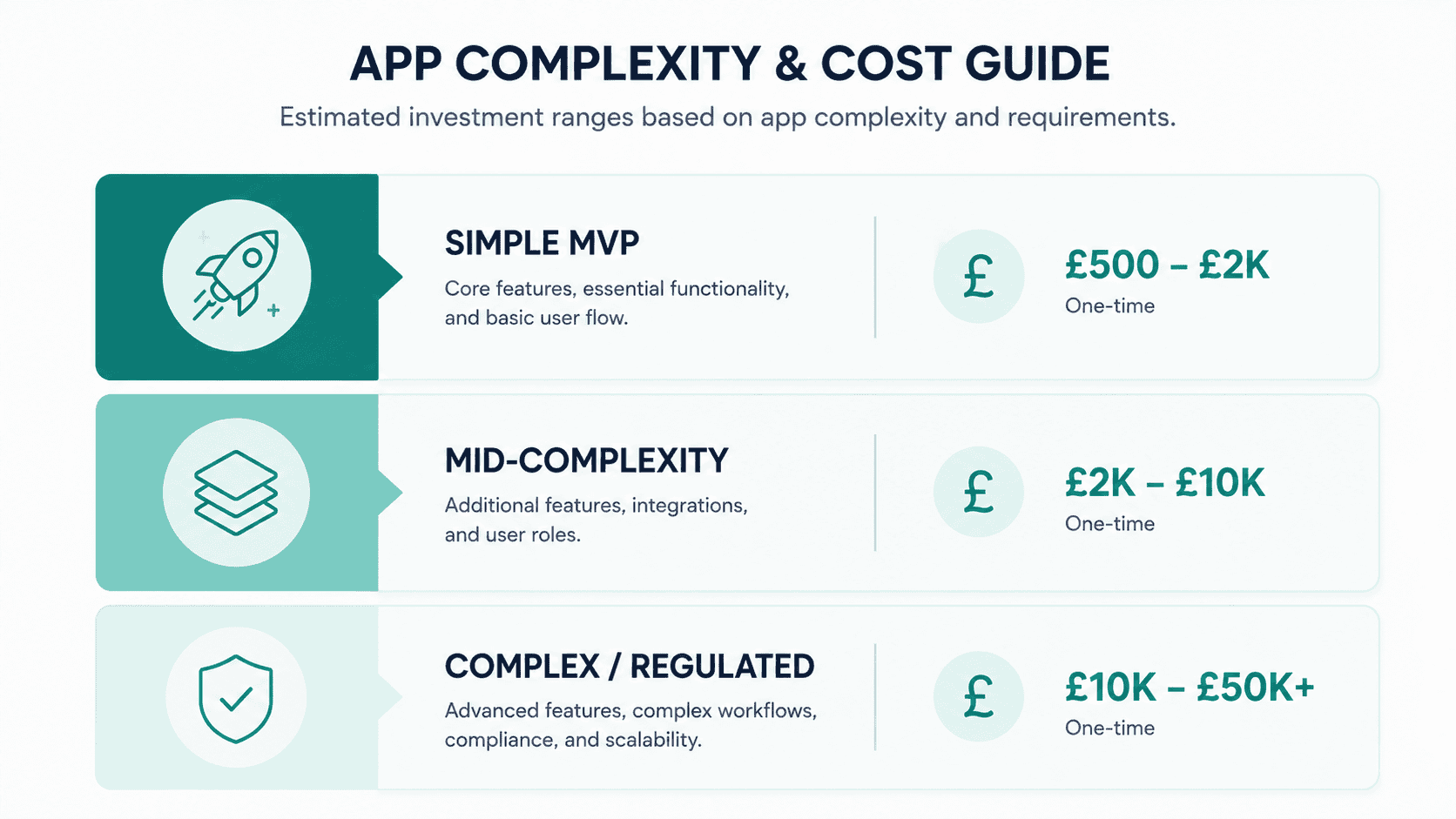
Real GBP cost ranges for building a mobile app in the UK, what actually drives the price, MVP versus full build, platform choice, and ongoing costs after launch.