
Resources
API First Architecture: Building Software That Scales and Integrates
What API-first architecture actually means, the real benefits, how it enables genuine integration and reuse, and when it matters versus when it's unnecessary overhead.

Ahmad Saeed
Full-Stack Engineer, Devity Technologies
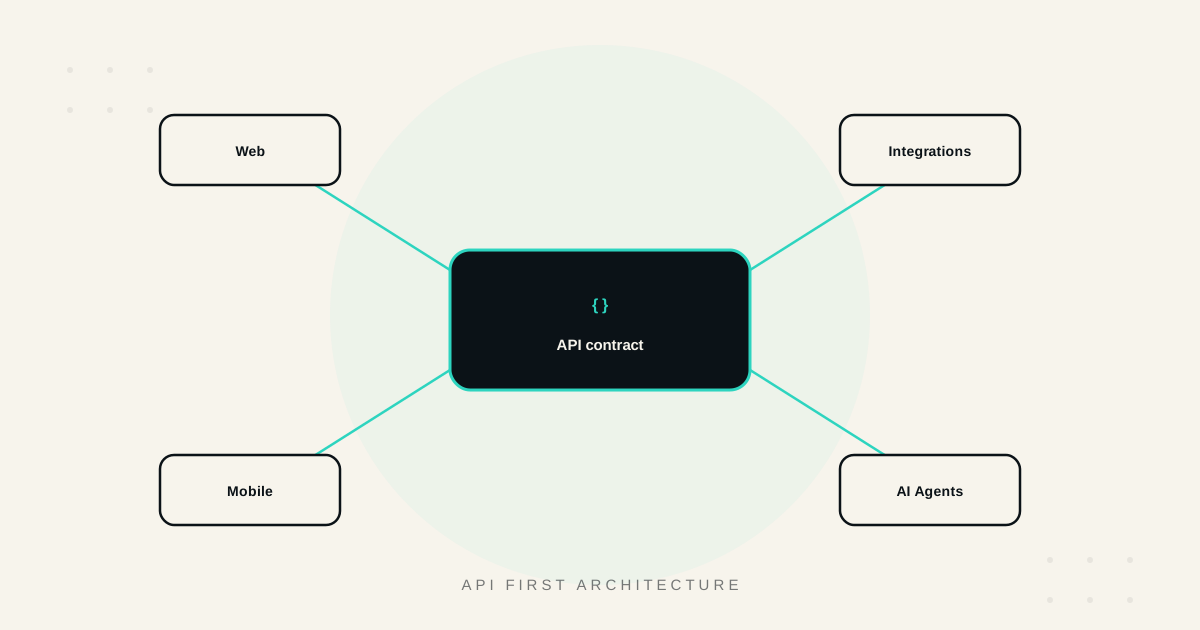
API-first has become one of the most repeated phrases in modern software architecture, and one of the most inconsistently applied. This guide gives a precise, honest account, what API-first actually means as a discipline, the real benefits it delivers, how it enables genuine integration and reuse, and when it earns its complexity versus when it is unnecessary overhead for a project that does not need it.
What API-First Actually Means
API-first means designing and agreeing an API's contract, its endpoints, data structures, and behaviour, before writing the implementation behind it, rather than building an application first and exposing an API afterward as a secondary concern.
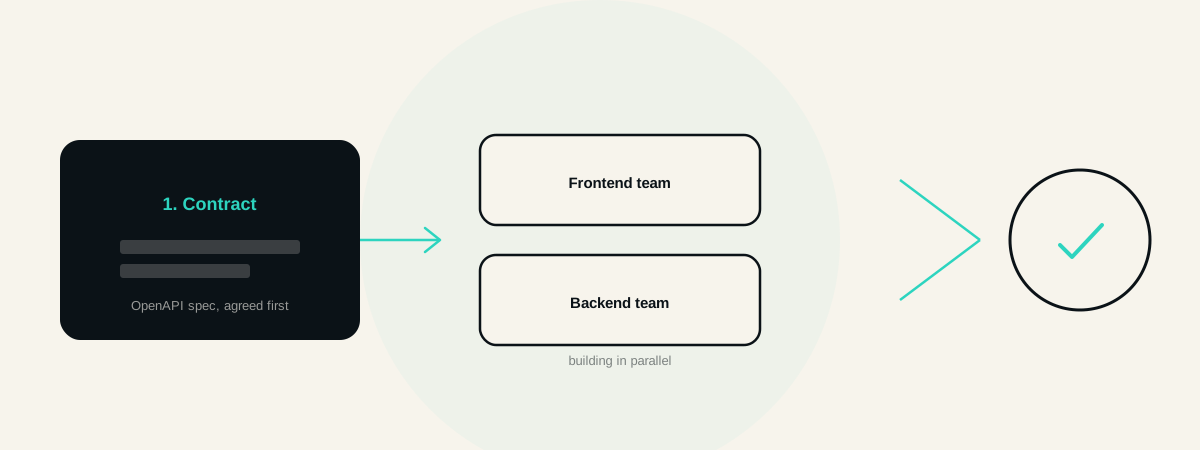
In practice, this typically means writing a specification, commonly an OpenAPI document, that defines exactly what the API accepts and returns, before backend implementation begins in earnest. This is a genuinely different discipline from simply having an API, which nearly every modern application does. API-first specifically treats the API as the primary interface the system is designed around, versioned and governed as a real product in its own right, not an internal detail reluctantly exposed once the application already exists.
This distinction matters because it changes team structure and workflow directly. With a contract agreed upfront, frontend and backend teams can build in parallel against that shared interface, rather than the frontend waiting on a backend implementation to exist before development can genuinely begin.
| API-first | API-as-afterthought | |
|---|---|---|
| Contract defined | Before implementation | After the application already exists |
| Frontend/backend work | Genuinely parallel | Sequentially blocked |
| Integration failures | Substantially reduced | Common, discovered late |
| Treated as | A real, versioned product | An internal implementation detail |
| Best suited to | Multiple consumers, composable systems | A single, self-contained application |
The Benefits
Reduced integration failures is the most concrete, measurable benefit. Defining the contract before implementation, and having both frontend and backend teams build against that agreed specification, has been associated with a substantial reduction in integration failures compared with building the implementation first and reverse-engineering the contract afterward, since disagreements about exactly what an endpoint returns get resolved during design, not discovered mid-integration.
Genuine parallel development follows directly, teams are no longer sequentially blocked on each other, since both sides can build against the same agreed contract simultaneously, a real, practical speed advantage on any project with more than a single team involved.
A stable foundation for change matters as a system grows, well-defined, versioned contracts let internal implementation evolve without breaking whatever depends on the API, provided the contract itself is respected and versioned properly when it does need to change.
Protocol choice becomes a genuine, informed decision rather than a default. REST remains the dominant choice for public-facing APIs, valued for its simplicity and broad familiarity, while GraphQL has seen substantial enterprise adoption specifically where clients need flexible, complex queries against the same underlying data. Neither is universally correct, an API-first approach forces this choice to be made deliberately, based on who the actual consumers are and what they genuinely need, rather than defaulting to whichever pattern a team happens to already know.
Integration and Reuse
This is where API-first architecture delivers its most durable, long-term value, and it connects directly to the broader composable architecture pattern, commonly described by the MACH framework, Microservices, API-first, Cloud-native, and Headless, that has become the standard foundation for genuinely flexible modern platforms.
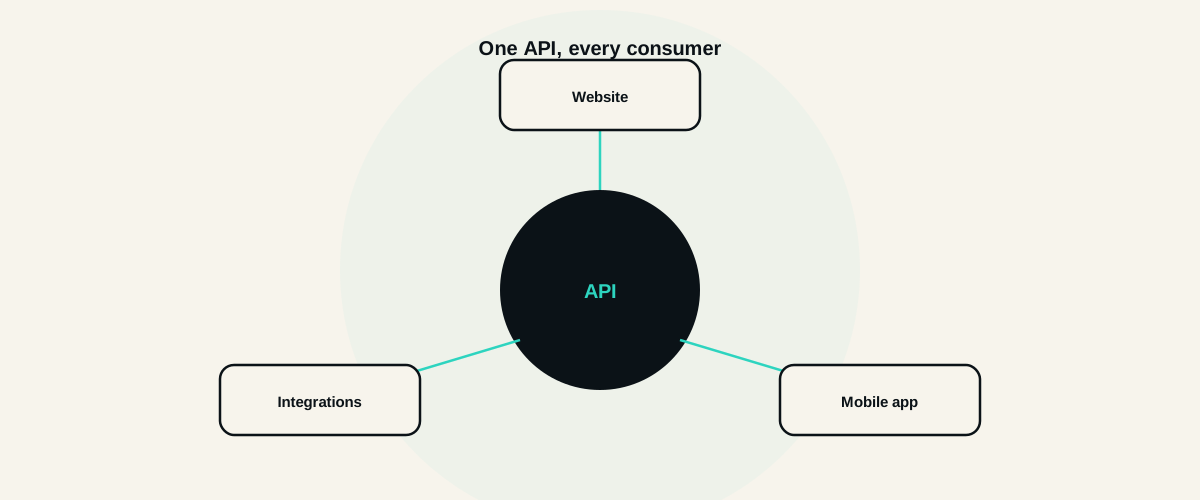
One well-designed API can serve multiple consumers. A properly designed API-first backend can power a web application, a mobile app, and third-party integrations from the same underlying interface, rather than each consumer requiring its own bespoke integration built separately, the same underlying principle covered in our guide to headless commerce, where a single API layer serves a website, a mobile app, and increasingly, other channels from one consistent source of truth.
Genuine composability, swapping or adding a specific vendor or internal service without a disruptive rewrite, depends directly on every component exposing a clean, well-defined API. The average larger organisation now runs a genuinely large number of connected SaaS tools, and composable architecture is the practical engineering response, building from replaceable, API-connected components so an individual piece can change without disrupting everything connected to it.
AI integration has become a significant, current driver of API-first adoption specifically. Structured, well-documented APIs give an AI agent or automation system a genuine, reliable way to interact with a platform's actual capabilities, something a monolithic, tightly coupled system without clean interfaces struggles to support at all.
When It Matters
Being genuinely useful here means being honest about the trade-off, not treating API-first as a default every project should adopt regardless of actual need.
It matters significantly when multiple consumers genuinely need the same underlying data and capability, a web app, a mobile app, third-party integrations, or when a platform needs to remain composable as individual pieces are swapped or upgraded over time without a disruptive full rewrite.
It adds real overhead with limited payoff for a smaller, genuinely self-contained application with a single consumer and no realistic near-term need for external integration, the upfront discipline of contract-first design costs real time that a simpler, more direct build would not require.
A real, honest failure mode is worth naming directly, "API-first" applied as a documentation exercise rather than a genuine architectural discipline, interfaces defined late, ownership left unclear, governance introduced only once complexity has already taken hold, delivers little of the real benefit while still carrying most of the overhead. The discipline only pays off when genuinely practiced from the start, not retrofitted as a label onto an architecture that was never actually designed this way.
In Practice
We apply API-first discipline specifically where a project's actual needs justify it, multiple consumers, genuine composability requirements, or clear plans for third-party integration, not as a default checkbox applied to every build regardless of fit. Our web platform development service treats this as a genuine architectural decision made during discovery, weighed honestly against your actual, specific requirements.
The platforms that get real, lasting value from API-first architecture are not the ones that adopted it because it sounded like current best practice, they are the ones where multiple real consumers, or a genuine need for composability, made the upfront discipline pay for itself many times over as the system continued to grow.
FAQ
Questions, Answered.
Read next
More on Web Platforms
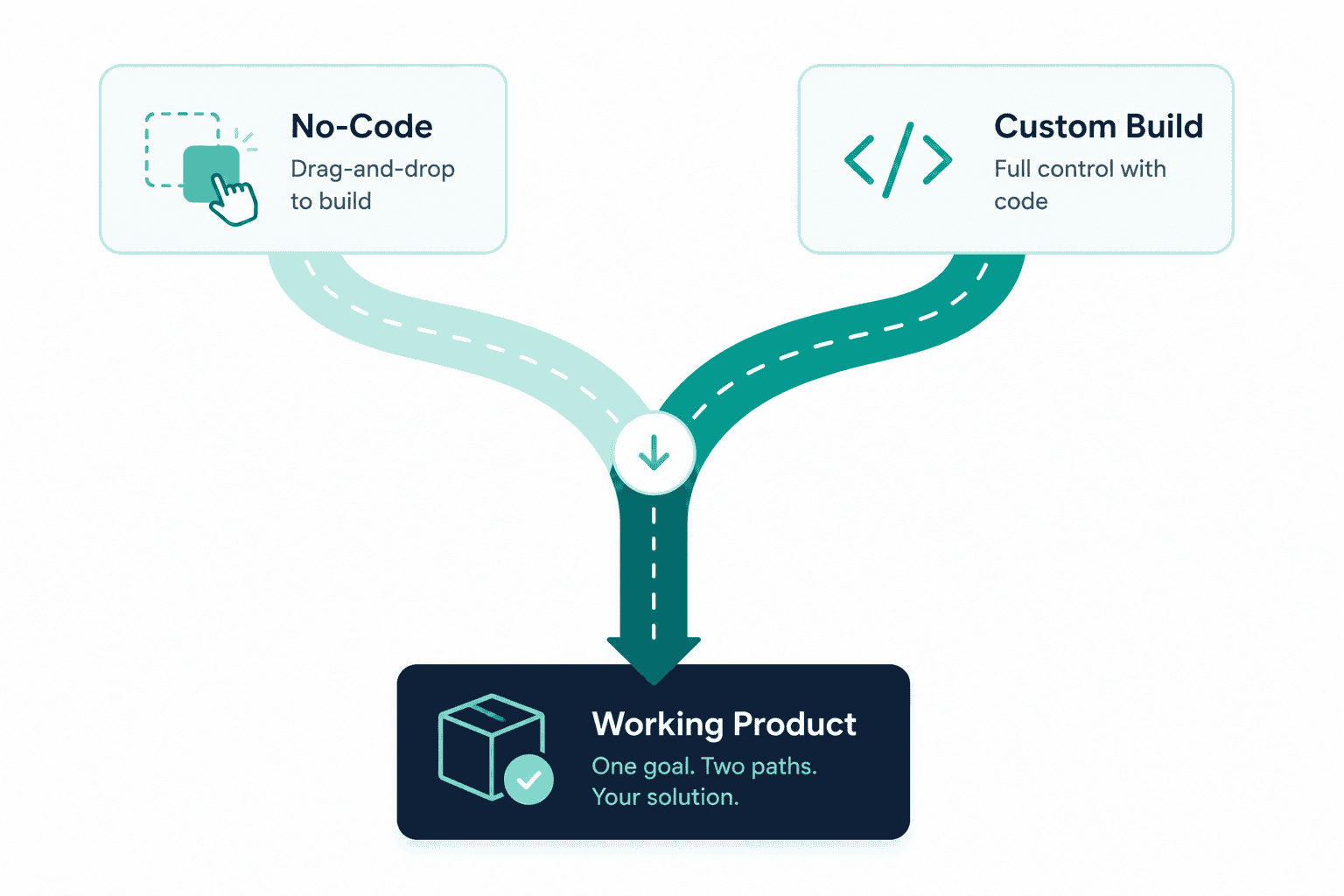
Build vs No Code for Web Apps: Where the Line Really Is
Where no-code web app builders genuinely excel, where they break down, and how to think about performance, ownership, and the migration path before you commit.
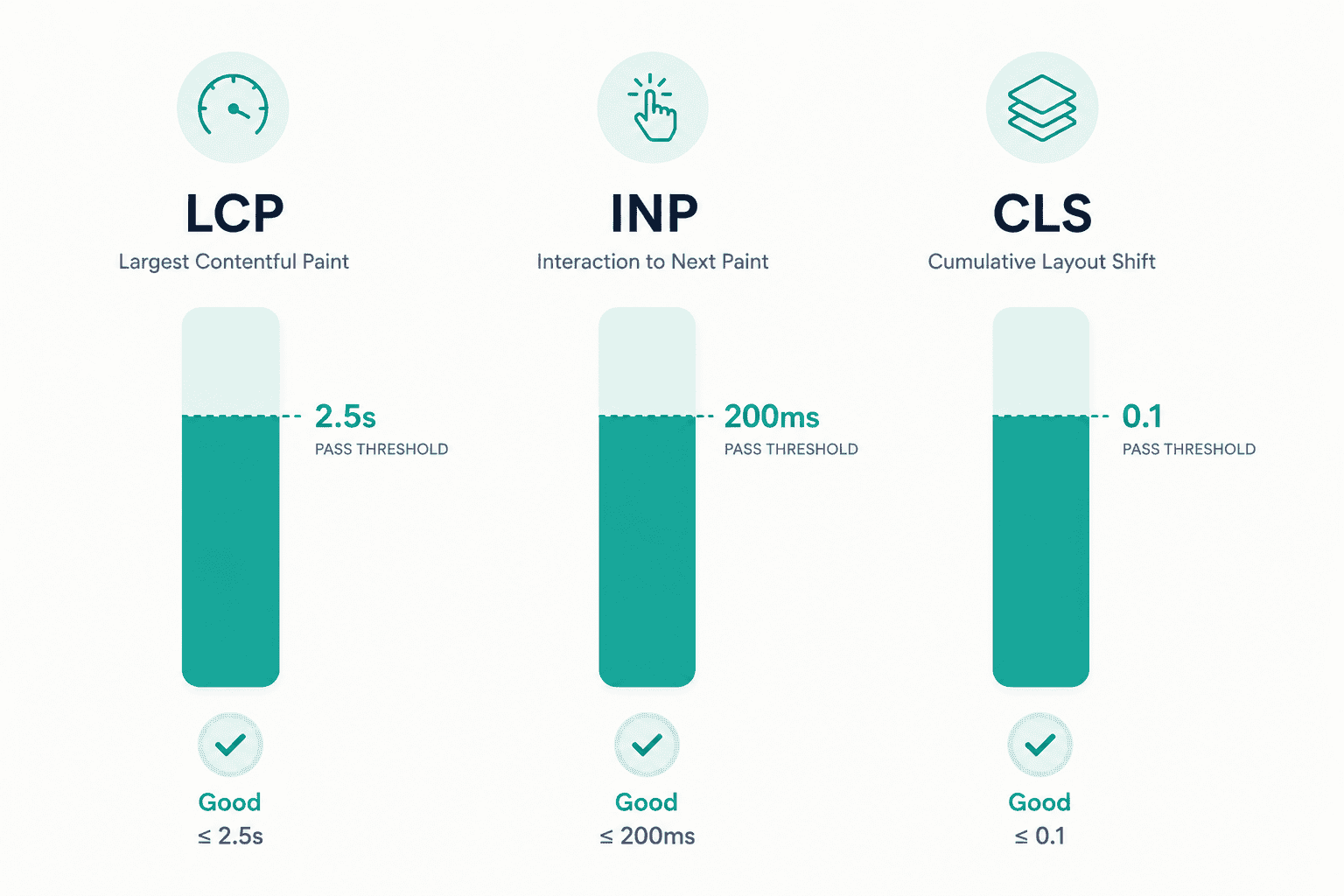
Core Web Vitals: A Practical Guide to a Faster, Higher Ranking Site
What LCP, INP, and CLS actually measure, the fixes that move each metric, how to measure them correctly, and the real business impact of getting them right.

Designing for Conversion: What High Performing B2B Sites Get Right
What separates high-converting B2B websites from the rest, clarity, proof, speed, CTA design, trust, and how to actually measure whether design changes are working.