
Resources
Headless Commerce Explained: Is It Right for Your Store
What headless commerce actually means, the real performance and flexibility trade-offs against a monolithic platform, honest costs, and when switching is genuinely worth it.

Ahmad Saeed
Full-Stack Engineer, Devity Technologies
Headless commerce gets pitched as the obvious upgrade from a standard platform, and sometimes it is. It is also genuinely the wrong move for a meaningful number of stores that adopt it before they need it, taking on real engineering complexity for a performance and flexibility gain they were never actually blocked on. This guide explains what headless commerce actually means, the real trade-offs against a monolithic platform, honest costs, and how to tell whether switching is genuinely worth it for your specific store.
Headless vs Monolith: What the Terms Actually Mean
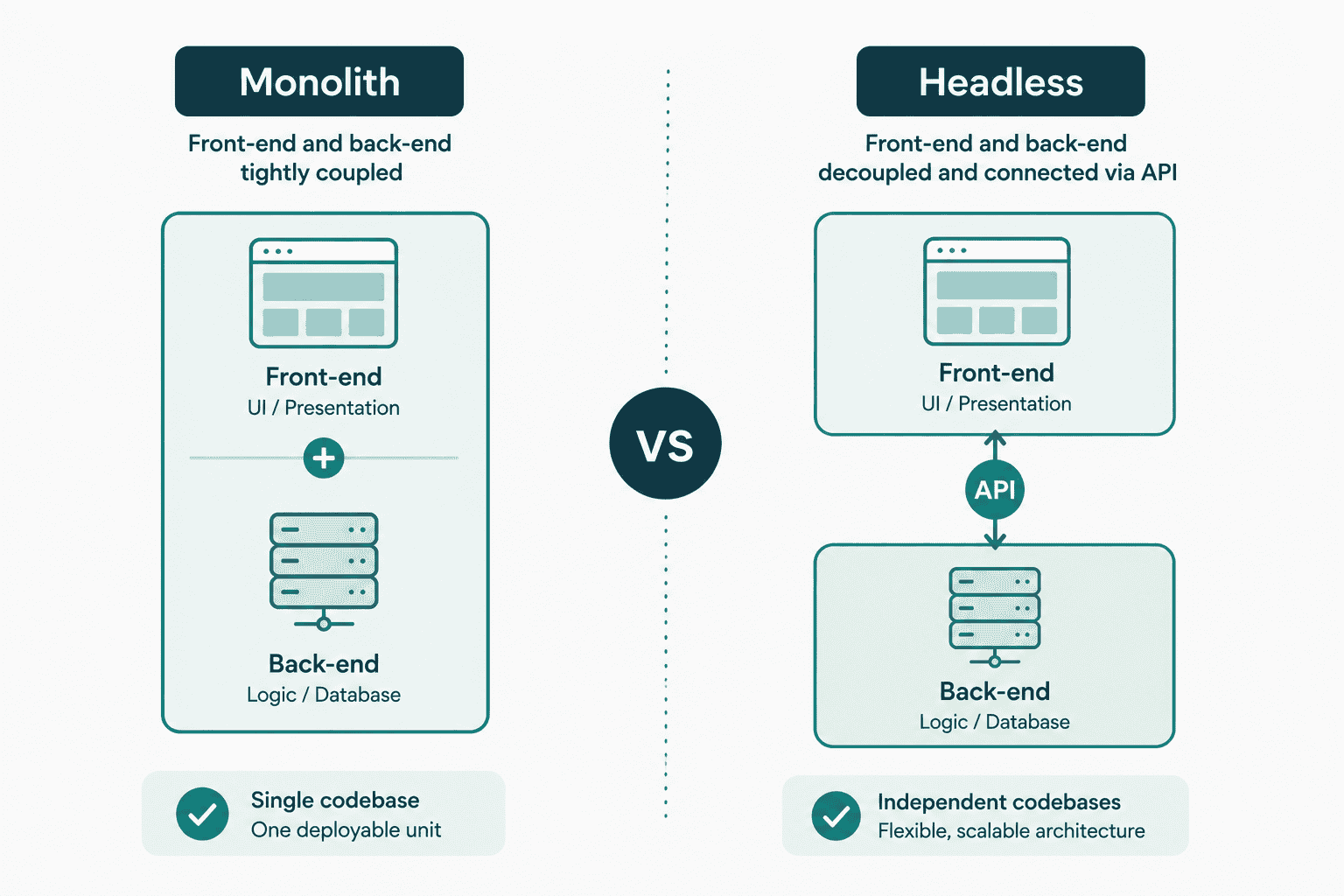
A monolithic platform, Shopify, BigCommerce, and Adobe Commerce in their default configurations, bundles the storefront, backend, and content management into one connected product. You get theme templates, a built-in admin interface, and a single system handling nearly everything, which is exactly why these platforms are fast to launch and simple to maintain for a small team.
Headless commerce separates the storefront, what customers actually see and interact with, from the backend systems managing inventory, checkout, and payments. The two communicate through APIs rather than being built as one connected product, which means you can build a fully custom frontend, in whatever technology fits your needs, while the backend continues handling commerce logic independently.
A third term worth knowing, since it comes up often in current discussion: composable commerce takes the same decoupling further, treating the entire stack, search, payments, content, order management, as separate, interchangeable services assembled together rather than accepting one vendor's full bundle. Composable is not simply "more advanced headless," it is a genuinely different level of architectural commitment, with real operational overhead that only pays off at a certain scale and complexity.
A concrete example makes the difference tangible. A standard homeware retailer selling through a single website, with a fairly typical browsing and checkout flow, is well served by a monolithic platform, the theme system already covers the experience they need, and the backend, storefront, and content live together with minimal engineering overhead. A fashion brand wanting a highly visual, interactive product configurator, selling simultaneously through its own site, a marketplace, and an in-app experience, with marketing publishing new campaign pages daily without waiting on engineering, is describing requirements a monolithic theme system was never built to support, and is a genuine candidate for headless.
Performance and Flexibility: What You Actually Gain
Performance with headless commerce is a genuine possibility, not an automatic outcome. A custom-built storefront, properly engineered with server-side rendering and optimised for your specific product catalogue and customer journey, can meaningfully outperform a general-purpose theme built to work reasonably well for thousands of different stores. That performance gain only materialises if the frontend is actually built well, headless architecture removes the platform's constraints, it does not remove the need for good engineering.
Flexibility is where headless commerce earns its reputation most clearly. A monolithic platform's theme system inherently limits what your storefront can do, you are working within a template's structure, even a highly customisable one. A headless setup lets you build genuinely custom shopping experiences, unusual product configurators, non-standard checkout flows, entirely bespoke browsing experiences, without fighting a theme system that was never designed for what you are trying to build.
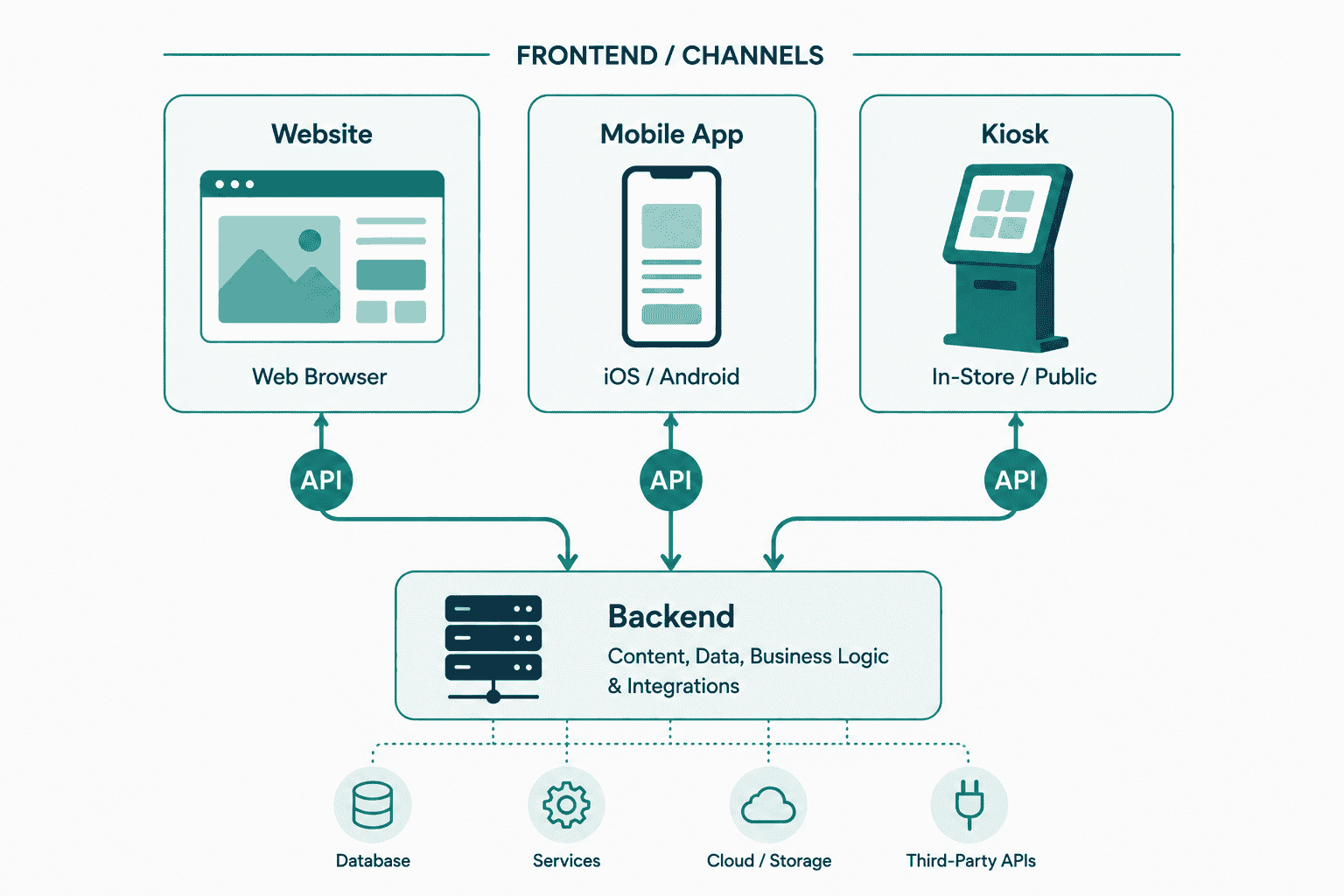
Omnichannel reach is a related, often underweighted benefit. With commerce logic separated from any single frontend, the same backend can power a website, a mobile app, an in-store kiosk, or increasingly, AI shopping agents, from one consistent source of truth, rather than maintaining separate commerce logic for each channel.
The Real Costs
Headless commerce costs meaningfully more upfront than configuring a monolithic platform, and being honest about why matters more than the number itself.
Development cost is higher because you are building a custom frontend from scratch rather than configuring an existing theme. This is not a marginal difference, it reflects genuinely more engineering work.
Ongoing engineering capacity is required in a way a monolithic platform does not demand. A theme-based store can be run largely by a marketing or operations team with occasional developer support. A headless storefront needs sustained engineering attention, since you own the frontend build in a way you do not with a theme.
Integration work adds up as you connect the storefront to payments, inventory, search, and any other services the backend needs to talk to, work that a monolithic platform typically handles natively, out of the box.
Ongoing maintenance shifts meaningfully too. A monolithic platform's vendor handles core updates, security patches, and infrastructure as part of the product. With a headless setup, your team, or your development partner, owns the frontend's ongoing maintenance directly, which is the cost side of the same flexibility that makes custom experiences possible in the first place.
Against these costs, the long-term case for headless is lower marginal cost for customisation once the foundation exists, and freedom from being structurally limited by what a theme system allows, both of which become more valuable as your store's ambitions grow past what a standard platform was designed to support.
When to Actually Switch
The decision is a threshold question, not a universal preference, below a certain combination of revenue, traffic, and available engineering capacity, a monolithic platform delivers more value per pound spent. Above that threshold, the calculation flips.
Switch when your desired customer experience is genuinely blocked by your theme system, not just less convenient to build within it. A specific, ambitious frontend experience that a monolithic platform structurally cannot deliver is a real, concrete reason to move.
Switch when you need true omnichannel commerce from one backend, multiple storefronts, an app, in-store systems, rather than managing separate commerce logic across disconnected platforms.
Switch when engineering and marketing are consistently blocked by each other on the same release schedule. A monolithic platform ties frontend content changes and backend engineering work to one shared deployment pipeline. Headless lets a content or marketing team publish independently while engineering works on its own cadence, a genuine operational unlock for teams large enough to feel that friction regularly.
Do not switch simply because headless sounds more advanced. A small store with a straightforward catalogue and no specific experience or omnichannel need it is currently blocked on is very likely better served staying on a monolithic platform, where a theme and a single extension store already solve the large majority of real requirements with far less ongoing engineering overhead.
Do not switch without the engineering capacity to actually own it. Headless architecture trades a vendor's managed simplicity for direct control, and direct control requires someone genuinely responsible for keeping the frontend running, updated, and performant. A business that switches to headless without lining up that capacity first tends to end up worse off than the monolithic platform it left, since it has taken on the cost and complexity without the team to make the flexibility actually pay off.
Platform Options
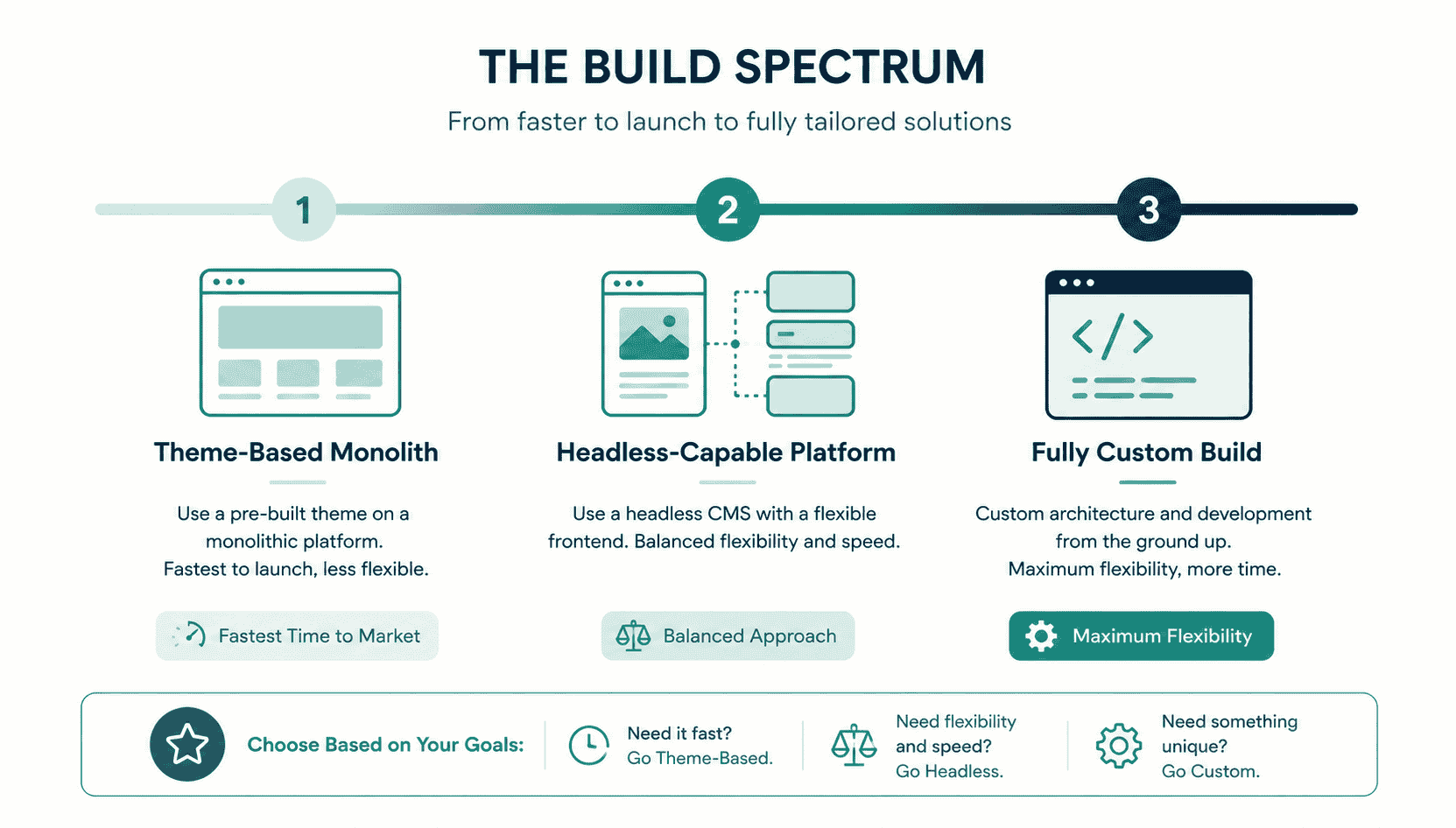
For businesses that determine headless genuinely fits, the practical options range from headless-capable versions of familiar platforms (several major platforms now offer headless or API-first modes alongside their traditional theme systems) to dedicated headless commerce infrastructure built API-first from the ground up, to a fully custom backend paired with a custom frontend for businesses with requirements specific enough that no existing platform fits well. Which fits depends heavily on how much of your commerce logic, pricing rules, inventory complexity, checkout flow, is genuinely standard versus how much needs to be built to your own specification.
In Practice
Headless commerce is exactly the kind of build where the difference between a properly engineered frontend and a generic implementation shows up directly in real performance and conversion numbers, which is why it tends to reward genuine engineering investment more than a standard site does. For a deeper look at ecommerce development more broadly, including where headless fits into the wider decision, see our guide on ecommerce development in the UK. If you are weighing up whether your store has genuinely outgrown its current platform, our web platform development service is a good place to have that conversation honestly, including the case for staying exactly where you are if that is the right answer.
The stores that get the most from headless commerce are not the ones who adopted it earliest, they are the ones who waited until the specific, concrete need was real, then invested properly in the engineering it actually requires, rather than treating headless as a status upgrade rather than an architectural decision with genuine trade-offs.
FAQ
Questions, Answered.
Read next
More on Web Platforms
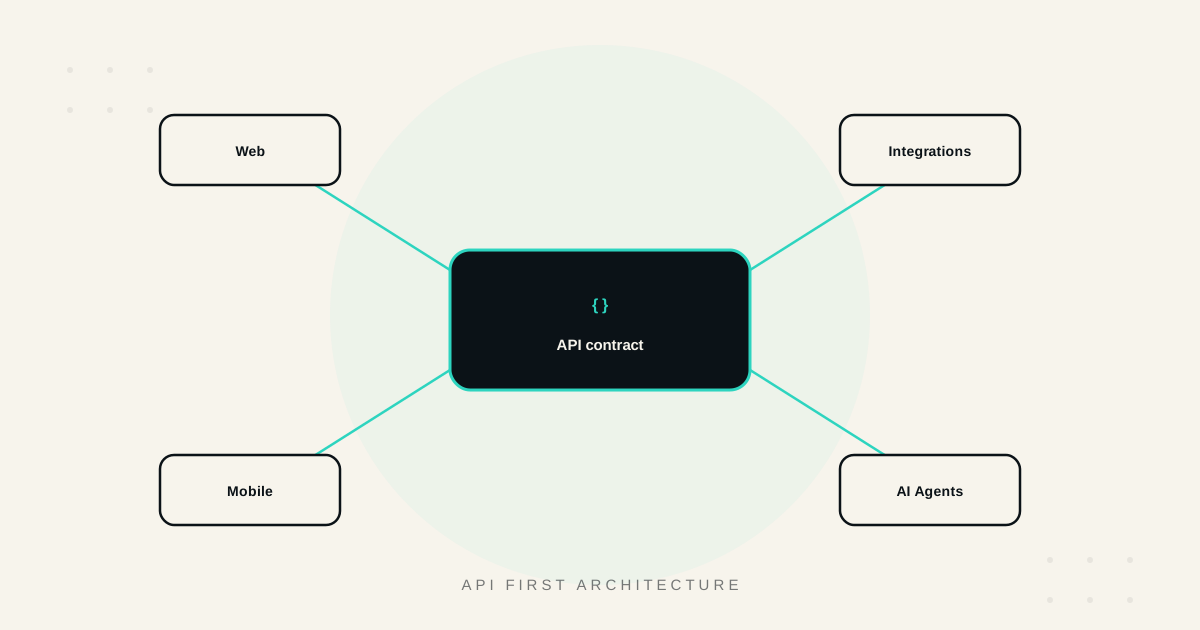
API First Architecture: Building Software That Scales and Integrates
What API-first architecture actually means, the real benefits, how it enables genuine integration and reuse, and when it matters versus when it's unnecessary overhead.
Build vs No Code for Web Apps: Where the Line Really Is
Where no-code web app builders genuinely excel, where they break down, and how to think about performance, ownership, and the migration path before you commit.
Core Web Vitals: A Practical Guide to a Faster, Higher Ranking Site
What LCP, INP, and CLS actually measure, the fixes that move each metric, how to measure them correctly, and the real business impact of getting them right.