
Resources
How to Choose a Mobile App Development Company
A practical, mobile-specific guide to choosing an app development company, portfolio, process, tech stack, post-launch support, pricing, and the questions worth asking.

Prem Kumar
Mobile Engineer, Devity Technologies
Choosing a mobile app development company has one genuine advantage most software categories don't offer, you can download and actually use a company's past work yourself, for free, before ever speaking to them. This guide covers what to look for specifically for a mobile project, portfolio, process, tech stack, post-launch support, pricing, and the questions worth asking directly, building on the more general vetting criteria covered in our questions to ask before hiring a software development company.
Portfolio, Verified Yourself
This is where mobile projects offer a genuine, practical advantage over most other kinds of software evaluation.
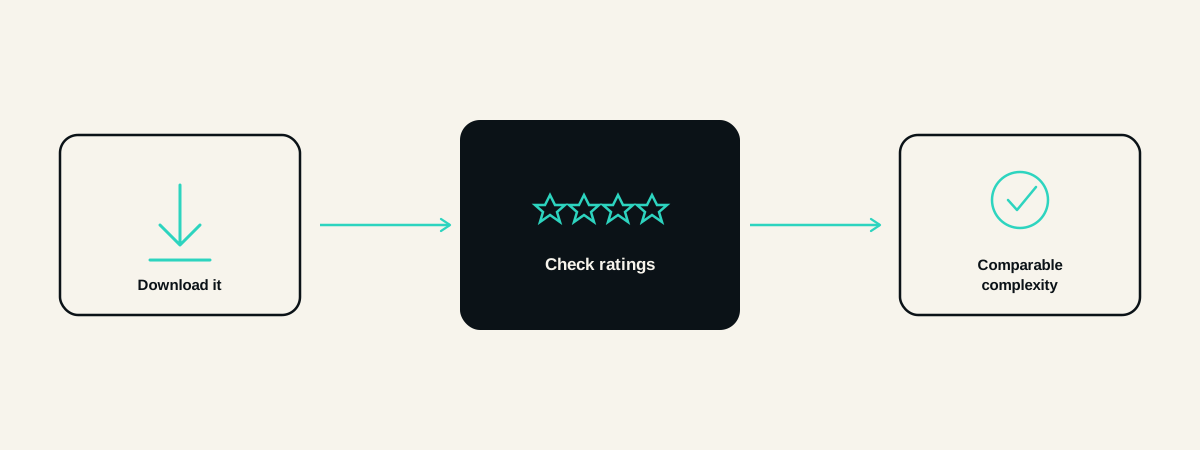
Download a named, live client app and actually use it, not just view screenshots in a case study. A portfolio full of polished mockups with no working App Store or Play Store link is far weaker evidence than an app you can install and try in the next five minutes.
Check the app's real rating and recent reviews. A consistently well-rated app with recent, positive reviews tells you something a screenshot never can, that real users have actually used this company's work and found it genuinely reliable over time, not just on launch day.
Ask about apps genuinely comparable to yours, a consumer social app and a complex B2B field service tool draw on meaningfully different skills, ask specifically about experience with your category, not mobile development in the abstract.
Look specifically for evidence of real-world performance, does the app launch quickly, does scrolling feel smooth, does it handle a poor connection gracefully. These are exactly the details a genuinely skilled mobile team gets right and a weaker one glosses over, and they are entirely verifiable within a few minutes of actually using the app yourself.
Process
A properly run mobile project moves through discovery, design, build, and submission in visible, demonstrable stages, not a single opaque period between a signed contract and an app suddenly appearing in the store.
A real discovery phase producing a written brief and pricing range before development begins, and for mobile specifically, this should include an explicit position on native versus cross-platform, and offline requirements if relevant to your use case.
Regular builds you can actually install and test, via TestFlight or an equivalent Android distribution method, throughout development, not a single reveal once the app is otherwise finished and ready for submission.
Tech
A clear, reasoned position on native versus cross-platform, not a default answer applied regardless of your specific app. For the large majority of business apps, cross-platform, typically React Native, is the right choice, and a genuinely competent company should be able to explain specifically why, not simply because it's what they happen to specialise in.
Real experience with offline-first architecture, if your app genuinely needs it, is a meaningfully different skill from standard, always-online mobile development, worth asking about directly rather than assumed from general mobile experience alone.
Familiarity with current app store requirements, both Apple's and Google's review guidelines shift periodically, and a company actively shipping apps regularly will have current, accurate knowledge of what actually gets an app approved without delay.
A clear approach to testing across real devices, not just a single, current-model simulator. A meaningful share of your actual users will be on older devices, different screen sizes, and varying OS versions, and a team that tests broadly across this range catches problems a simulator-only workflow simply never surfaces.
Post-Launch
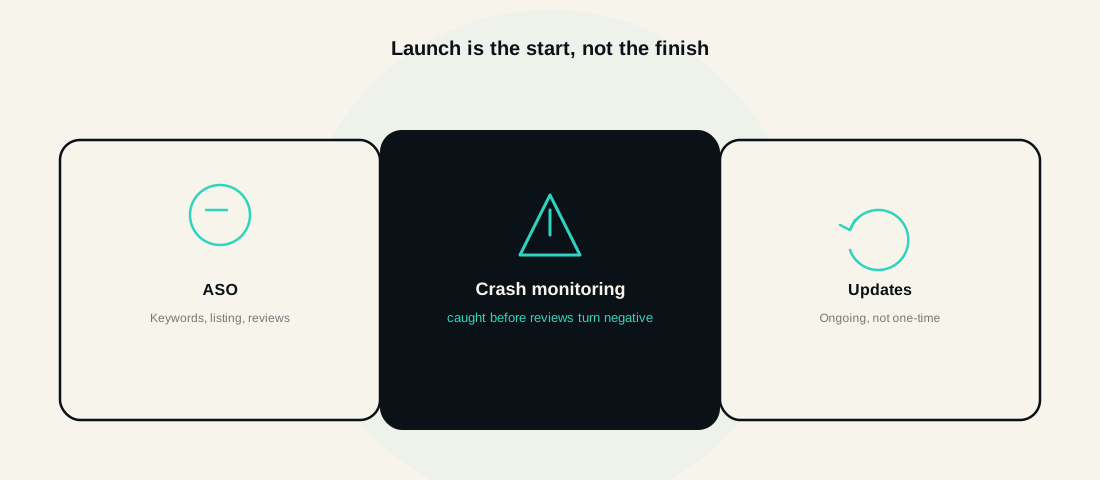
Launch is not the finish line for a mobile app, and a company's plan for what happens after matters as much as the build itself.
A defined ASO plan, keywords, listing optimisation, and an ongoing review-generation strategy, covered in more depth in our guide to app store optimisation and launch strategy, since a well-built app that nobody can find in search has left real, avoidable value on the table.
Crash monitoring and a real response process, so an issue affecting real users gets caught and fixed quickly, not discovered only when reviews start turning negative.
A clear plan for ongoing updates, both feature updates and the routine maintenance every mobile app needs as new OS versions and device changes roll out, this is genuinely ongoing work, not a one-time build with no further attention required.
Pricing
Mobile projects commonly use the same hybrid structure covered in our guide to fixed price versus time and materials contracts, a fixed price for a well-scoped MVP, with time and materials or milestone billing for larger, ongoing feature development once the app is live and evolving based on real usage.
Be wary of a quote with no clear line for app store submission handling and post-launch support, an app is not a one-time deliverable, and a quote that treats it as one is likely to leave you needing a second, unbudgeted engagement soon after the first one ends.
Questions to Ask Directly
Beyond the general questions worth asking any development partner, a few worth adding specifically for a mobile project: which specific apps have you shipped that I can download right now, what's your reasoning for native versus cross-platform on an app like mine, and what does your post-launch support actually include, specifically, not in general terms.
In Practice
Our own approach to mobile development treats native-versus-cross-platform, offline architecture, and post-launch ASO as core parts of the conversation from day one, not an afterthought raised once a build is already underway. If you want an honest second opinion on a mobile app proposal you've already received, our free technical audit is a genuinely useful, no-obligation way to get one, and our mobile application development service is where that conversation continues if it's a good fit.
The businesses that choose well are rarely the ones persuaded by the most polished pitch deck, they are the ones who actually downloaded the apps, checked the real reviews, and asked specifically what happens after launch, not just what happens before it.
FAQ
Questions, Answered.
Read next
More on Mobile Applications
App Store Optimisation and Launch Strategy for New Apps
The real ASO basics, how to build a listing that converts, managing reviews, a genuine launch plan, and how post-launch iteration actually drives growth.

Designing Mobile UX That Keeps Users Coming Back
Real mobile UX practices that drive genuine retention, onboarding, performance, navigation, accessibility, and what actually keeps users coming back.
From Web App to Mobile App: When and How to Make the Leap
Real reasons to go mobile, how much code and logic you can actually reuse, honest cost, and how to phase the transition from a web product to mobile properly.