
Resources
Fixed Price vs Time and Materials: Which Contract Protects You
How fixed-price and time-and-materials contracts actually work, who carries the risk in each, when each one genuinely fits, and why a hybrid is often the smarter choice.

Ahmad Saeed
Full-Stack Engineer, Devity Technologies
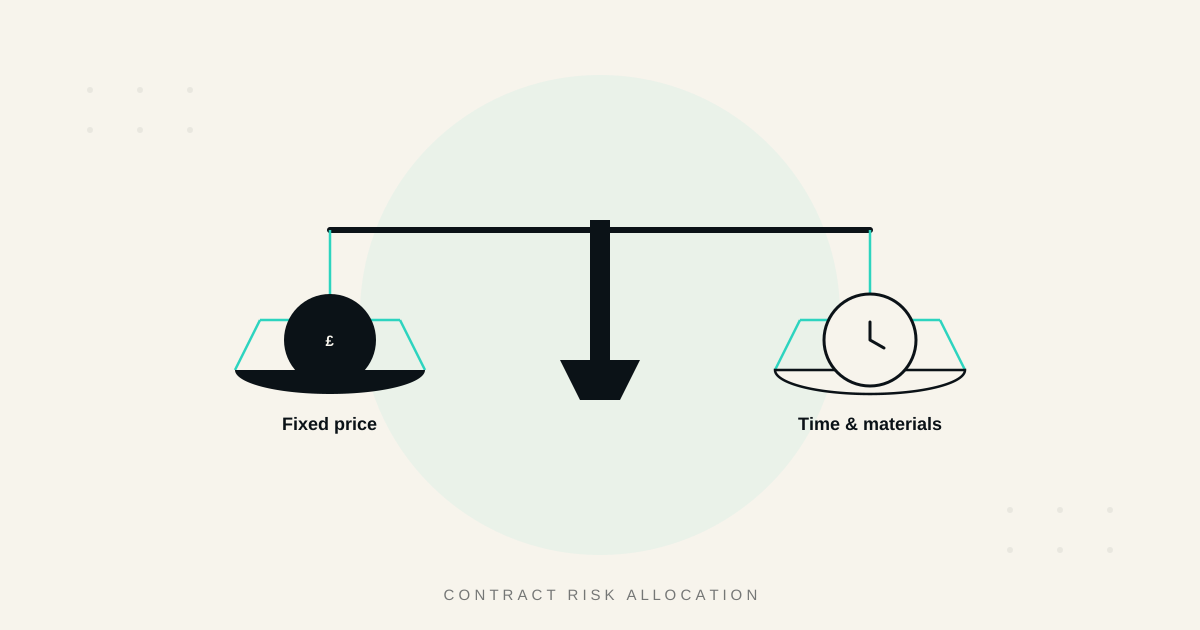
The fixed-price versus time-and-materials debate gets framed as a simple safety question, which one protects me from being overcharged, when the more accurate question is which one allocates risk in a way that actually matches your specific project. Getting this wrong is a common, avoidable source of budget disputes and strained relationships partway through a build. This guide explains how each model actually works, who carries the risk in each, when each genuinely fits, the hybrid approach worth knowing about, and what we actually recommend.
How Each Model Actually Works
Fixed price means agreeing a defined scope and a set price upfront, the developer delivers that scope for that price, regardless of how much actual effort it takes on their side. The scope document becomes the contract's real backbone, everything inside it is covered, anything outside it is a separate conversation.
Time and materials means paying for the actual work done, typically billed weekly or monthly against an agreed team and rate, with the total cost following the real amount of work required rather than a number fixed in advance. This does not mean unlimited or unpredictable spending, a responsible time-and-materials engagement still includes an estimated range and regular check-ins against it, just without a hard, absolute ceiling baked into the contract itself.
| Fixed price | Time and materials | |
|---|---|---|
| Who carries estimation risk | The developer | You |
| Cost certainty | High, agreed upfront | Estimated range, not fixed |
| Flexibility for scope change | Low, requires formal renegotiation | High, absorbed more fluidly |
| Includes a risk buffer | Usually, built into the quote | No, billed on actual work |
| Best suited to | Well-defined, stable scope | Exploratory, evolving scope |
Risk Allocation: Who Actually Carries What
This is the part most comparisons skip past too quickly, and it is the actual heart of the decision.
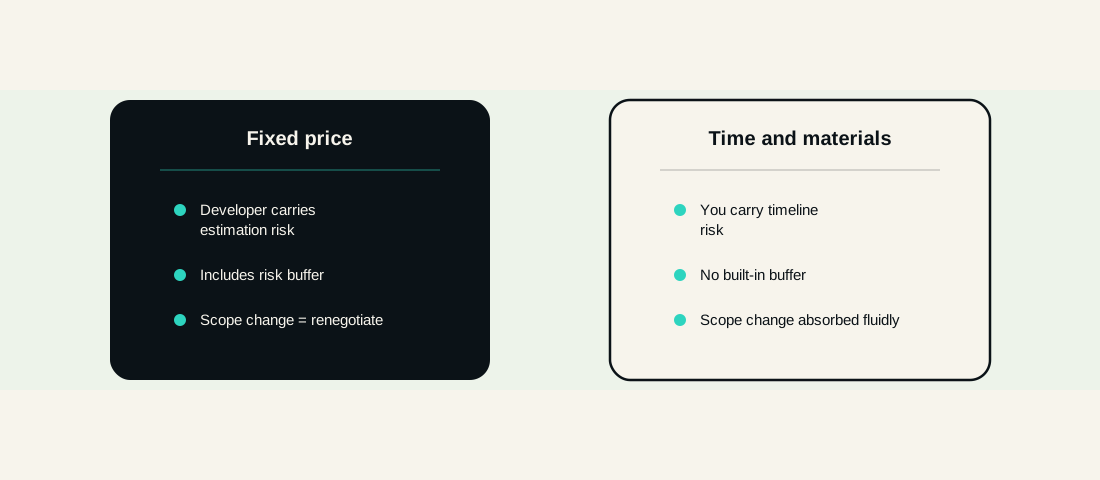
Under fixed price, the developer carries the risk of underestimating the work. If a task turns out to be harder than expected, that cost is theirs to absorb, not yours, which is exactly why a responsible fixed-price quote includes a buffer for the unknowns the developer cannot fully see at the time of quoting. You pay for that buffer whether or not the risk it covers ever actually materialises.
Under time and materials, you carry the risk of the project taking longer than expected. If requirements turn out to be more complex than anticipated, that additional time is billed to you, which is exactly why this model needs active oversight, regular check-ins against the estimate, not passive trust that the number will simply work out.
Scope change risk shifts differently under each model too. A fixed-price contract treats any scope change as a formal negotiation, potentially slowing the project down while a new price is agreed. A time-and-materials contract absorbs a scope change more fluidly, since you are already paying for actual work done, but this fluidity only stays healthy with genuine transparency about how a change is affecting the timeline and total cost.
When Each Genuinely Fits
Fixed price fits well when the scope is genuinely, thoroughly well-defined and unlikely to change meaningfully, a well-understood internal tool replacing a known manual process, or a clearly specified feature addition to an existing system. It gives you budget certainty in exchange for less flexibility if your understanding of the problem evolves.
Time and materials fits well when the product is genuinely exploratory, an early-stage build where real requirements will sharpen as you learn from actual development and, eventually, real users. Locking a fixed price against a specification that will likely need to change is a mismatch that tends to produce friction on both sides.
Neither fits well when misapplied. Fixed price on a genuinely exploratory project forces premature specificity, locking in decisions before you actually have enough information to make them well. Time and materials on a simple, well-understood project with no real oversight can drift without anyone noticing until the invoice arrives.
A practical way to check which situation you are actually in: if you can write the full feature list today and expect it to still be accurate in three months, fixed price is a reasonable fit. If you expect the feature list to meaningfully change once real users or real data are involved, time and materials, or the hybrid approach below, is the more honest choice, since a fixed price built on a specification that everyone already suspects will change tends to produce change orders and friction rather than the certainty it was meant to provide.
The Hybrid Approach
A fixed fee for an initial discovery and scoping phase, where requirements genuinely can be defined tightly in a focused, time-boxed effort, followed by time and materials or a milestone-based structure for the build itself once real requirements are clearer, is an increasingly common and often smarter middle ground.
This gives you real cost certainty for the planning stage, and genuine flexibility where it actually matters, during the build, when the product is still being shaped by what you are learning. It also produces a far more accurate fixed-price quote for any later phase that does get fixed-priced, since it is based on a properly scoped brief rather than an early guess made before anyone fully understood the problem.
What We Actually Recommend
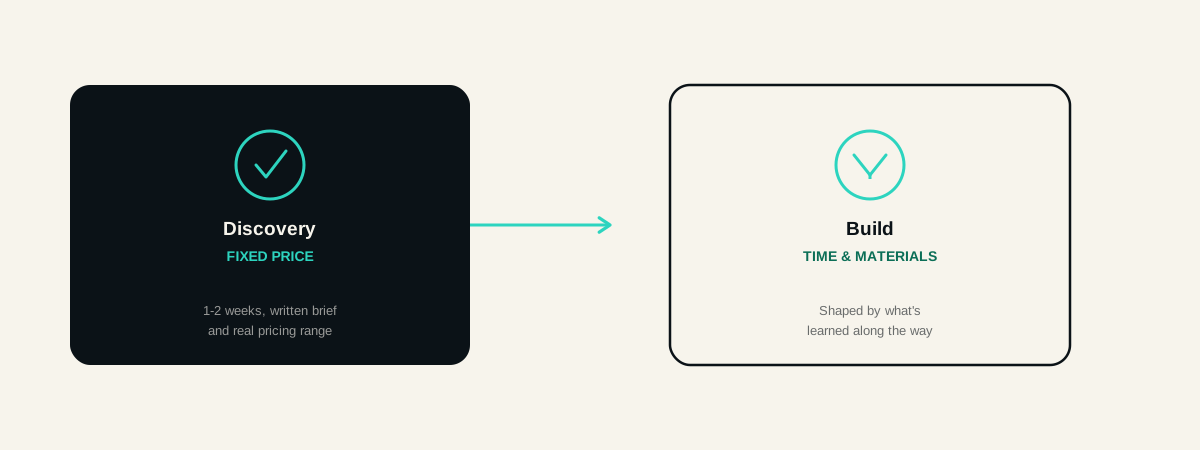
For most projects, a hybrid structure: a fixed-price discovery and scoping phase, giving you a real, defensible number and a clear brief before any larger commitment, followed by time and materials or clear milestone-based billing for the build itself, once requirements are genuinely understood by both sides.
This is not a hedge or a way to avoid commitment, it reflects an honest view of where genuine certainty is actually possible in a software project and where it is not. Discovery can be scoped tightly, our own process treats it as exactly this, a defined one-to-two week phase producing a written brief and a real pricing range. The build itself benefits from flexibility precisely because the best software gets shaped by what is learned along the way, not just what was guessed at the very start. For a deeper look at realistic project budgets under either model, our cost guides cover real GBP ranges across different project types.
In Practice
Being transparent about how a contract allocates risk, before you sign anything, is worth more than any single price on its own. If you want to talk through which structure genuinely fits your specific project, reach out and we will walk through the trade-offs honestly, including whether a straightforward fixed price is actually the better fit for what you are building, not just the hybrid approach we tend to recommend by default.
The businesses that avoid contract disputes are rarely the ones who negotiated the lowest number, they are the ones who understood exactly what risk they were taking on before they signed, and chose the model that actually matched the shape of their project, not just the one that felt safest on paper.
FAQ
Questions, Answered.
Read next
More on Choosing & Trust
How to Budget for a Software Project Without Nasty Surprises
A practical guide to budgeting a software project realistically, scoping for budget, genuine contingency, change control, phasing, and tracking spend as you go.

How to Vet a Remote or Offshore Development Team
A genuine due diligence framework for vetting a remote or offshore development team, references, trials, communication and timezone fit, and IP and security.
In House vs Agency vs Offshore: The Honest Comparison
A genuinely honest comparison of in-house, agency, and offshore software development on cost, quality, control, communication, and risk, and when each one actually fits.