
Resources
How to Vet a Remote or Offshore Development Team
A genuine due diligence framework for vetting a remote or offshore development team, references, trials, communication and timezone fit, and IP and security.

Ahmad Saeed
Full-Stack Engineer, Devity Technologies

The instinct to be more cautious about a remote or offshore development team is reasonable, but the caution should translate into genuine due diligence, not a blanket assumption that distance itself is the risk. This guide gives a real vetting framework, references, trials, communication and timezone fit, and IP and security, the specific things actually worth checking, rather than location as a proxy for all of them.
Due Diligence
Genuine due diligence on a remote team looks much like due diligence on any development partner, with a few points that deserve specific extra attention given the distance involved.
Verify the team actually exists as described. A real, checkable company registration, a genuine physical location, and team members with verifiable professional histories are a reasonable baseline, not an unusual ask. A team reluctant to provide basic verifiable detail about who they actually are is a real signal worth taking seriously.
Ask for work genuinely comparable to your project, not just any portfolio piece, comparable complexity and comparable domain matter more than a long client list with no detail behind it.
Confirm legal and contractual clarity upfront, which jurisdiction the contract falls under, how disputes would actually be handled, and what recourse genuinely exists if something goes wrong, questions worth asking directly rather than assuming standard protections automatically apply across a border.
Check for genuine, current online presence beyond the sales pitch, real client reviews on independent platforms, an active, substantive presence rather than one built purely around the sales funnel itself. This is not proof on its own, but its absence, particularly for a team claiming years of experience, is worth noting.
References
This is the single most reliable, and most underused, verification step available, and it applies with even more force for a remote team than a local one.
Speak to a real, past client directly, not just a written testimonial, which could have been written by anyone and edited by the agency itself. A short, genuine conversation reveals far more about communication quality, reliability, and how the team actually handled a difficulty than any curated quote ever will.
Ask the reference specifically about communication and timezone experience, since this is precisely the dimension a remote engagement most needs to get right, and precisely the dimension a sales conversation is least likely to surface honestly on its own.
Ask what, if anything, went wrong, and how it was handled. A reference with no complaints at all is less useful than one who can describe a real difficulty and how the team responded to it, since every real engagement eventually hits some friction, and how it gets handled is the actual signal.
Trials
A small, paid trial engagement is the single most reliable way to verify quality before a larger commitment, and is worth insisting on regardless of how confident the sales conversation makes you feel.
A defined discovery phase or a small, well-scoped piece of work reveals communication quality, technical judgement, and reliability under genuinely real conditions, in a way no amount of talking about process ever can.
Pay attention to the trial's process, not just its output. How clearly did the team communicate during the work, how did they handle any ambiguity or a question that came up, did updates arrive proactively or only when specifically asked. This tells you more about how a larger engagement will actually feel than the quality of the specific deliverable alone.
Treat the trial's cost as genuine information, not sunk cost. A trial that reveals real communication friction, missed expectations, or evasiveness under a small amount of pressure is telling you something valuable and worth heeding, even if it means walking away and absorbing the smaller cost of the trial rather than proceeding into a much larger commitment on the hope that things will improve once more money is involved.
Communication and Timezone
This is the genuine, specific risk that "remote" actually introduces, worth naming directly rather than treated as an unspoken, vague worry.
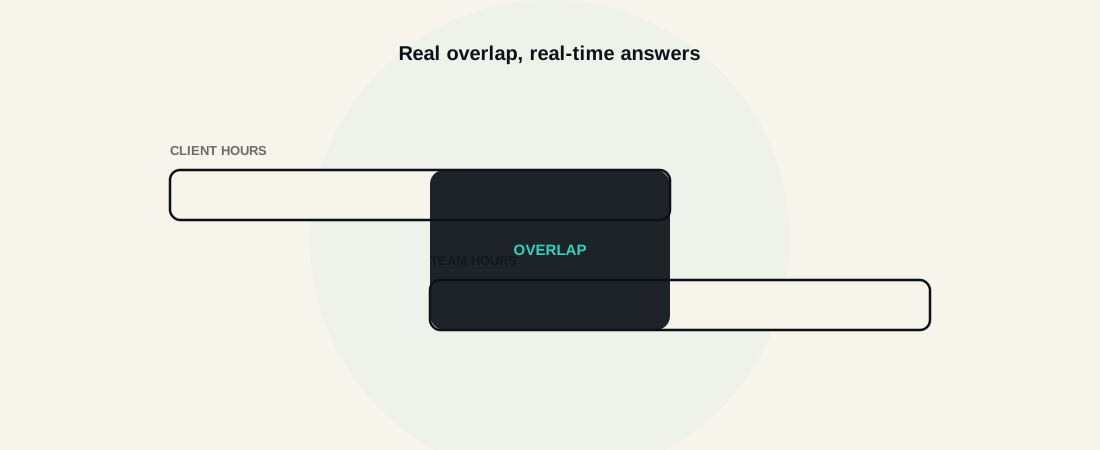
Real working-hours overlap matters directly. Several hours of genuine overlap during your working day is generally sufficient for most engagements, letting real-time questions get answered quickly rather than waiting a full day for a response. Zero overlap forces fully asynchronous communication, which works reasonably well for clearly documented, well-defined work and struggles considerably for anything requiring fast clarification or genuine back-and-forth problem solving.
Written communication quality is a genuine, checkable skill, not an afterthought. A team with clear, structured written updates and documentation communicates well specifically because distance has forced them to build that discipline, in some cases making a genuinely remote team's communication habits stronger than a co-located team's, not weaker.
IP and Security
This deserves the same rigour as any other data processor or contractor your business relies on, not a lower bar simply because the relationship is remote.
Confirm unconditional code and IP ownership, everything transfers to you entirely once the project is paid for, with no hedging, partial rights, or vague language that could be interpreted either way later.
Ask directly how client data and credentials are handled, storage practices, access control, and what happens to your data and access once an engagement ends. A team with a clear, specific, already-documented answer is a genuinely different signal than one improvising an answer on the spot.
Ask for any relevant security certifications or practices directly, and treat vague reassurance without specifics as a real gap worth pressing on, not something to let go simply because the rest of the conversation felt reassuring.
In Practice
We are, by our own structure, exactly the kind of team this guide is describing how to vet, a small, senior, remote team based in Pakistan working direct hours with clients in the UK and Australia. You can read more about our actual background and approach on our about page, and the broader trade-offs between in-house, agency, and offshore models generally, including where offshore's old reputation is genuinely outdated and where real risk still exists, are covered in more depth in our honest comparison of the three. We would rather you run this exact vetting process on us, and on anyone else you are considering, than take either claim on trust.
The businesses that get remote hiring right are not the ones who avoided it out of caution, they are the ones who applied real, specific due diligence, spoke to genuine references, ran a real trial, and treated communication and IP protection as checkable facts, not vague, unresolved worries.
FAQ
Questions, Answered.
Read next
More on Choosing & Trust
Fixed Price vs Time and Materials: Which Contract Protects You
How fixed-price and time-and-materials contracts actually work, who carries the risk in each, when each one genuinely fits, and why a hybrid is often the smarter choice.
How to Budget for a Software Project Without Nasty Surprises
A practical guide to budgeting a software project realistically, scoping for budget, genuine contingency, change control, phasing, and tracking spend as you go.
In House vs Agency vs Offshore: The Honest Comparison
A genuinely honest comparison of in-house, agency, and offshore software development on cost, quality, control, communication, and risk, and when each one actually fits.