
Resources
How to Budget for a Software Project Without Nasty Surprises
A practical guide to budgeting a software project realistically, scoping for budget, genuine contingency, change control, phasing, and tracking spend as you go.

Ahmad Saeed
Full-Stack Engineer, Devity Technologies
Budget surprises rarely come from one dramatic overrun, they accumulate from an underestimated contingency, an unclear scope, and a change request nobody formally tracked. This guide covers scoping for budget properly, genuine contingency, change control, phasing, and tracking spend as a project actually progresses.
| Element | What it protects against |
|---|---|
| Itemised, phase-based quote | A single opaque number hiding where cost is concentrated |
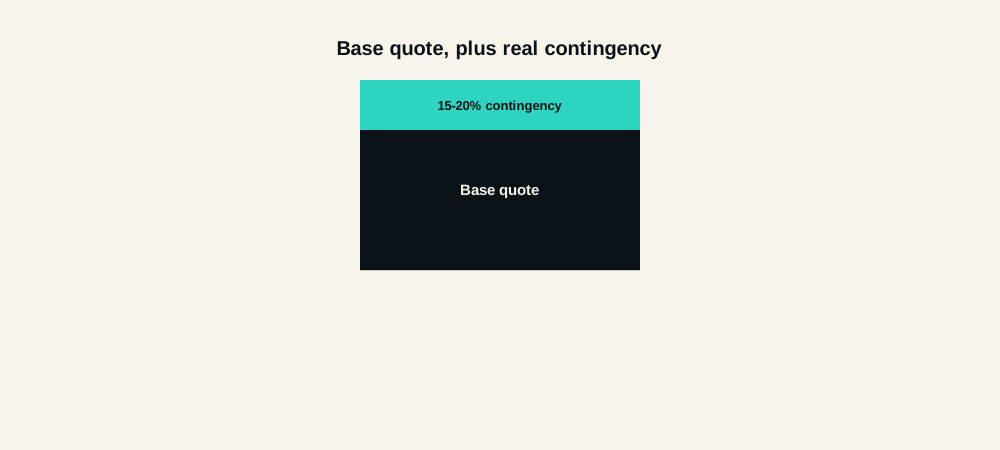
| 15-20% contingency | Genuine, unavoidable technical uncertainty |
| Change control process | Scope creep absorbed silently, without a real decision |
| Milestone-based payments | Paying significantly ahead of delivered, verified work |
Scoping for Budget
A vague scope produces a vague budget, and a vague budget is where nasty surprises actually originate. The tighter and more specific the scope going into a quote, the more reliable the number that comes out of it, covered in more depth in our guide to scoping an MVP.
Ask for an itemised quote, not a single lump figure. A breakdown by feature or phase lets you see exactly where the cost is actually concentrated, and gives you a real, informed basis for cutting or adjusting scope later if budget pressure genuinely requires it.
Contingency
Budget genuine contingency on top of any quote, a commonly used range is 15 to 20%, though the right figure scales with how mature and well-defined the underlying scope actually is. A vaguer scope justifies more contingency, a tightly defined one justifies less.
Contingency is not a sign the quote itself is unreliable. Software development genuinely involves some irreducible uncertainty, even a well-scoped project can surface a technical complexity nobody could have reasonably anticipated at the quoting stage, contingency exists to absorb that reality honestly, not to paper over a poorly prepared estimate.
Change Control
A defined process for handling a new request during the build is what actually protects budget, not willpower or good intentions. Every new idea gets logged and evaluated against the original scope and budget, rather than silently absorbed into the work because it seemed small at the time.
Insist on this being agreed before the build starts, a genuine change-control process specifies how a new request gets costed, approved, and reflected in both timeline and budget, turning what would otherwise be an invisible source of overrun into a visible, deliberate decision made with full information.
A concrete example of how this protects budget in practice: a client requests a small addition mid-build, "could we also add an export feature while you're in there." Without change control, this either gets silently absorbed, quietly extending the timeline and eating into contingency without anyone formally deciding it was worth the trade-off, or gets refused outright with no path to include it. With a defined process, the request gets costed properly, weighed against the original budget and priorities, and either approved with a clear, agreed impact on cost and timeline, or consciously deferred, a visible decision either way, not an invisible one.
Phasing
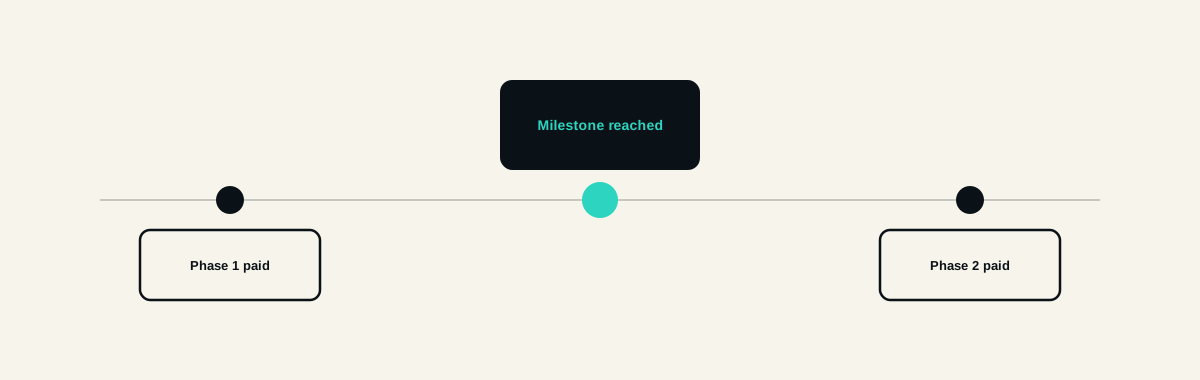
Phased payments tied to specific, defined milestones protect you directly, you are never paying significantly ahead of delivered, verified work, and each milestone gives you a natural, low-friction point to pause, adjust, or redirect if your priorities genuinely change partway through.
A phased structure also surfaces problems early. A partner consistently missing milestones is a clear, early signal worth acting on, far better discovered three weeks into a project than only at the very end, once the bulk of the budget has already been spent.
Tracking
Regular, structured check-ins tied to actual delivered progress, not simply elapsed time, let you compare what has genuinely been built against what was budgeted for that specific stage, catching real drift early enough to address it before it compounds into a larger problem.
Ask directly, at each check-in, whether the project is still tracking to the original budget and timeline. A good partner answers this honestly and proactively, flagging a genuine concern before you have to ask, rather than only when directly confronted about it.
In Practice
We provide itemised, phase-based quotes with contingency built into the conversation explicitly, not hidden in a single opaque number, and a defined change-control process agreed before any build begins. If you want a realistic, itemised quote for your specific project, that's the natural starting point.
The founders who avoid budget surprises are rarely the ones who found the cheapest quote, they are the ones who scoped tightly, budgeted genuine contingency, insisted on phased payments and change control, and tracked real progress against budget throughout, not just at the very end.
FAQ
Questions, Answered.
Read next
More on Choosing & Trust
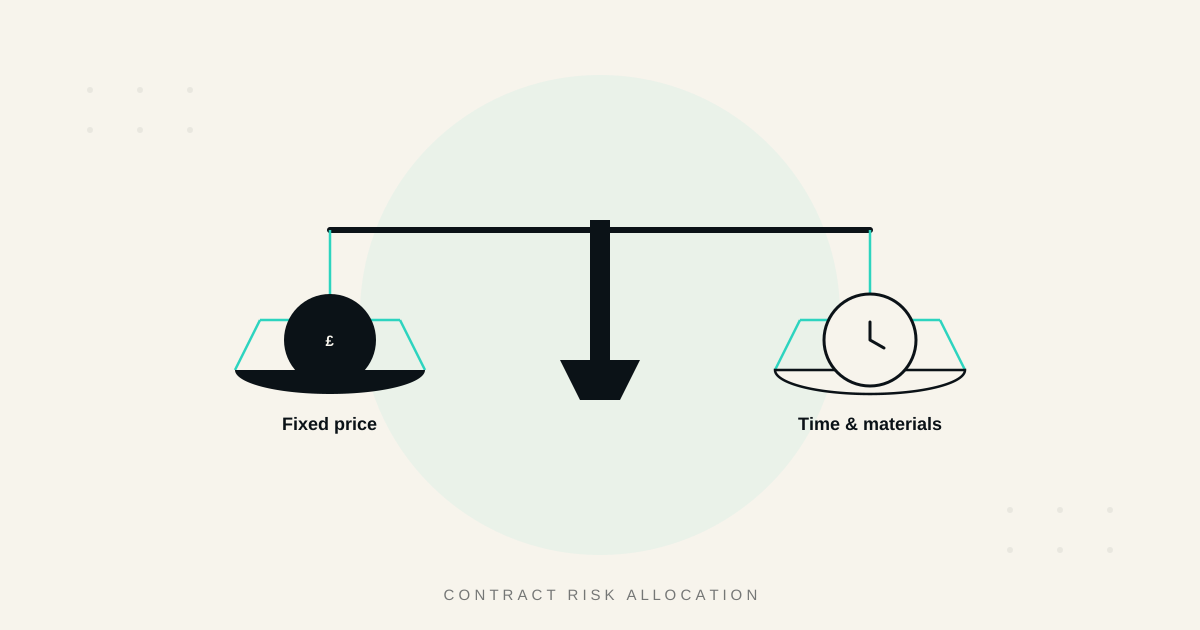
Fixed Price vs Time and Materials: Which Contract Protects You
How fixed-price and time-and-materials contracts actually work, who carries the risk in each, when each one genuinely fits, and why a hybrid is often the smarter choice.

How to Vet a Remote or Offshore Development Team
A genuine due diligence framework for vetting a remote or offshore development team, references, trials, communication and timezone fit, and IP and security.
In House vs Agency vs Offshore: The Honest Comparison
A genuinely honest comparison of in-house, agency, and offshore software development on cost, quality, control, communication, and risk, and when each one actually fits.