
Resources
Questions to Ask Before Hiring a Software Development Company
Fifteen direct questions across process, team, pricing, ownership, and support, plus what a genuinely good answer sounds like versus a warning sign.

Ahmad Saeed
Full-Stack Engineer, Devity Technologies
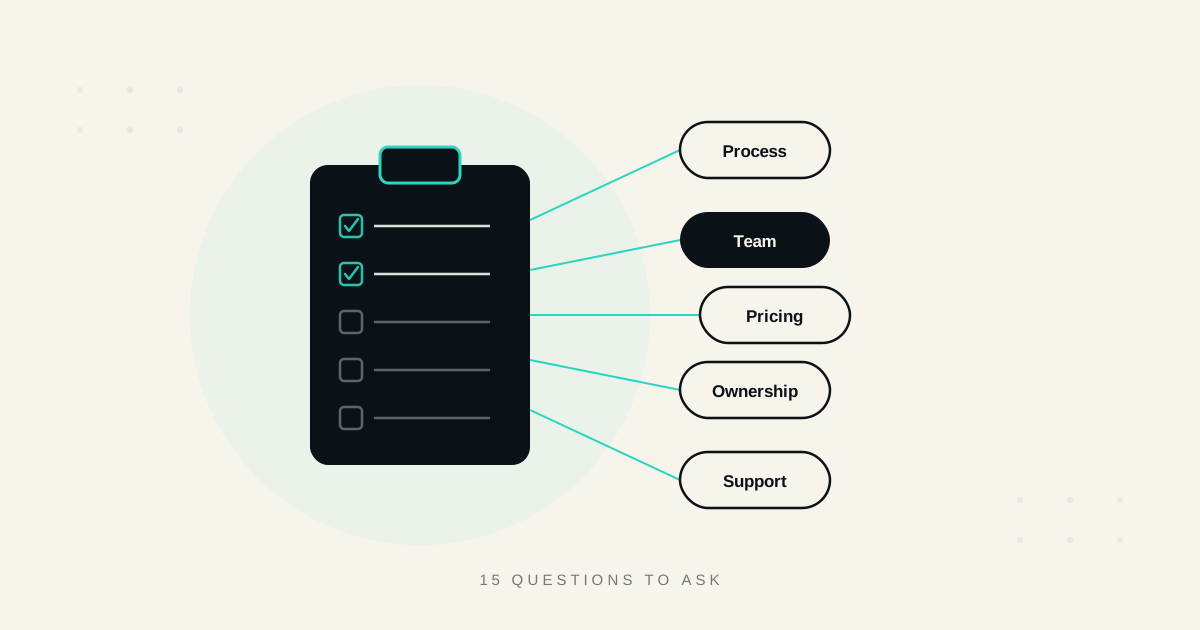
Most software development companies look credible on the surface, a polished website, an impressive client list, a confident sales call. None of that reliably predicts whether the actual engagement will go well. The Standish Group's long-running CHAOS research has repeatedly found that only a minority of software projects are considered fully successful, and the reasons rarely trace back to raw technical skill, they trace back to a mismatch discovered too late, on process, ownership, or communication that should have been caught during the vetting stage.
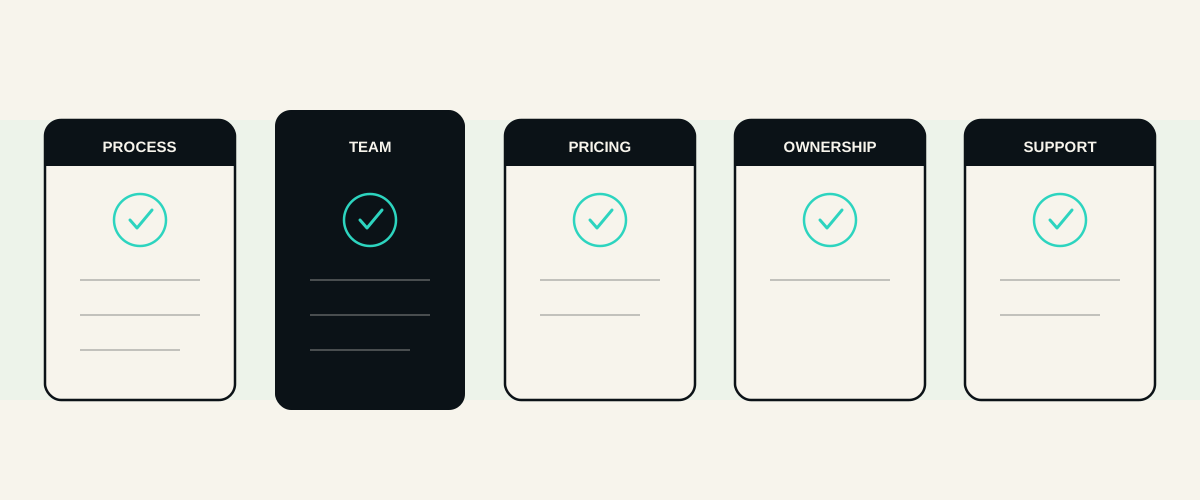
The only real way to separate a genuine partner from a poor one is asking direct questions before you sign anything, and paying close attention not just to what they say, but how specifically they say it. Here are fifteen questions across process, team, pricing, ownership, and support, along with what a genuinely good answer sounds like.
Process
1. Walk me through a typical two-week period on a real project. A good answer describes a concrete rhythm, planning, building, a demo, incorporating feedback. A vague answer talks about "agile" without describing anything you could actually picture happening. Push further if the answer stays abstract, ask them to describe the last sprint they actually ran, including something that did not go to plan.
2. How often will we see working software, not just a status update? Good answer: every sprint, or close to it. Warning sign: "every few months, once we're ready to show you something."
3. How do you handle a change in scope partway through? A strong answer describes a calm, defined process for evaluating and pricing a change. A weak answer either promises the scope will never change, which is rarely honest, or has no real process at all. Real projects almost always surface something unexpected once development starts, the question is not whether scope will shift, it is whether the team has a mature, non-adversarial way of handling it when it does.
4. What tools do you use for tracking work and communication? Look for a coherent, specific answer, not improvisation stitched together differently for every client.
Team
5. Who will actually be working on our project, and how senior are they? Ask to meet the lead engineer directly, not just the salesperson who ran the pitch. A team that keeps this person invisible until after signing is worth questioning.
6. How many other projects is our lead currently responsible for? Two or three active projects is normal for a senior lead. Ten is a real warning sign about how much attention your project will actually get.
7. What happens if a key team member leaves mid-project? A strong answer describes documentation practices, code review discipline, and knowledge sharing that reduce single points of failure. A weak answer is simply "we'll find someone else," with nothing about how continuity is actually protected.
8. Can you show me work genuinely similar to what we're planning, not just any past project? A portfolio full of marketing sites tells you little about a company's ability to build a complex application with real backend logic and integrations. Ask specifically for comparable complexity, not just comparable industry.
Pricing
9. Which pricing model do you recommend for our project, and why? This tests genuine alignment, a thoughtful answer explains the trade-offs for your specific situation, not a default they push on every client regardless of fit.
10. How accurate have your estimates historically been? A confident, self-aware answer acknowledges where past estimates were off and what changed as a result. Nobody estimates perfectly every time, a company claiming otherwise is not being fully honest with you.
11. What is explicitly included and excluded from this quote? Design, testing, project management time, and post-launch support should each be addressed directly, not folded into an ambiguous total you have to guess at.
Ownership
12. Who owns the code, the design, and the documentation once the project finishes? This should have a simple, direct answer, you do, all of it, upon final payment. Any hedging, retained partial rights, restrictions on future use, is one of the clearest red flags on this entire list.
13. What documentation and handover do we get if we ever move to a different team? A strong answer includes a genuine knowledge transfer session and documentation a new developer could actually work from. A weak answer treats this as an unusual, awkward request rather than standard practice.
Support
14. What does support actually look like after launch, specifically? Ask directly whether it is a defined retainer, monitoring, and a real bug-fix window, or whether the relationship effectively ends the moment the final invoice is paid.
15. If a critical bug appears two weeks after launch, what happens? A good answer describes a clear response process and realistic timeframe. A company with no ready answer to this question has likely not been asked to think about it seriously before.
What to Do With the Answers
Underneath all fifteen questions sits one real question worth asking yourself afterward: do you trust this specific team with something that matters to your business. Pay as much attention to how the answers were delivered as to their content, a defensive or evasive tone on ownership or pricing tells you as much as the words themselves. A company that communicates clearly and specifically during a sales conversation tends to communicate the same way once the project gets genuinely difficult, and a company that is vague or defensive now is unlikely to improve once you have already signed.
A practical way to use this list is to score each answer honestly on the spot, not just note whether a question was technically answered. A confident, specific response with a concrete example is a strong signal. A confident but generic response, one that could apply to any company answering any client's question, is weaker than it sounds in the moment. And an answer that dodges the question entirely, however smoothly, should weigh more heavily against a company than a single missed deadline in their portfolio ever would.
In Practice
This checklist pairs directly with our broader comparison of in-house, agency, and offshore development, since the right answers here matter regardless of which model you end up choosing. If you want to put these exact questions to a real conversation about your own project, reach out and bring this list with you, a genuinely good answer should hold up under exactly this kind of direct questioning.
The businesses that avoid the worst outsourcing outcomes are rarely the ones who found the cheapest quote, they are the ones who asked these fifteen questions directly, listened carefully to how the answers were actually delivered, and were willing to walk away the moment a simple question got a complicated, evasive response.
FAQ
Questions, Answered.
Read next
More on Choosing & Trust
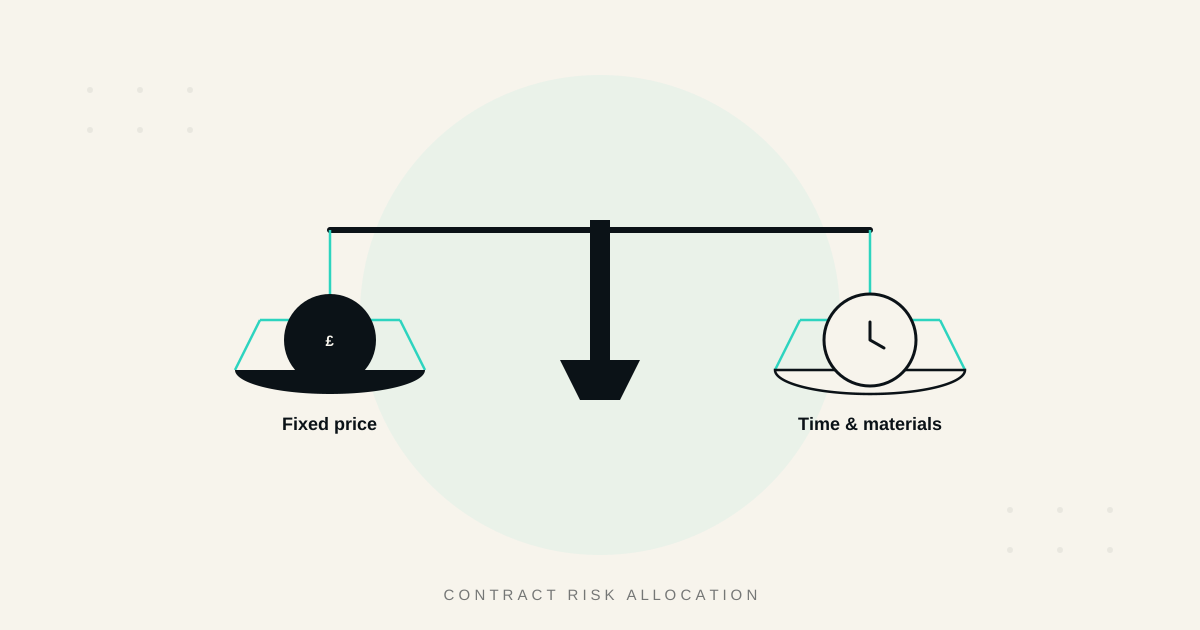
Fixed Price vs Time and Materials: Which Contract Protects You
How fixed-price and time-and-materials contracts actually work, who carries the risk in each, when each one genuinely fits, and why a hybrid is often the smarter choice.
How to Budget for a Software Project Without Nasty Surprises
A practical guide to budgeting a software project realistically, scoping for budget, genuine contingency, change control, phasing, and tracking spend as you go.

How to Vet a Remote or Offshore Development Team
A genuine due diligence framework for vetting a remote or offshore development team, references, trials, communication and timezone fit, and IP and security.