
Resources
Pre Seed to Seed: Building a Product Investors Will Back
What investors genuinely assess in a pre-seed to seed product, the metrics that matter, demo quality, scalability signals, and the common gaps that stall a raise.

Ahmad Saeed
Full-Stack Engineer, Devity Technologies

The jump from pre-seed to seed is, at its core, a question of evidence, do you have genuine, demonstrable proof that a real problem exists and your product solves it well enough that people actually use it. This guide covers what investors genuinely assess, the metrics that matter, demo quality, scalability signals, and the common gaps that stall a raise.
| Signal investors look for | What weakens it |
|---|---|
| Genuine retention | Sign-ups without repeat, engaged usage |
| Founder clarity about what's been learned | A fixed plan with no real, honest reflection |
| A functional, reliable demo | Polish substituting for actual reliability |
| Architecture that can scale | Technical debt discovered during due diligence |
What Investors Assess
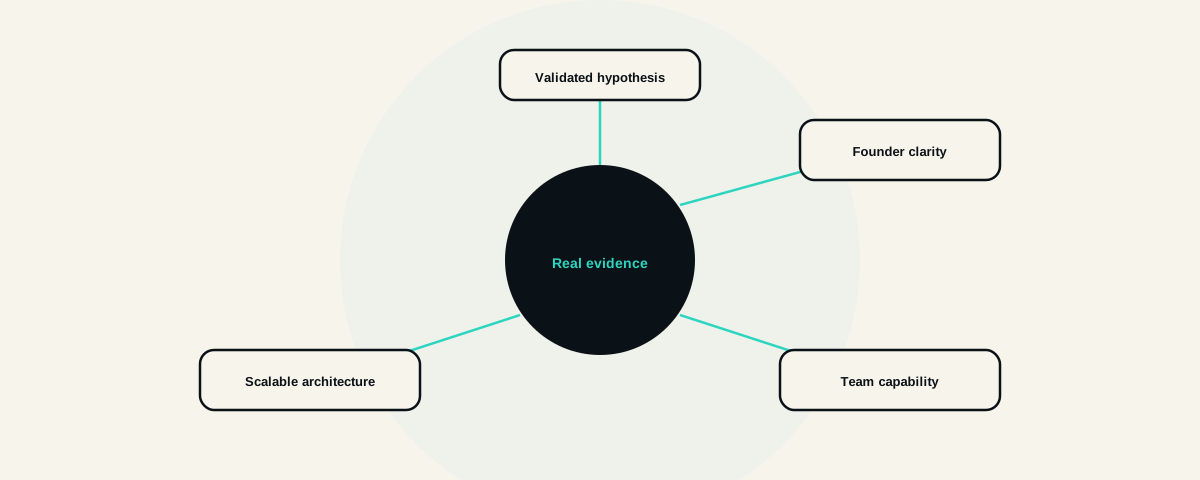
Genuine evidence the core hypothesis has been validated, real user behaviour demonstrating the underlying problem is actually real and your specific solution genuinely resonates, matters considerably more than a polished pitch deck describing an opportunity in the abstract.
A founder's clarity about what they've actually learned, not just what they built, investors are assessing judgement as much as the product itself, a founder who can speak specifically and honestly about what worked, what didn't, and why signals genuine, ongoing learning rather than a fixed, unexamined plan.
Team capability relative to the specific problem being solved, investors weigh whether the founding team genuinely has what it takes to execute on this specific opportunity, not a generic assessment of talent in isolation from the actual challenge in front of them.
Metrics
Retention matters more than raw sign-up numbers. A smaller group of genuinely engaged, returning users demonstrates real product-market signal far more convincingly than a larger number of users who tried the product once and never came back, covered in more depth in our guide to validating your startup idea.
Track and be able to speak to the metrics that actually matter for your specific business model, not a generic dashboard of vanity numbers. A subscription product should be able to speak clearly to retention and churn, a marketplace to genuine two-sided liquidity, the specific metrics that matter vary by model, and knowing which ones matter for yours is itself a signal of founder maturity.
Be honest about what your current metrics actually show, and equally honest about what they don't yet show. Investors have seen enough pitches to recognise metrics being stretched to imply more than the underlying data genuinely supports, and that recognition damages credibility far more than an honest, more modest number presented clearly.
A concrete illustration: a founder presenting "500 sign-ups" without context invites the obvious follow-up question about how many of those users are actually still active. Presenting the same underlying data honestly instead, "500 sign-ups, 80 genuinely active weekly users, and clear evidence those 80 keep returning specifically for the core feature," is a smaller headline number that tells a far more credible, investable story, since it demonstrates the founder actually understands and tracks what matters rather than optimising for a single vanity figure.
Demo Quality
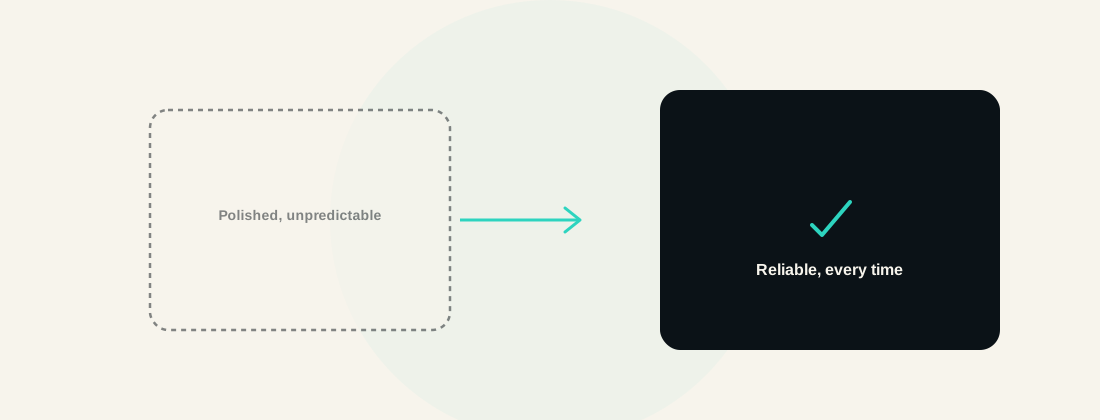
Genuinely functional and reliable matters more than visually polished. A demo that breaks or behaves unpredictably during an investor conversation undermines confidence far more than a visually simple product that works exactly as described, every single time it's shown.
Demo the actual core value proposition directly, not a tour of every feature. A focused demonstration of the specific thing your product does well builds far more genuine confidence than a broad walkthrough that dilutes attention across features that matter less to the core thesis.
Scalability Signals
A technical architecture that can genuinely support real growth, not necessarily built for massive scale on day one, but not carrying obvious, structural limitations that would require a disruptive rebuild the moment real growth actually arrives, covered in more depth in our guide to how startups should think about technical debt early.
A repeatable, understood path to acquiring the next cohort of users, not just how the current users were found, but genuine evidence you understand why that channel worked and whether it can scale, distinct from a one-off spike in growth that isn't actually repeatable.
Common Gaps
A product that demonstrates activity without demonstrating genuine value delivered. Impressive-looking usage numbers with no real evidence users are actually getting meaningful value and returning because of it is one of the most common, and most quickly identified, gaps in an early pitch.
No clear articulation of what the seed round will actually be used to prove. A round without a specific, honest hypothesis it exists to test, the next real thing you'll learn and demonstrate with that capital, reads as less considered than one with a clear, specific plan for what happens next.
Technical debt or architecture gaps discovered only during investor technical due diligence, a genuinely avoidable, credibility-damaging discovery, covered in more depth in our guide to building an MVP, where scoping and architecture discipline from the start prevents exactly this kind of gap from surfacing at the worst possible moment.
In Practice
Building a product investors will genuinely back starts with the same discipline covered across our MVP content, validating the real problem first, scoping tightly around the core hypothesis, and building technical foundations that hold up under real scrutiny. If you want an honest, direct read on whether your current product is genuinely ready for that conversation, that's worth having before you're in the room with investors, not after.
The founders who raise well are rarely the ones with the most polished deck, they are the ones with genuine, honest evidence their product solves a real problem, clear-eyed about what they've actually learned, and technically sound enough to survive real scrutiny.
FAQ
Questions, Answered.
Read next
More on MVP & Startup

Choosing the Right Development Partner for Your Startup
What early-stage founders should actually look for in a development partner, technical and product fit, communication, equity versus cash, and the red flags specific to startup engagements.
From Idea to Launch: A Realistic Product Timeline
A genuinely realistic MVP timeline, discovery, design, build, test, and launch, with real durations for each stage and what actually speeds it up or slows it down.
How Startups Should Think About Technical Debt Early
Good technical debt versus bad, building an MVP that can actually change, when refactoring is genuinely worth it, and the real cost of ignoring debt at the earliest stage.