
Resources
Choosing the Right Development Partner for Your Startup
What early-stage founders should actually look for in a development partner, technical and product fit, communication, equity versus cash, and the red flags specific to startup engagements.

Ahmad Saeed
Full-Stack Engineer, Devity Technologies
Choosing a development partner as an early-stage founder carries higher stakes than the same decision at a larger, more established company, you likely have less capital, less time, and far less room to recover from a bad match. This guide covers what genuinely matters, technical and product fit, communication, the equity-versus-cash question specific to startups, and the red flags worth watching for at this stage particularly.
What to Actually Look For
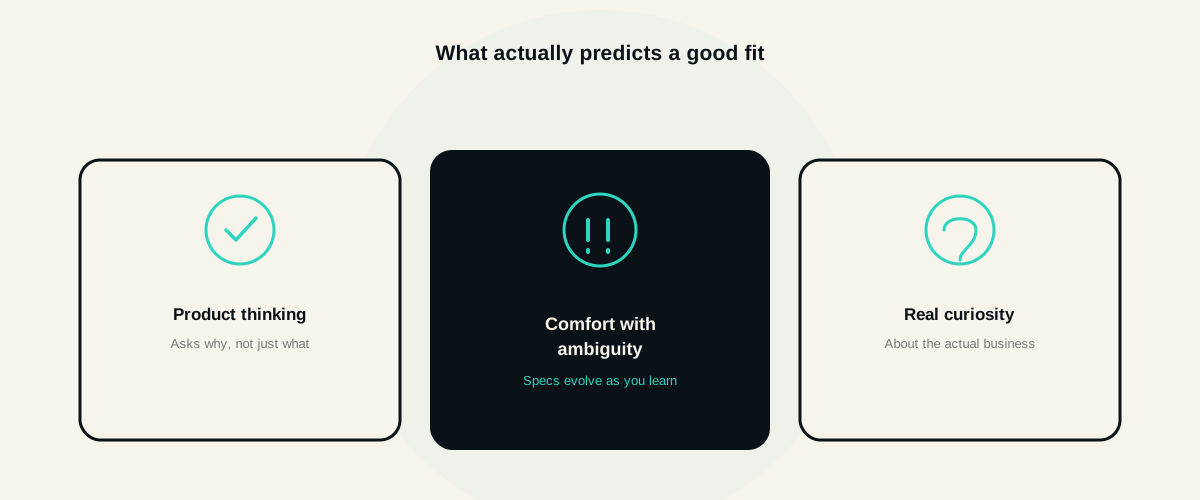
Genuine product thinking, not just technical execution. A partner who only builds exactly what they are told, without ever questioning scope or asking why a specific feature matters, is functioning as a contractor. A partner who constructively pushes back, asks what you are actually trying to learn or prove, and helps you scope toward that goal, is a genuine product partner, which matters enormously more at the earliest, most uncertain stage of a company than it does for a larger, well-specified project.
Experience with genuine ambiguity, not just execution against a finished spec. Early-stage requirements shift as founders learn, and a partner who has only ever worked from fully specified briefs may struggle with the iterative, evolving nature of real startup development, where the brief itself is still being discovered.
A real understanding of what an MVP is actually for. We cover this in depth in our guide to building an MVP, and it matters directly here, a partner who pushes toward building your full product vision rather than the minimal version that actually validates your hypothesis is optimising for a bigger invoice, not your company's actual chances of success.
Genuine enthusiasm for the specific problem, not just the engagement. A partner who asks thoughtful questions about your market and shows real interest in whether the idea actually works, not just in signing the contract, tends to bring noticeably more care to the details that matter once the build gets genuinely difficult.
Technical and Product Fit
Category-specific experience matters directly, a team with strong general software experience but no familiarity with your specific product category, consumer, B2B SaaS, a marketplace, will still need to learn category-specific patterns, on your budget and your timeline. Some learning curve is normal and healthy. A complete absence of any relevant category experience is a real risk worth weighing honestly against cost savings elsewhere.
Architecture decisions made with your actual trajectory in mind, not over-engineered for a scale you may never reach, and not so minimal that reasonable, foreseeable growth requires an expensive rebuild within the first year. A partner who asks genuine questions about your expected growth and funding trajectory before making architecture decisions is thinking about your actual situation, not applying a generic template.
A stack choice that considers your own hiring plans, not just what the partner personally prefers to build with. If you plan to bring development in-house eventually, a mainstream, well-supported technology choice with a large hiring pool matters more than it would for a company with no such plan.
Communication
This matters more at the startup stage than almost anywhere else, since a founder typically has far less bandwidth to manage a difficult partner relationship alongside everything else early-stage founders are already juggling.
Direct access to the people actually doing the work, not exclusively filtered through an account manager with no technical depth of their own. At the earliest stage, you need genuine, fast technical conversations, not a relay system that slows every decision down.
Response times and communication style that match how you actually need to operate. An early-stage company often needs to move quickly and adjust course on short notice, a partner whose process assumes long lead times for every change may be a poor operational fit, independent of their technical quality.
Honesty about capacity and timeline, rather than telling a founder what they want to hear in a sales conversation. A partner willing to say a timeline is unrealistic, or that a specific feature request will meaningfully affect the budget, is more valuable long-term than one who agrees to everything upfront and lets problems surface later.
Equity vs Cash
This is a genuinely startup-specific question worth addressing directly, since it rarely comes up in general agency-hiring advice.
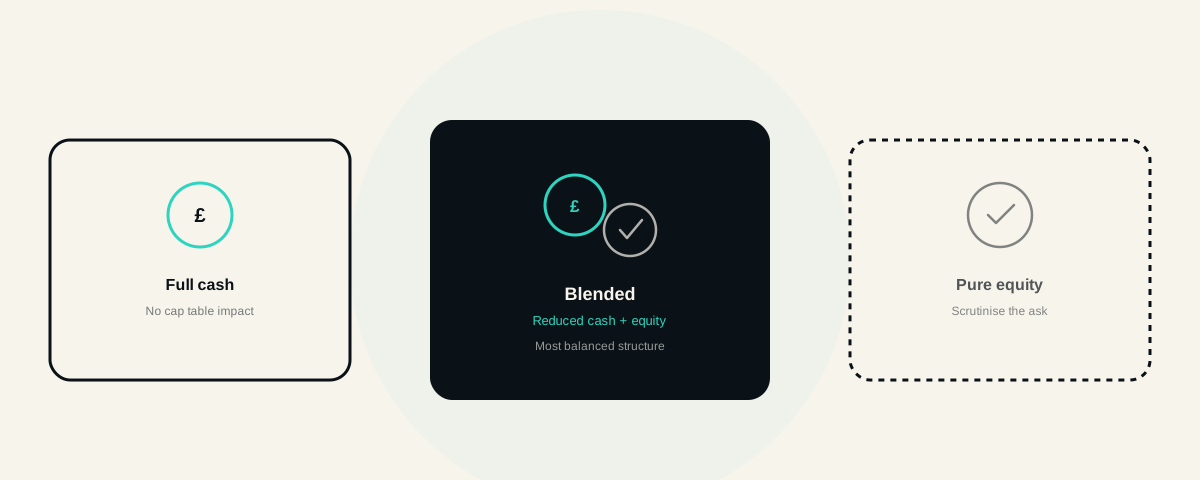
Pure equity-for-development arrangements deserve real scrutiny. A partner willing to work entirely for equity is either genuinely convinced of your idea, which is a meaningfully good sign about their judgement, or is pricing the equity stake well beyond what the actual development work is worth, which is a real risk to your cap table for value that may not materialise for either side.
A blended arrangement, reduced cash alongside a modest equity component, is more common in practice and tends to be more balanced, since it gives the partner real, immediate skin in the game without requiring your company to give up a disproportionate stake for services that carry genuine, ongoing market value regardless of how your company performs.
Whatever the structure, get real numbers and real terms in writing. Vesting schedules, valuation basis, and what happens if the relationship ends partway through a build all need to be genuinely clear before any equity changes hands, not agreed informally and formalised later once real disagreement has already surfaced.
| Structure | How it works | Watch for |
|---|---|---|
| Full cash | Standard payment for standard risk | Straightforward, no cap table impact |
| Reduced cash + equity | Blended, partner has real stake plus real payment | Fair vesting terms, clear valuation basis |
| Pure equity | Partner works entirely for a stake | Equity ask disproportionate to work value |
Red Flags Specific to This Stage
Beyond the general red flags covered in our guide on questions to ask before hiring a software development company, a few deserve specific attention for early-stage founders.
Pushing a large, full-scope build before any proof of fit. A partner eager to skip a smaller first engagement, an MVP or a discovery phase, in favour of a large, immediate commitment is asking you to take on disproportionate risk relative to how well you actually know each other yet.
No real curiosity about your actual business. A partner who never asks about your target users, your competitive landscape, or what you are trying to prove with the product is treating this as a generic build, not a genuine startup partnership.
Overpromising on speed or investor readiness. Claims about turning an idea into an "investor-ready" product in an unrealistically short timeframe, without qualification, are a sign of sales pressure over honest technical judgement.
In Practice
Starting with a smaller, defined first engagement, an MVP or a discovery phase, rather than a large commitment, is the single most reliable way to genuinely evaluate fit before a bigger, harder-to-reverse decision. If you want an honest technical read on your idea before committing to any partner, ours included, our free technical audit is a genuinely useful, no-obligation way to start that conversation.
The founders who choose well are rarely the ones swayed by the most polished pitch or the lowest quote, they are the ones who tested fit on a small, real engagement first, asked directly about equity terms and communication style, and treated a partner's genuine curiosity about the actual business as a stronger signal than any portfolio piece.
FAQ
Questions, Answered.
Read next
More on MVP & Startup
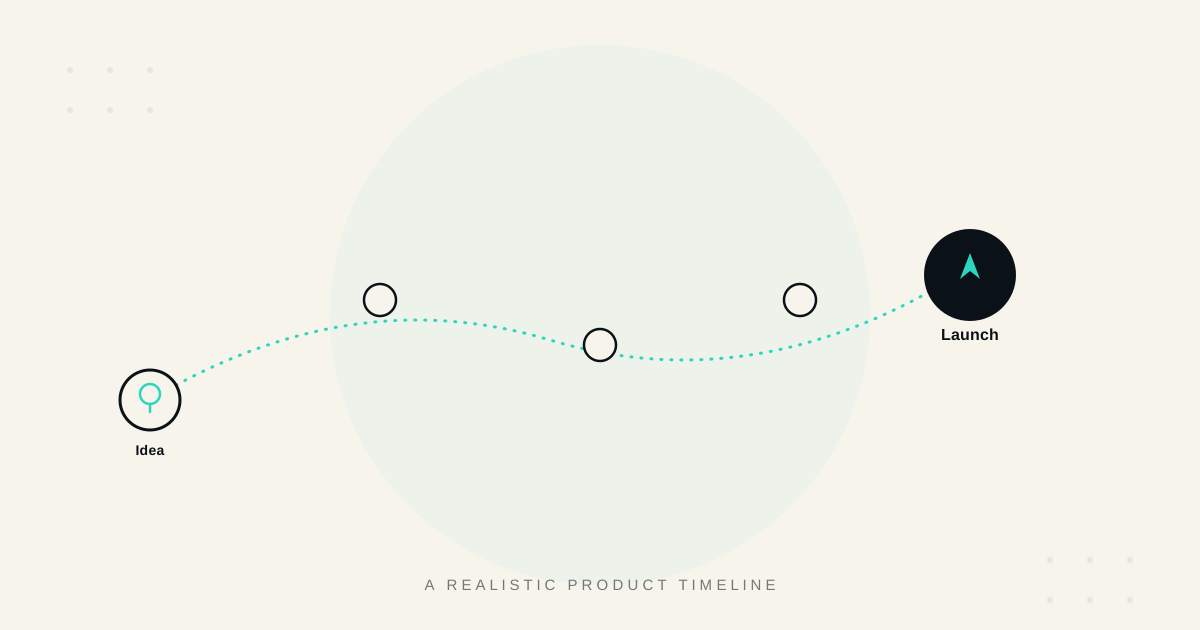
From Idea to Launch: A Realistic Product Timeline
A genuinely realistic MVP timeline, discovery, design, build, test, and launch, with real durations for each stage and what actually speeds it up or slows it down.
How Startups Should Think About Technical Debt Early
Good technical debt versus bad, building an MVP that can actually change, when refactoring is genuinely worth it, and the real cost of ignoring debt at the earliest stage.
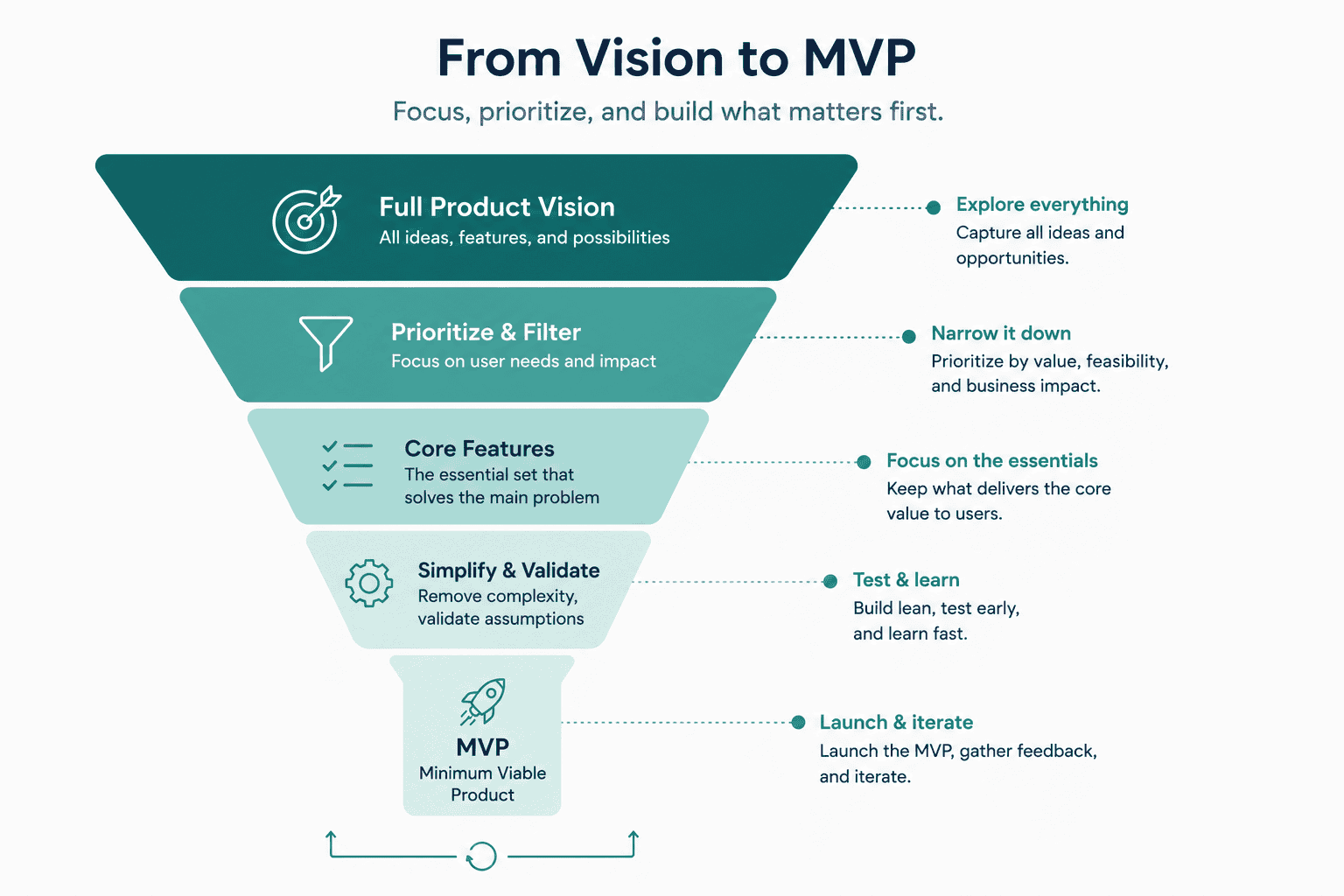
How to Build an MVP: A Founder's Step by Step Guide
A grounded, step by step guide to building an MVP, defining the real problem, scoping it right, timeline, cost, and the mistakes that sink most first products.