
Resources
From Idea to Launch: A Realistic Product Timeline
A genuinely realistic MVP timeline, discovery, design, build, test, and launch, with real durations for each stage and what actually speeds it up or slows it down.

Ahmad Saeed
Full-Stack Engineer, Devity Technologies
Founders asking how long an MVP takes usually get one of two unhelpful answers, a vague "it depends," or an unrealistically fast number meant to close a sale rather than reflect reality. This guide gives a genuinely realistic timeline, discovery, design, build, test, and launch, with honest durations for each stage and what actually speeds the process up or slows it down.
| Stage | Realistic duration | What happens |
|---|---|---|
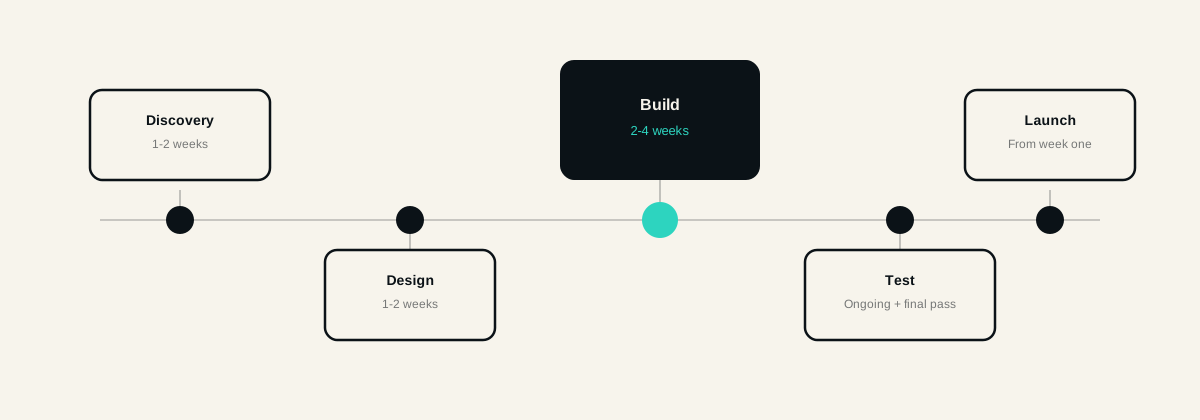
| Discovery | 1 to 2 weeks | Problem defined, scope mapped, written brief produced |
| Design | 1 to 2 weeks, overlapping discovery | Core loop made usable, often templated |
| Build | 2 to 4 weeks | The essential feature list, and nothing beyond it |
| Test | Ongoing, plus a final pass | Continuous through the build, dedicated pass before launch |
| Launch | Ongoing from week one | Real users, real feedback, the actual purpose of an MVP |
Discovery: 1 to 2 Weeks
Discovery is where the real problem gets understood, scope gets mapped into a specific, written brief, and key technical decisions get identified before any code is written. This stage, covered in more depth in our guide to building an MVP, is deliberately time-boxed, long enough for genuine clarity, short enough to avoid becoming its own source of delay.
Rushing discovery is a false economy, a vague or incomplete brief tends to resurface as expensive confusion later in the build, when correcting course costs meaningfully more than it would have at this stage.
Design: 1 to 2 Weeks
For an MVP specifically, design should focus on making the core loop genuinely usable and coherent, not producing a full, polished brand identity and design system. A templated approach built on an existing design system is often the right choice at this stage, reserving a fully custom, bespoke design for later, once the product has actually validated that it is worth that additional investment.
Design and the tail end of discovery often overlap in practice, early design exploration can begin once scope is clear enough, even before every last discovery detail is fully locked down.
Build: 2 to 4 Weeks
This is typically the longest single stage, and its actual duration depends directly on how disciplined the scope coming out of discovery genuinely was. A tightly scoped MVP with a clear, minimal feature list moves through this stage predictably. A scope that quietly expanded during discovery, or that continues expanding during the build itself, is the single most common reason this stage runs long.
Regular, visible progress, working demos or a staging environment you can actually see throughout, not a single reveal at the end, is what keeps a build stage honest and on track, surfacing any drift early enough to correct it cheaply.
A concrete illustration: an MVP scoped tightly around one core workflow, three or four essential features, typically lands toward the shorter end of this range. The same idea, if scope quietly grows during the build to include a handful of "while we're in there" additions, can easily push toward the longer end or beyond it, not because any single addition was large, but because each one adds testing surface, integration points, and decisions that compound rather than simply stacking.
Test: Ongoing Through the Build, Plus a Dedicated Final Pass
Testing is not a single stage bolted onto the end, it happens continuously throughout the build, with a dedicated final testing pass before launch specifically to catch anything that only surfaces once the full feature set is actually working together.
For a mobile MVP specifically, this includes genuine testing on real devices, not just a simulator, since real-world conditions, an older device, a patchy connection, surface issues a simulator simply does not reproduce.
Launch and First Observation: Ongoing From Week One
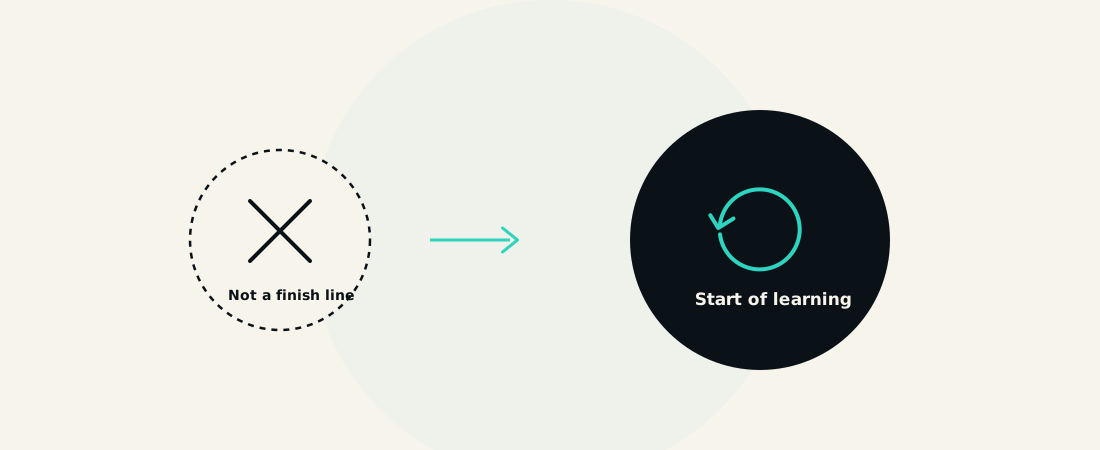
Launch is not the finish line, it is the point where the actual purpose of an MVP begins, real users interacting with it and generating the evidence the whole exercise exists to produce. The first days and weeks after launch, watching real usage, gathering real feedback, are where the MVP's core hypothesis actually gets tested, not the launch moment itself.
Realistic Total: 4 to 8 Weeks
Adding these stages together, with genuine overlap between discovery and design, and continuous testing throughout the build rather than a separate block at the end, four to eight weeks from the start of discovery to something real users can access is a realistic, honest range for a properly scoped MVP. This matches the range covered in our guide to building an MVP, and it holds across web, SaaS, and mobile products, the underlying driver is scope discipline, not which specific platform the product happens to be built on.
What Speeds It Up
A tightly scoped, genuinely minimal feature list coming out of discovery is the single biggest lever available, every feature cut before the build starts is time and cost that never has to be spent at all.
A founder who is genuinely available and decisive during the build, able to answer a question or make a call quickly rather than leaving the team waiting on a decision for days, keeps momentum that a slow, hard-to-reach founder quietly erodes.
Starting with a templated design approach rather than commissioning a fully custom design system removes real time from the schedule without meaningfully compromising the MVP's ability to test its core hypothesis.
What Slows It Down
Scope creep is the most common, most avoidable cause of an MVP timeline stretching well past its original estimate. A feature added mid-build because it "seemed quick" rarely stays quick once it interacts with everything else already built, and each addition compounds the delay rather than adding time in isolation.
Indecision or slow feedback from the founder during the build creates real, compounding delay, every day a team waits on an answer is a day the schedule slips, and these delays accumulate faster than they seem to in the moment.
Skipping or rushing discovery tends to backfire specifically because the resulting ambiguity surfaces mid-build, at exactly the point where resolving it costs the most in both time and money.
Attempting to compress the timeline by adding more people has real limits, coordination overhead grows with team size, and beyond a certain point, adding people to an already-tight timeline slows things down rather than speeding them up, a well-documented pattern in software development generally.
In Practice
This is the exact timeline structure our own process follows, a defined discovery phase, focused design, a build with regular, visible progress, and continuous testing throughout, not a single leap from idea to finished product with no visibility in between. If you want a real, specific timeline for your own idea rather than a generic range, that conversation is the natural next step.
The founders who launch on a realistic timeline are rarely the ones who moved fastest through each individual stage, they are the ones who scoped tightly from the start, stayed genuinely available during the build, and treated launch as the beginning of learning rather than the finish line the whole project was racing toward.
FAQ
Questions, Answered.
Read next
More on MVP & Startup
Choosing the Right Development Partner for Your Startup
What early-stage founders should actually look for in a development partner, technical and product fit, communication, equity versus cash, and the red flags specific to startup engagements.
How Startups Should Think About Technical Debt Early
Good technical debt versus bad, building an MVP that can actually change, when refactoring is genuinely worth it, and the real cost of ignoring debt at the earliest stage.
How to Build an MVP: A Founder's Step by Step Guide
A grounded, step by step guide to building an MVP, defining the real problem, scoping it right, timeline, cost, and the mistakes that sink most first products.