
Resources
MVP Development Cost: What Founders Should Budget
Real GBP ranges for MVP development, what actually drives the cost, team structure, timeline, and how to scope your MVP budget against your actual funding stage.

Ahmad Saeed
Full-Stack Engineer, Devity Technologies
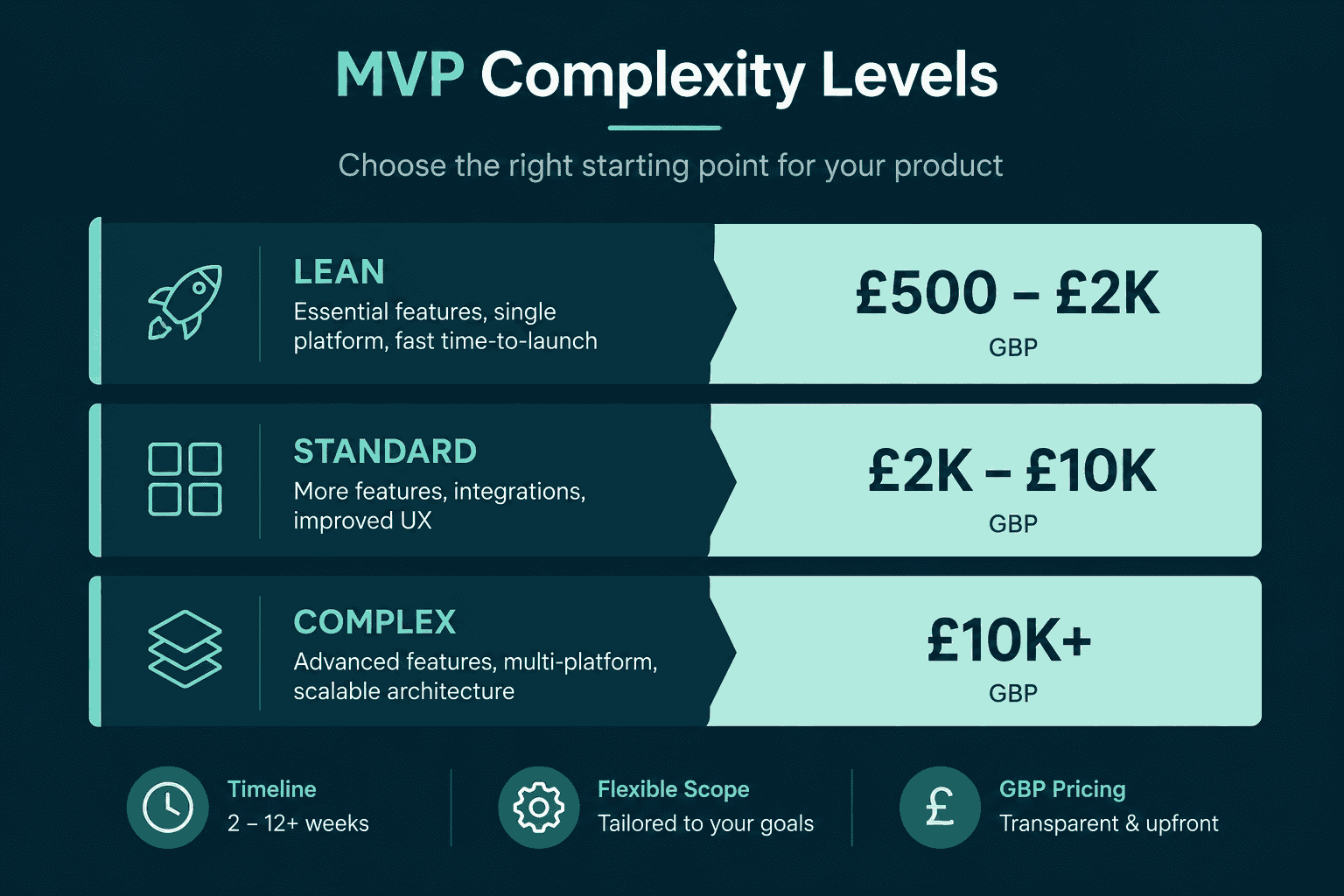
Search "MVP development cost" and you will find dozens of guides, most in US dollars, most citing wildly different ranges with little explanation of why. This is the direct companion to our guide on how to build an MVP, focused specifically on budgeting, real GBP ranges, what actually drives the number, team structure, realistic timelines, and how to scope your spend against your actual funding stage.
Scope and Cost: The Real Relationship
The single biggest driver of MVP cost is not the platform, the technology, or even the industry, it is how tightly the scope has actually been defined. An MVP built around one clearly bounded workflow, with a genuinely minimal, essential feature list, costs a fraction of what the same idea costs once "just one more feature" creeps in a dozen times before development even starts.
This is why two MVPs that sound nearly identical in a one-line pitch can differ by tens of thousands of pounds in practice. A booking app with one core flow, browse, select, confirm, is a fundamentally different, cheaper build than the same concept with staff calendars, automated reminders, and an admin dashboard bolted on because the founder decided the validation phase should also prove out the full product vision. Scope discipline is the actual cost lever most founders underuse, more than negotiating a lower day rate ever will be.
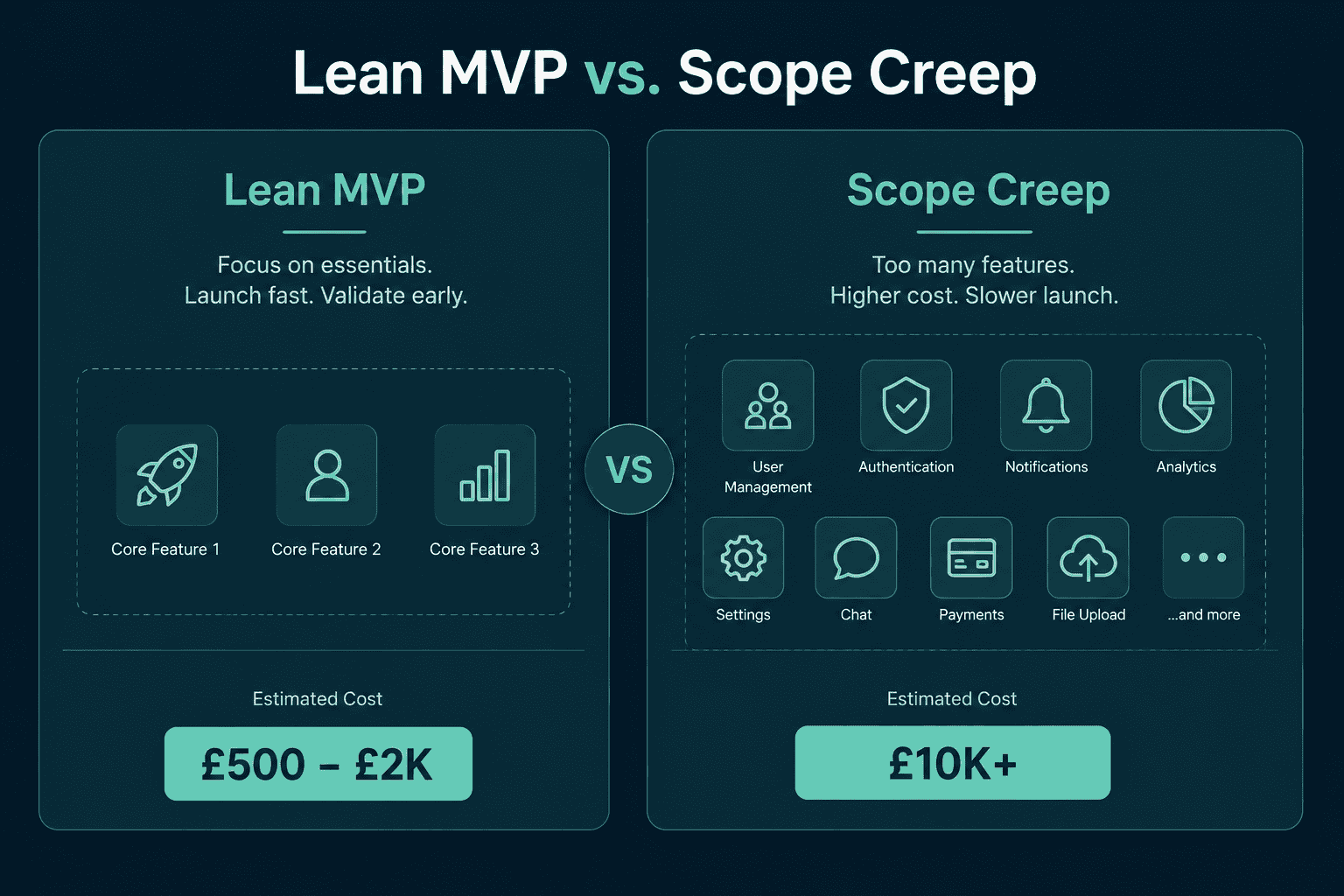
A second example makes the same point from the SaaS side. A B2B tool that helps small teams schedule shift work has a lean core, create a schedule, assign shifts, notify staff. Add multi-location support, payroll integration, a mobile app alongside the web version, and custom reporting, and the same idea has quietly tripled in scope before a single real user has confirmed the core scheduling workflow is even valuable to them. Neither version is wrong, but only one of them is actually an MVP, and the price difference between them reflects that distinction precisely, not an arbitrary markup.
Team: Who Actually Builds It, and What That Costs
Freelancer or small independent developer. The cheapest option per hour, but carries real risk for anything beyond a very simple build, single points of failure, inconsistent availability, and no genuine quality assurance process. Suits a genuinely minimal MVP with low complexity and low stakes if it needs rework.
A small agency or studio. Sits in the middle, a properly resourced team with design, engineering, and QA working together, at a cost reflecting that structure. This is where most properly built MVPs land, since it balances real engineering discipline against the budget realities of an early-stage business.
An in-house team. Makes sense once you have validated demand and expect continuous, ongoing development, not before. Hiring a full team before you know what you are actually building means paying salaries during the exact period your priorities are shifting weekly, which is expensive uncertainty most pre-validation founders cannot afford.
Offshore or nearshore teams. Can meaningfully reduce cost, but the savings need to be weighed honestly against communication friction, timezone overlap, and quality variance, since a cheaper build that needs a rebuild six months later was never actually the cheaper option.
A hybrid arrangement. Some founders combine a small in-house core, often just the founder or a technical co-founder, with an external team handling the bulk of the build. This can work well when the founder has enough technical fluency to genuinely direct the work and catch problems early, but adds real coordination overhead if that fluency is not actually there.
Timeline and What It Means for Cost
A properly scoped MVP typically takes four to eight weeks from discovery through to something real users can access, and this timeline is directly tied to cost, not a separate consideration. Rushed timelines usually mean a larger team working in parallel, which adds coordination cost rather than genuinely saving money, and timelines stretching well beyond eight weeks are almost always a sign scope has quietly grown beyond what an MVP is supposed to be, not a sign of unusual technical difficulty.
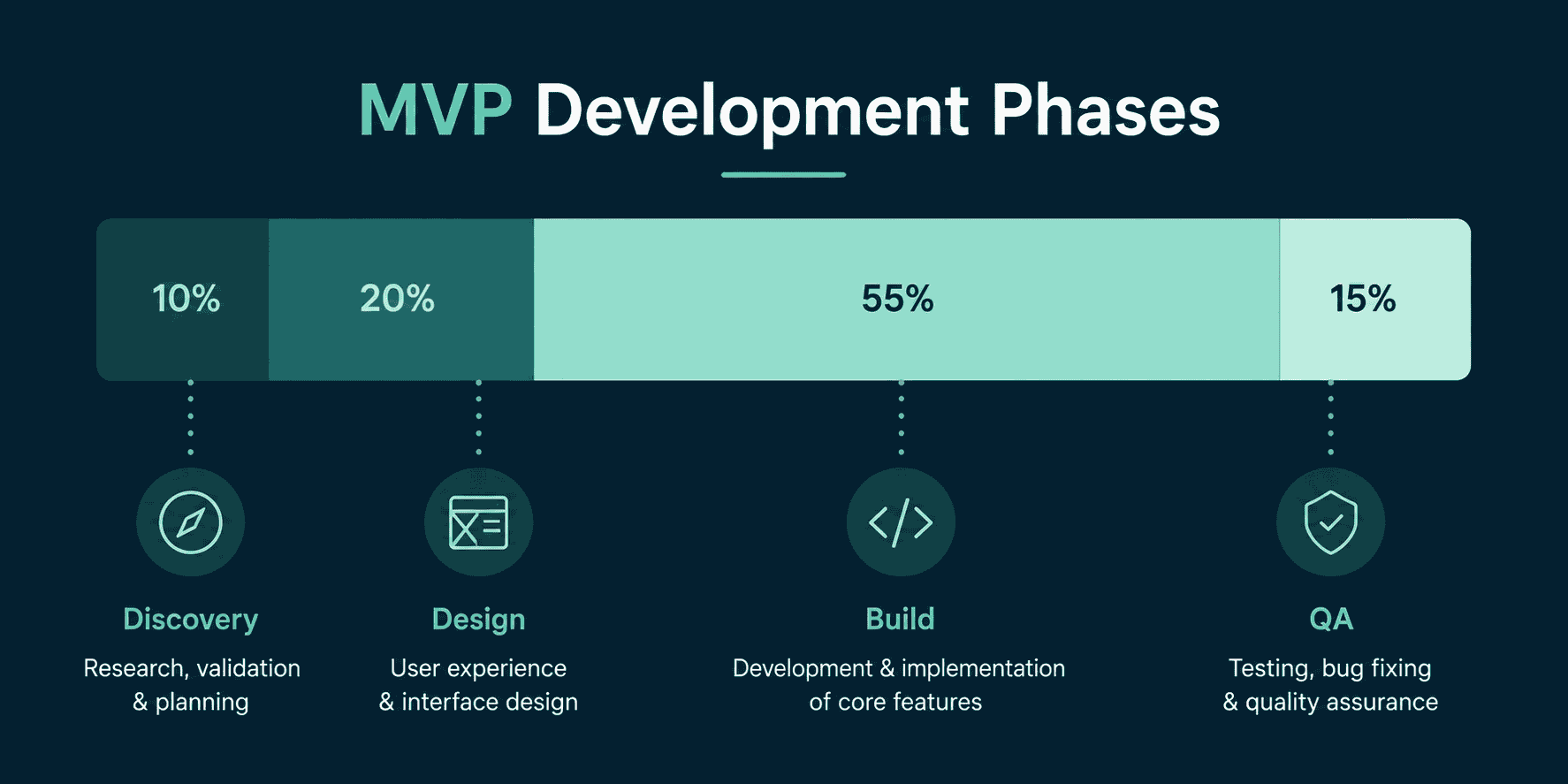
A rough breakdown of where the budget actually goes on a properly run MVP: discovery and scoping typically accounts for a modest early slice, design another meaningful portion, the core build the largest share by far, and QA and deployment the remainder. A quote with no visibility into this breakdown, just one opaque total, makes it hard to judge whether you are paying for genuine engineering discipline or just a number pulled from a generic pricing page.
Sample Ranges in GBP
| MVP type | Typical build cost | Typical timeline |
|---|---|---|
| Lean, single-workflow MVP | £15,000 to £25,000 | 4 to 6 weeks |
| Standard MVP, multiple roles or integrations | £25,000 to £40,000 | 6 to 8 weeks |
| Complex MVP, AI features or compliance needs | £40,000 to £90,000+ | 8 to 14 weeks |
These ranges hold across web, SaaS, and mobile MVPs, the underlying cost driver is integration complexity and design depth, not which platform the product happens to be built on. A quote significantly below these bands for a genuinely comparable scope is worth questioning, not celebrating, it usually means testing, post-launch support, or design quality has been quietly left out.
Worth budgeting for separately: ongoing costs after launch. Hosting, third-party services, and the inevitable post-launch fixes and small feature requests typically add fifteen to twenty-five percent of the build cost per year, a figure many founders never budget for because it does not appear on the initial invoice.
Funding-Aligned Scope
Budget should follow validated need, not simply how much capital happens to be available, and this principle should shape your MVP spend differently depending on where you actually stand.
Pre-seed or bootstrapped. Spend on the smallest defensible MVP that can genuinely validate real demand. This is not the stage to build for hypothetical future scale, and stretching a limited budget across too broad a feature set usually means validating nothing clearly. If runway is genuinely tight, it is often worth testing basic demand more cheaply first, a landing page, a small ad test, direct conversations with target users, before committing the full MVP budget, so the build itself is informed by real signal rather than pure assumption.
Seed stage. Spend on the specific things early users have actually told you matter, not a wishlist assembled because capital is now available. A funded founder who suddenly triples their MVP scope because "we can afford it now" is often making the same mistake as an underfunded founder who cuts corners, just in the opposite, more expensive direction.
Series A and beyond. By this stage the MVP question has typically already been answered, and spend shifts toward the scale-stage priorities covered in our SaaS development cost guide, reliability, compliance, and infrastructure that holds up under real, growing usage.
In Practice
This same scope discipline, spending deliberately against what actually needs validating rather than a full product vision, is exactly how we approach every early-stage engagement, which is why our own MVP timelines and typical pricing land squarely within the ranges described here. If you have an idea and want a specific, honest quote rather than a generic range, reach out and we will scope it properly before putting a number on it.
The founders who budget well for an MVP are not the ones chasing the lowest quote, they are the ones who understand what is actually driving the number, price in the real cost of the year after launch, and spend against validated need at every stage rather than whatever their current bank balance happens to allow.
FAQ
Questions, Answered.
Read next
More on MVP & Startup
Choosing the Right Development Partner for Your Startup
What early-stage founders should actually look for in a development partner, technical and product fit, communication, equity versus cash, and the red flags specific to startup engagements.
From Idea to Launch: A Realistic Product Timeline
A genuinely realistic MVP timeline, discovery, design, build, test, and launch, with real durations for each stage and what actually speeds it up or slows it down.
How Startups Should Think About Technical Debt Early
Good technical debt versus bad, building an MVP that can actually change, when refactoring is genuinely worth it, and the real cost of ignoring debt at the earliest stage.