
Resources
SaaS Development Cost: What to Budget at Each Stage
Real GBP budgets for SaaS MVP, growth, and scale stages, what team and infrastructure actually costs, and how to align spending with your funding stage.

Ahmad Saeed
Full-Stack Engineer, Devity Technologies
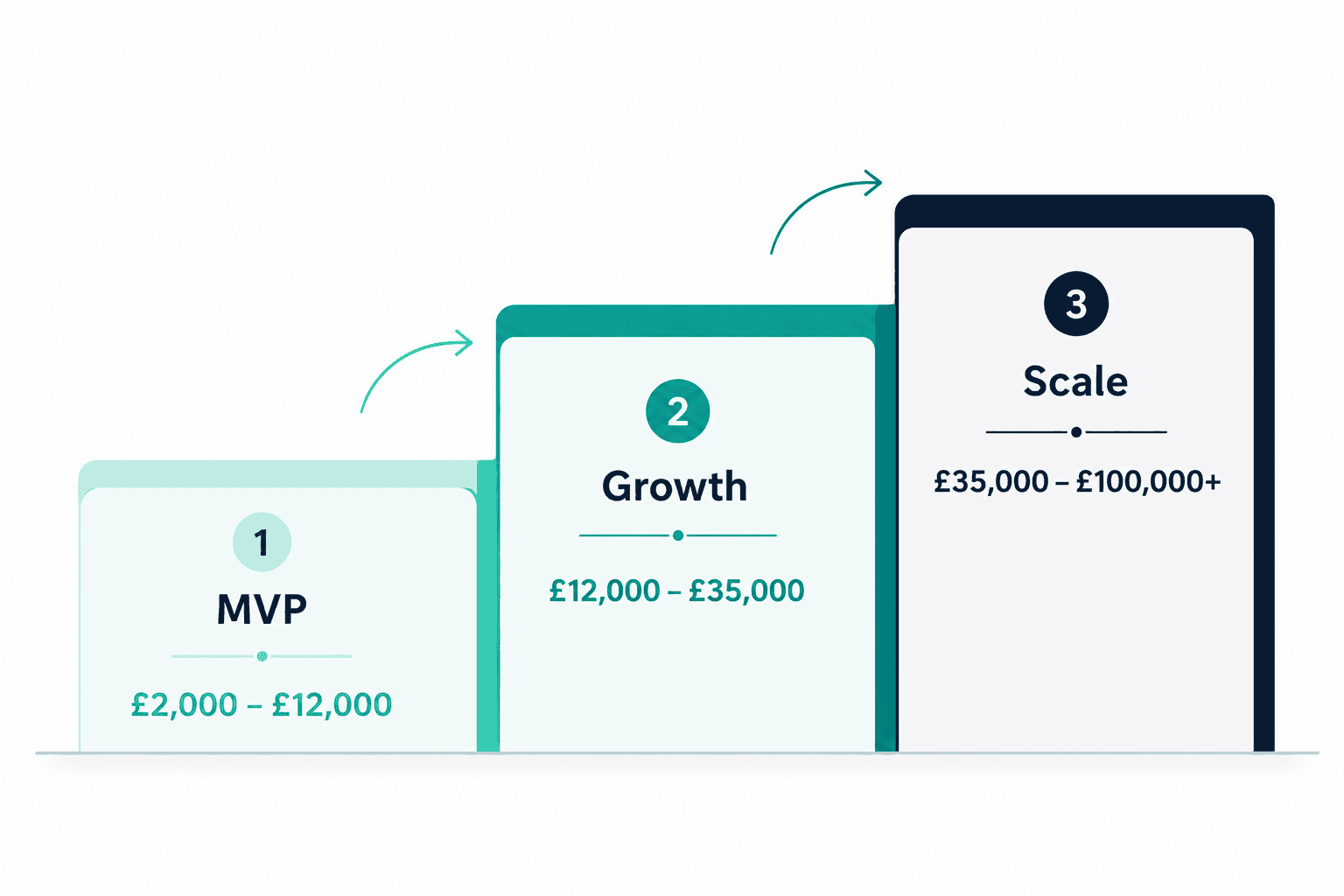
Search for SaaS development cost and most of what comes back is US-priced, generic, and disconnected from what a UK founder is actually planning against. This guide is the direct companion to our SaaS development pillar guide, focused specifically on budgeting, real GBP ranges at each stage of a SaaS product's life, what team and infrastructure actually cost, and how to align spending with where your funding actually stands.
The Three Stages, and Why They Budget Differently
SaaS spending is not one number, it is three distinct phases with different goals and different cost structures.
MVP stage. The goal is validating that real users want and will pay for what you are building, with the smallest defensible version of the product. Spending here should be tight and deliberate, since the entire point is learning cheaply, not building the finished product prematurely.
Growth stage. Once the MVP has validated real demand, spending shifts toward the features and reliability improvements that convert early users into a genuine customer base, better onboarding, more robust billing, the specific integrations customers are actually asking for.
Scale stage. Spending here shifts again, toward infrastructure that holds up under real load, stronger security and compliance work as enterprise customers start asking for it, and the engineering investment needed to keep the product reliable as usage multiplies.
Budgeting the same way across all three stages, either overspending too early or underspending once real scale needs arrive, is one of the most common and avoidable mistakes founders make.
MVP Stage: What to Actually Budget
A properly built MVP, not a disposable prototype but a genuinely usable first version, typically falls into a few tiers:
| MVP type | Typical range | What it includes |
|---|---|---|
| Lean single-workflow MVP | £15,000 to £35,000 | One core user journey, basic auth, minimal integrations |
| Standard B2B SaaS MVP | £35,000 to £70,000 | Multiple user roles, subscription billing, a small number of integrations |
| Complex MVP with real compliance needs | £70,000 to £150,000+ | Regulated industry requirements, multiple integrations, higher design investment |
Alongside the build cost, budget for infrastructure separately. At MVP scale, hosting, database, monitoring, and third-party services like payment processing and email delivery typically run a modest monthly amount, small in absolute terms but worth planning for from the start rather than discovering as a surprise recurring cost after launch.
The single most effective lever for controlling MVP cost is ruthless scope discipline, not negotiating a lower rate. A tightly scoped MVP that answers one core question, will real users adopt this and pay for it, almost always costs less and teaches you more than a broader first version trying to cover every feature you can imagine. Founders who resist the urge to build the full product vision in version one consistently end up with both a smaller invoice and a clearer picture of what to build next, since that picture comes from real usage rather than assumption.
Growth Stage: Where the Spending Shifts
Once an MVP has validated real demand, the spending pattern changes shape. Rather than one large build cost, growth-stage spending tends to be more continuous, feature development, onboarding improvements, and reliability work happening in parallel as the product matures.
A realistic growth-stage budget accounts for:
- Feature development driven by actual customer requests, not a speculative roadmap built before you had real usage data
- Billing and subscription logic maturing, moving from a simple flat-fee model to whatever pricing structure your actual customers are asking for, tiered plans, usage-based billing, annual discounts
- Onboarding investment, since activation and retention at this stage matter more to your growth than almost any single new feature
- A small but real ongoing engineering team, whether in-house or an external partner, rather than a one-off project treated as finished
Track cost against the metrics that actually matter at this stage, not just total spend. Cost per new customer acquired, activation rate after onboarding changes, and churn reduction after a reliability fix all tell you whether growth-stage spending is working, in a way that a simple monthly budget total cannot. A founder who only tracks total spend risks continuing to fund work that looks busy but is not actually moving the numbers that determine whether the business survives to the next stage.
Scale Stage: What Changes
At scale, the cost structure shifts again, and the biggest changes are often invisible in a simple feature list.
Infrastructure cost grows with usage, not linearly with your team size, meaning your hosting and third-party service bill can grow meaningfully even without adding new features, purely from serving more customers reliably.
Compliance and security work becomes a real, ongoing cost, not a one-time item, as enterprise customers begin asking for SOC 2, stronger audit logging, or specific data residency guarantees as part of procurement.
Engineering investment shifts toward reliability, monitoring, incident response, and the kind of architectural hardening that does not show up as a visible new feature but directly protects the revenue you already have.
Founders who underbudget at this stage often do so because scale-stage costs are less visible than a feature roadmap, they show up as infrastructure bills, engineering time spent on reliability rather than new features, and compliance work that customers demand rather than something you chose to build.
Team and Infrastructure Costs, Realistically
Whether you build in-house or with an external partner, the underlying cost categories are the same:
- Engineering time, the largest single cost category at every stage, whether billed as salaries or an external team's day rate
- Design, often underbudgeted relative to its actual impact on activation and retention
- Infrastructure and hosting, growing with usage rather than staying fixed
- Third-party services, payment processing fees, email delivery, monitoring and analytics tools, which individually look small but add up meaningfully at scale
- QA and testing, which scales with how much is actually at stake if something breaks, a consumer tool with low stakes needs less than a product handling sensitive financial or health data
Whether an in-house team or an external development partner is the more cost-effective route at your current stage depends heavily on how continuous your development needs are. Hiring a full in-house team before you have validated demand often means paying salaries during the exact period your priorities are still shifting week to week. An external partner offers more flexibility at the MVP and early growth stages, while an in-house team tends to become more cost-effective once your product has stabilised into a steady, ongoing development rhythm rather than rapid, exploratory iteration. Many SaaS founders end up somewhere in between, an external team for the initial build and early growth, transitioning toward in-house ownership as the product and team matures.
Budgeting Against Your Funding Stage
Budget should follow validated need, not simply available cash. A few principles worth holding onto as your funding situation changes:
Pre-seed or bootstrapped. Spend on the smallest defensible MVP that can genuinely validate demand. This is not the stage to build for hypothetical future scale.
Seed stage. Spend on the specific things your early users have actually told you matter, better onboarding, the integrations they are asking for, the reliability issues they have actually hit. Resist the temptation to build a long wishlist just because you now have capital.
Series A and beyond. This is typically where scale-stage investment genuinely becomes justified, stronger infrastructure, compliance work for enterprise customers, a larger engineering team. Even here, the discipline of spending against validated need rather than a speculative roadmap remains the difference between efficient growth and burning capital on features nobody asked for.
In Practice
This is the direct budgeting companion to the architecture and stack decisions covered in our SaaS development pillar guide, read together, the two cover both what to build and what it should actually cost at each stage. If you want a specific, honest budget for your own SaaS product rather than a generic range, our SaaS application development service is a good place to start that conversation.
The founders who budget well for SaaS development are not the ones who spend the least, they are the ones who spend the right amount at the right stage, tight and deliberate at MVP, responsive to real signal during growth, and genuinely invested in reliability once scale demands it.
FAQ
Questions, Answered.
Read next
More on SaaS Applications
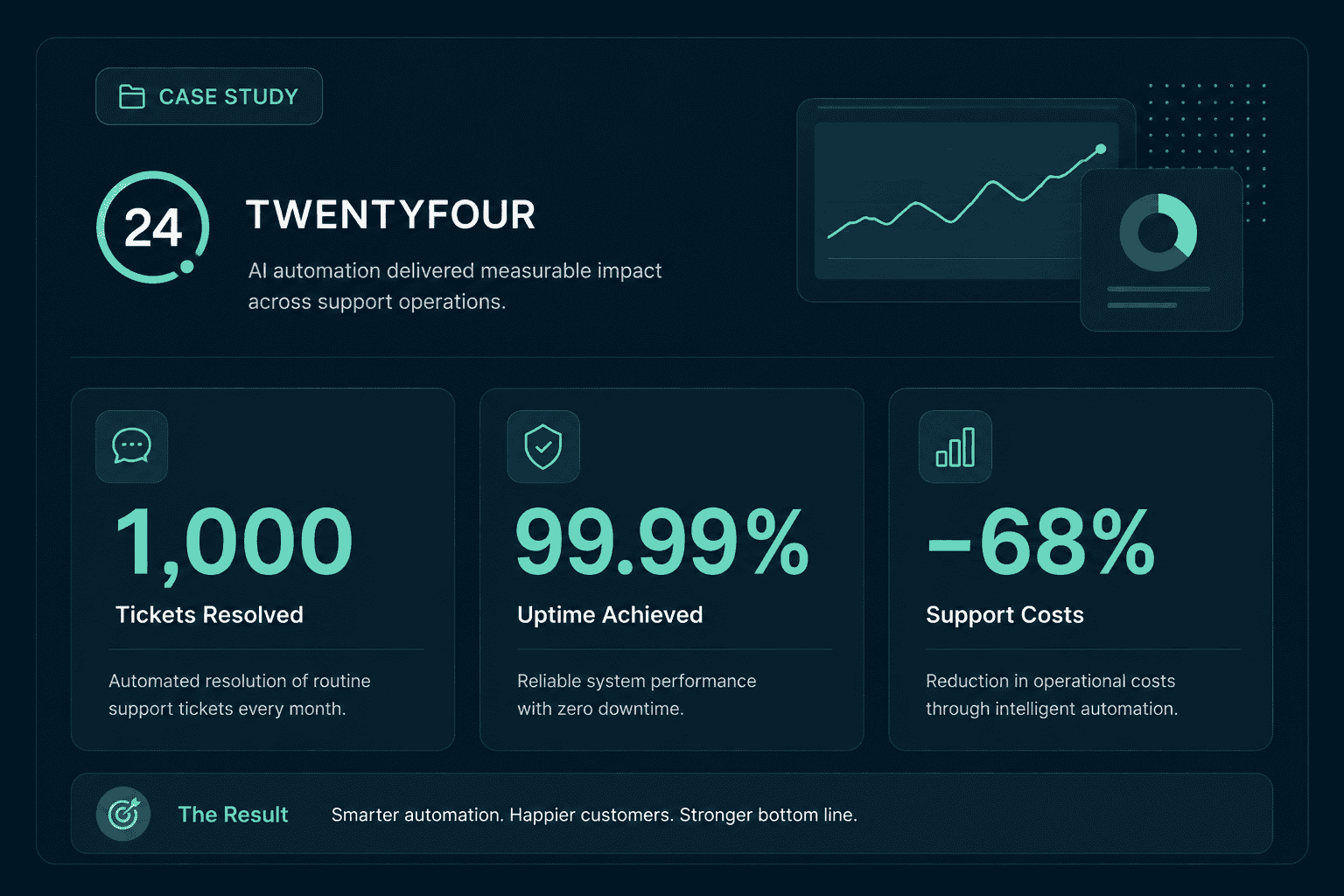
How We Built a High Performance SaaS Platform for a UK Client
A real case study: how TwentyFour's SaaS platform was rebuilt to handle real growth, the architecture behind it, and the results after launch.
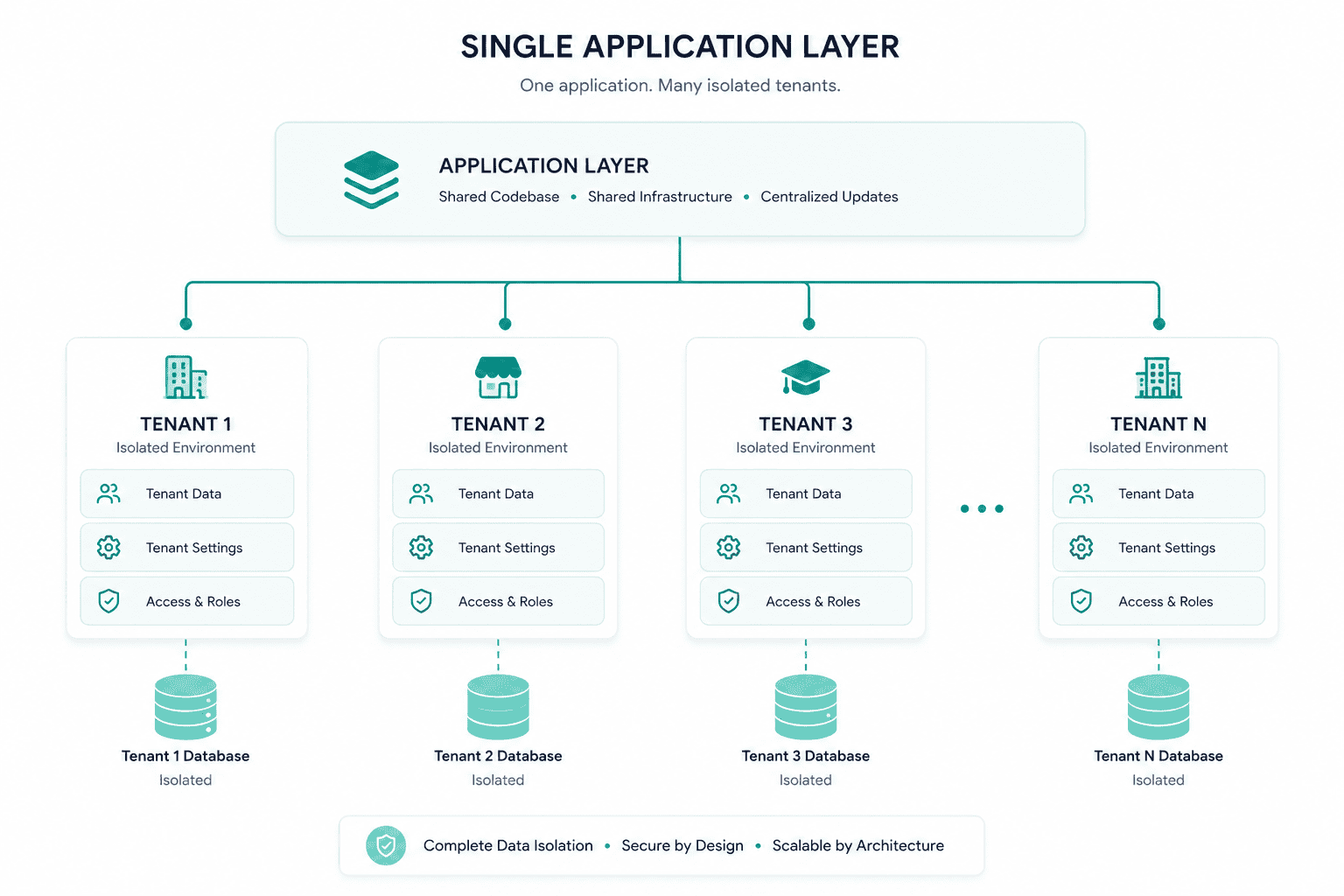
SaaS Development: How to Build a Scalable Product in 2026
A practical guide to SaaS architecture, multi-tenancy, stack choice, and the real path from MVP to a product that scales, plus what it actually costs in the UK.
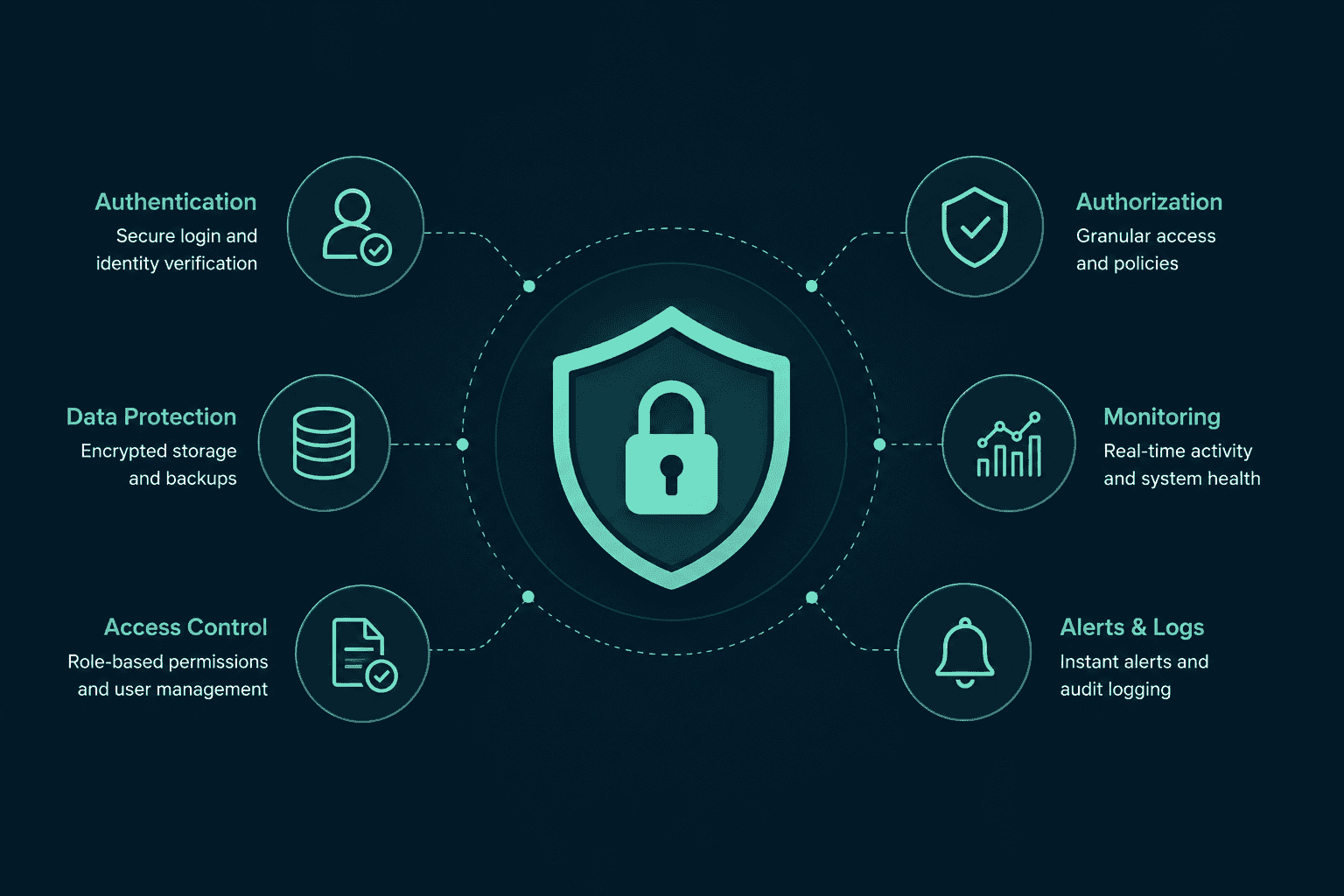
Web App Security Essentials for B2B Products
The real security risks B2B web applications face in 2026, authentication and data protection done properly, monitoring, and where compliance requirements overlap with good engineering.