
Resources
Web App Security Essentials for B2B Products
The real security risks B2B web applications face in 2026, authentication and data protection done properly, monitoring, and where compliance requirements overlap with good engineering.

Ahmad Saeed
Full-Stack Engineer, Devity Technologies
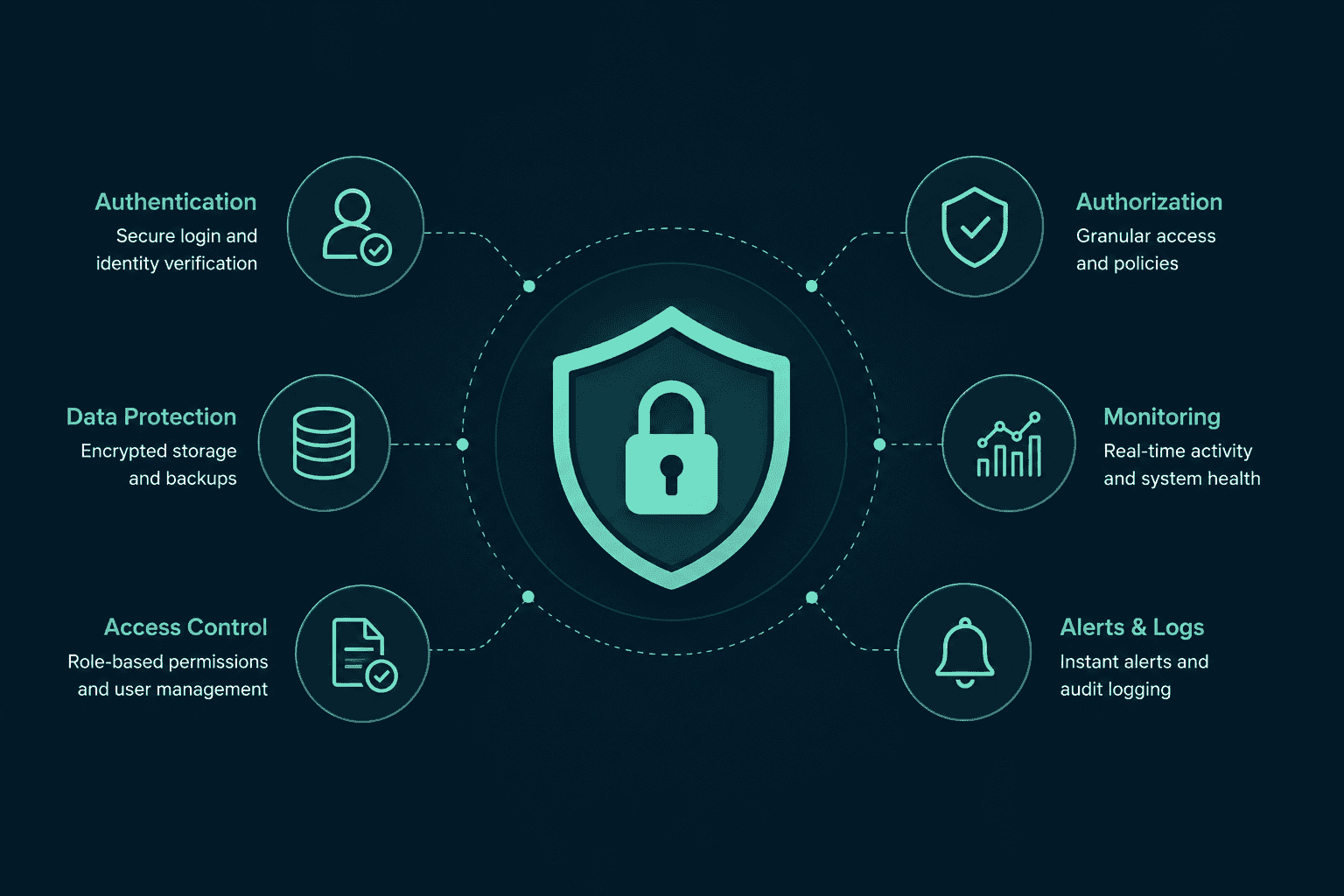
Security gets treated as an afterthought on far too many B2B products, addressed only once a prospective customer's procurement team asks a question nobody had a ready answer for. This guide covers the real risks worth taking seriously, authentication done properly, data protection that goes beyond encryption as a checkbox, monitoring that actually catches problems, and where compliance requirements overlap with practices you should be following anyway.
Common Risks Worth Actually Understanding
The OWASP Top 10, the industry's standard reference for the most critical web application security risks, remains the right starting point, and a few categories deserve specific attention for B2B products.
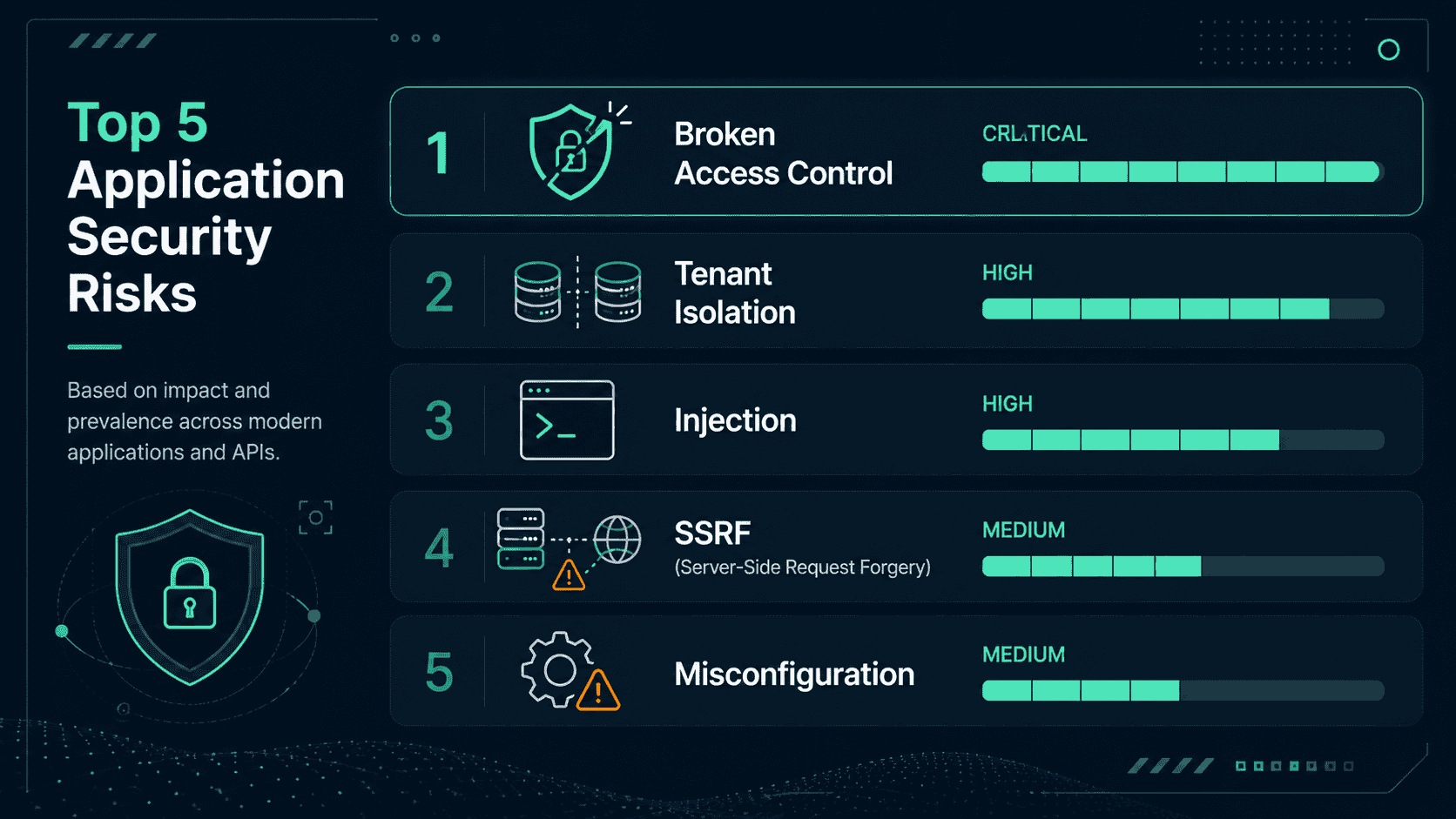
Broken access control has held the top spot for years, and testing consistently finds it present in the vast majority of applications assessed. This is what happens when a user can access data or perform an action they should not be permitted to, often through something as simple as changing an ID in a URL and finding no server-side check preventing access to another user's resource. The fix is not obscuring identifiers, that only makes exploitation marginally less obvious, it is enforcing authorization on every single request at the server, checking explicitly that the authenticated user actually has permission for the specific resource being requested.
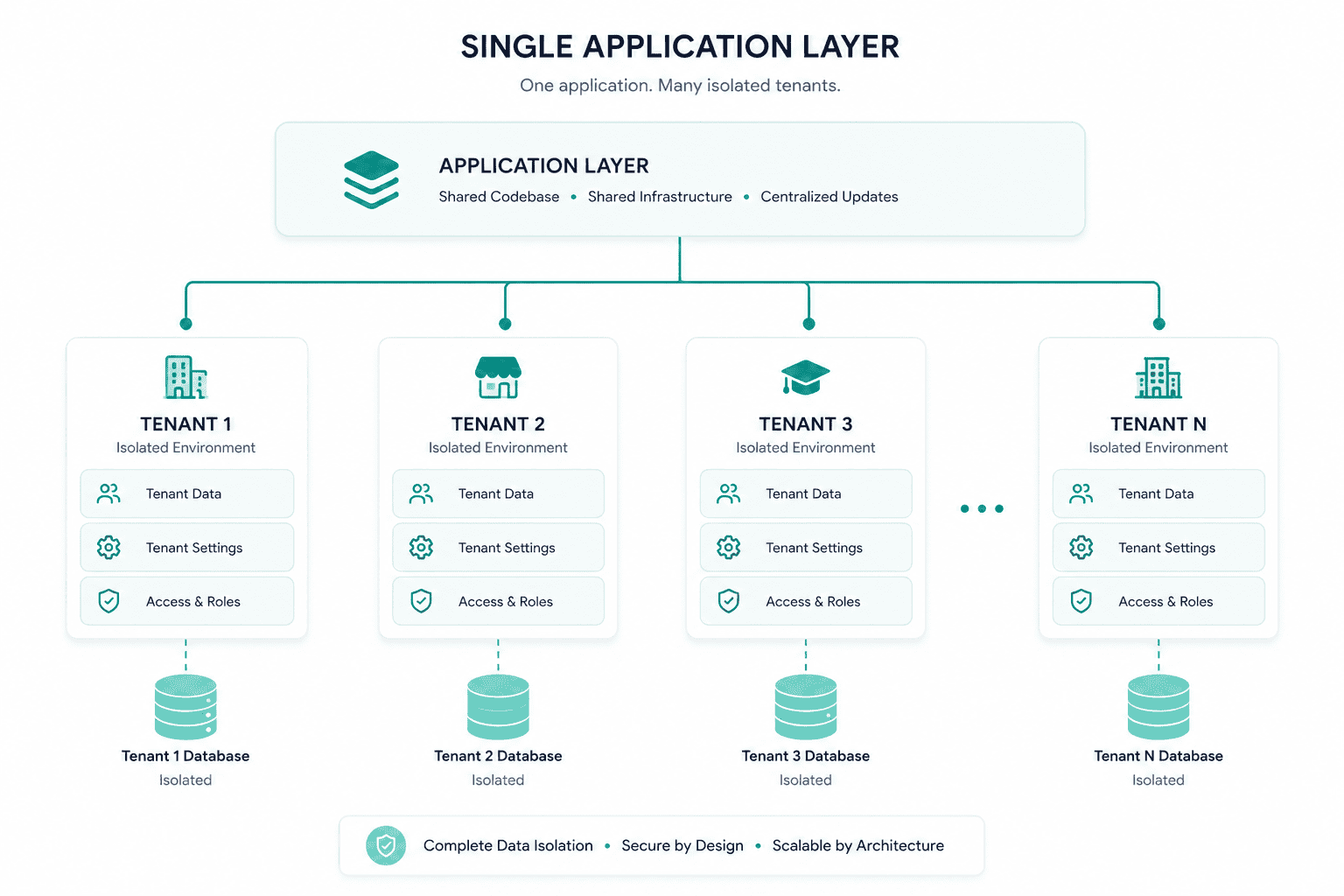
Tenant isolation failures deserve particular attention for any multi-tenant SaaS product specifically. This is a specialised, especially serious version of broken access control, where a missing or incorrectly enforced check allows one customer's data to become visible to another. The consequence is disproportionate to almost any other vulnerability category, a single mistake here can expose an entire customer's dataset, not just one user's record.
Injection attacks have evolved well beyond the classic SQL injection most developers learned about years ago, now extending to NoSQL queries, ORM layers, and other interpreters a modern application's stack commonly includes. The underlying principle has not changed, never trust input, validate and sanitise everything server-side, but the surface area has genuinely grown as applications have become more architecturally complex.
Server-side request forgery is a rising concern specifically because of how common cloud-native, microservice-heavy architectures have become, since these designs often create more opportunities for a request to be tricked into reaching an internal system it should never have access to.
Security misconfiguration rounds out the categories most worth specific attention, default credentials left unchanged, unnecessary services exposed, verbose error messages that leak internal implementation details to an attacker probing for weaknesses. These are rarely sophisticated attacks, they exploit ordinary oversights that a proper configuration review catches easily, which is exactly why they remain so common despite being so preventable.
Authentication Done Properly
Authentication is the layer worth investing the most architectural care in, since nearly every serious breach traces back to a failure here.
Multi-factor authentication has moved from an advanced feature to a baseline expectation, particularly for mid-market and enterprise buyers, who now routinely ask about it during procurement rather than treating it as a nice-to-have.
Tenant context propagation, for multi-tenant products specifically, is worth understanding as a security boundary, not just a data-modelling detail. When a user authenticates, the token issued should carry their tenant ID, role, and permissions, and every downstream system should read that context from the token itself rather than trusting a value passed separately by the client, which could be manipulated.
Centralised, consistent authorization across the whole product, rather than scattered permission checks implemented differently in different parts of the codebase, meaningfully reduces the chance of a gap being missed. A deny-by-default posture, where access is refused unless explicitly granted, is the safer default than the reverse.
Session management deserves the same care as the initial login itself. Sessions should expire after a reasonable period of inactivity, tokens should be invalidated properly on logout rather than simply discarded client-side, and a compromised session should be revocable without requiring every other user's session to be affected. This is one of the areas most often left as a framework default without any real thought given to whether that default actually fits the product's risk profile.
Data Protection Beyond the Checkbox
Encryption at rest and in transit is table stakes, genuinely necessary but not sufficient on its own. Encrypting data that is then exposed through a broken access control vulnerability protects against one class of attacker while doing nothing against the far more common failure mode.
Data minimisation is underused as a security practice, not just a privacy one. Data your product never collects or never retains cannot be exposed in a breach, and being deliberate about what is genuinely necessary to store, and for how long, reduces your actual risk surface directly.
Secrets management deserves specific attention, API keys, database credentials, and similar secrets should never live in source code or plain configuration files, and should be rotated on a defined schedule, not left unchanged indefinitely simply because nothing has gone wrong yet.
Third-party dependencies are worth treating as part of your actual attack surface, not someone else's problem. Every library, package, and external service your product depends on is a potential vector, and supply chain security, keeping dependencies patched and genuinely tracking what your product actually relies on, has become a significant concern in its own right as applications have grown more dependent on external code.
Monitoring That Actually Catches Problems
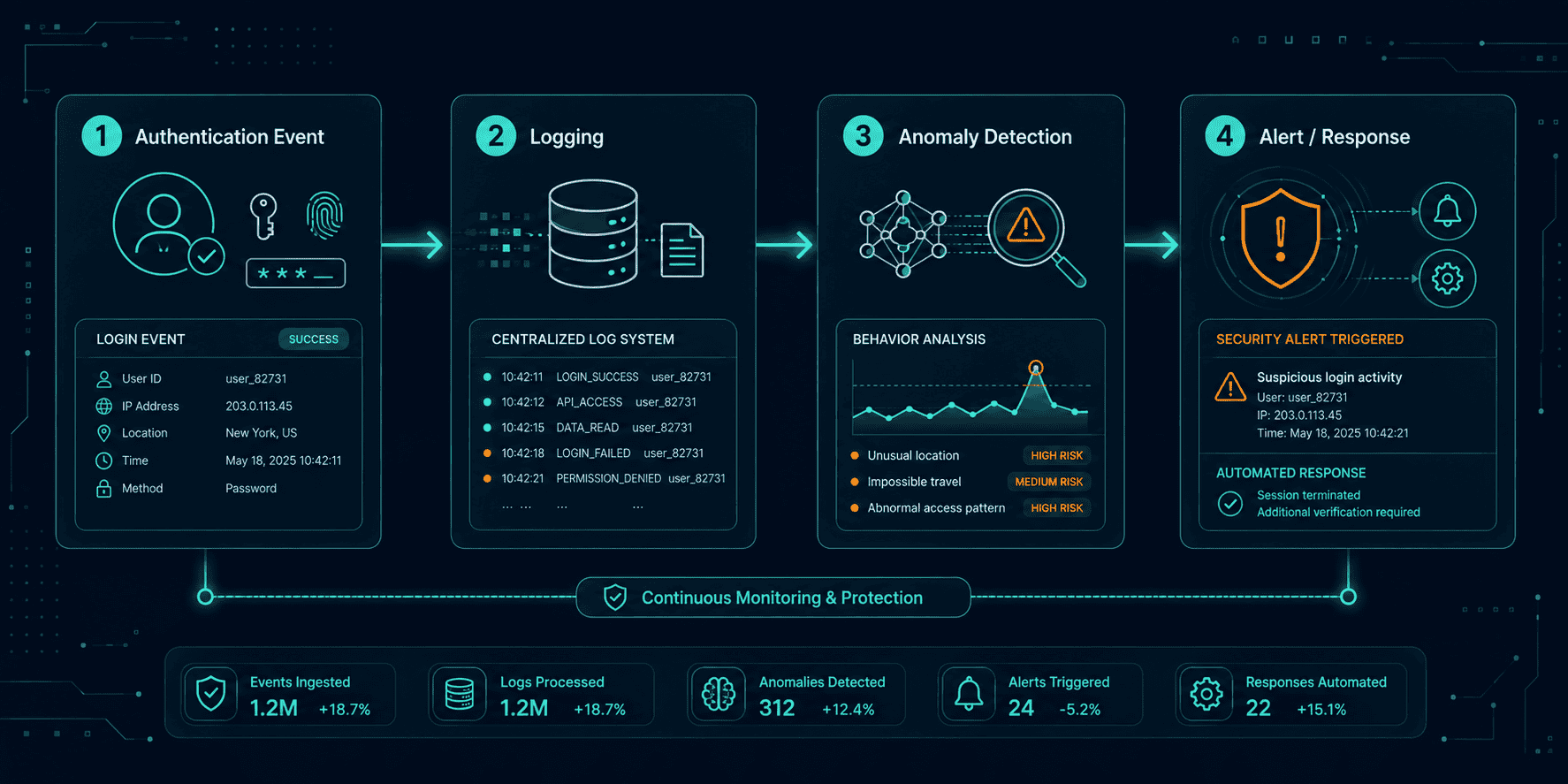
A security posture with no monitoring behind it only reveals its gaps after something has already gone wrong. Real, useful monitoring includes logging authentication events and access-control decisions in a way that can be audited after the fact, alerting on genuinely unusual patterns, repeated failed logins, access attempts outside normal usage patterns, rather than generating so much noise that real signals get lost in it, and having an actual, written incident response plan, even a simple one, rather than improvising for the first time during a real incident.
Regular security testing, automated scanning integrated into the development pipeline alongside periodic manual review, catches a meaningful share of common issues before they reach production. Automated tools alone are not sufficient, they reliably catch known vulnerability patterns but consistently miss logic flaws specific to how a particular product actually works, which is why manual review by someone who understands the product's specific business logic remains necessary alongside automated scanning, not instead of it.
The Compliance Overlap
This is worth naming explicitly, since it changes how security investment should be framed internally: the practices that constitute good security engineering, encryption, access control, audit logging, monitoring, are largely the same practices that satisfy most compliance frameworks, GDPR, SOC 2, and similar standards.
This means security work done properly from the start is not separate from future compliance work, it is the substance of it. A product that has genuinely implemented strong authentication, proper tenant isolation, encryption, and audit logging is most of the way toward a compliance certification already, the remaining work is largely documentation and formal verification of practices that already exist, rather than a disruptive retrofit. Products that treat security as an afterthought tend to face both problems at once later, a genuine security gap and a compliance gap, solved together under time pressure once an enterprise customer's procurement process demands both.
In Practice
Security is built into every product we deliver from the architecture stage, not added as a separate phase once the core build is finished, which is consistent with the tenant isolation and access control practices described throughout this guide. If you want an honest read on where your own product's actual security gaps are, our SaaS application development service is a good place to start that conversation directly.
The products that hold up under real scrutiny, whether from an attacker, an auditor, or a security-conscious enterprise customer during procurement, are not the ones with the most impressive security page on their marketing site, they are the ones where access control, authentication, and monitoring were treated as core engineering from day one, not bolted on once someone finally asked.
FAQ
Questions, Answered.
Read next
More on SaaS Applications
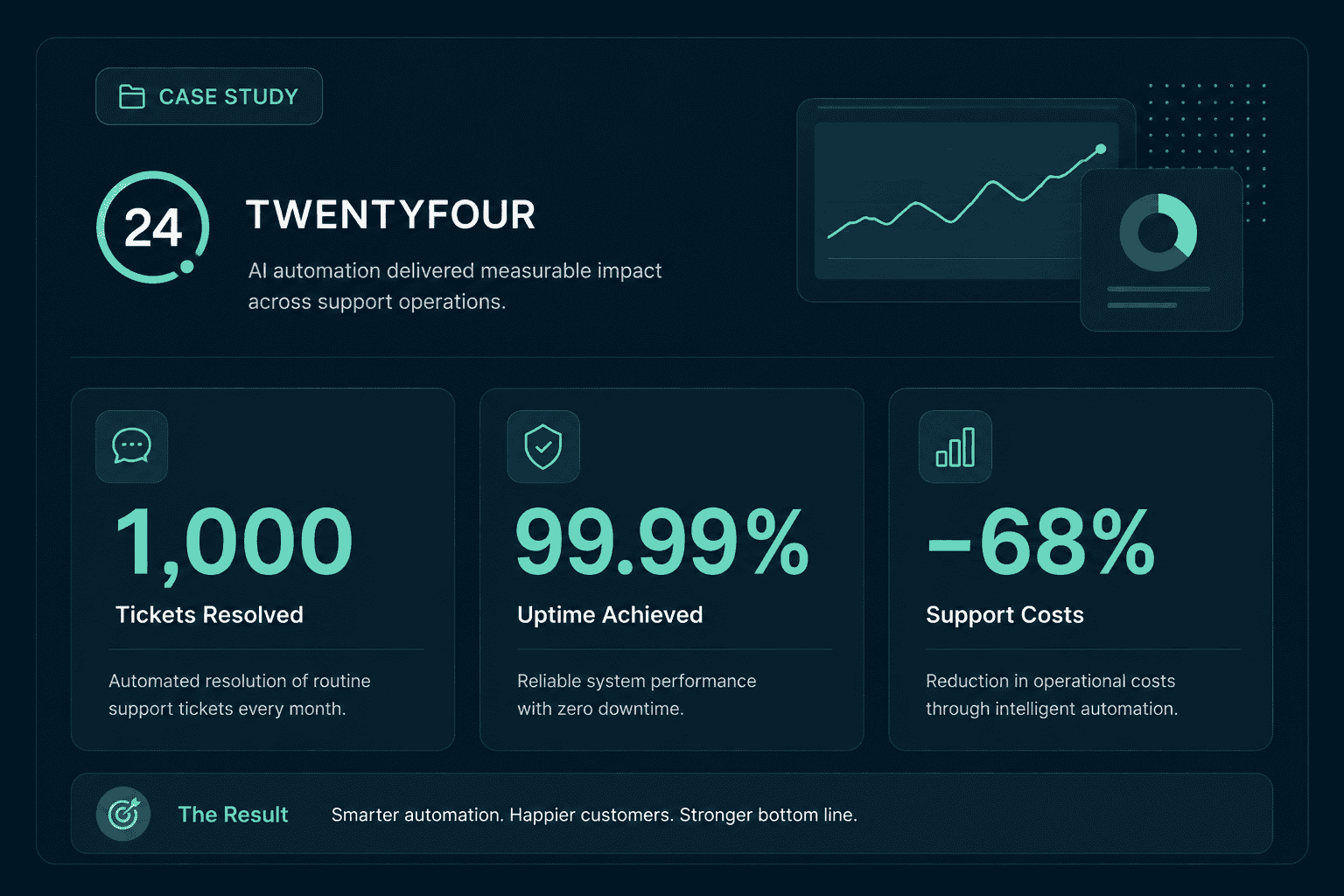
How We Built a High Performance SaaS Platform for a UK Client
A real case study: how TwentyFour's SaaS platform was rebuilt to handle real growth, the architecture behind it, and the results after launch.

SaaS Development Cost: What to Budget at Each Stage
Real GBP budgets for SaaS MVP, growth, and scale stages, what team and infrastructure actually costs, and how to align spending with your funding stage.
SaaS Development: How to Build a Scalable Product in 2026
A practical guide to SaaS architecture, multi-tenancy, stack choice, and the real path from MVP to a product that scales, plus what it actually costs in the UK.