
Resources
SaaS Development: How to Build a Scalable Product in 2026
A practical guide to SaaS architecture, multi-tenancy, stack choice, and the real path from MVP to a product that scales, plus what it actually costs in the UK.

Ahmad Saeed
Full-Stack Engineer, Devity Technologies
Search "SaaS development company UK" and you will find the same page, over and over, with different logos on it. A list of "top agencies," a wall of superlatives (99% success rate, ISO-certified, 100+ platforms shipped), and almost no actual explanation of what building a SaaS product well actually requires. That gap is what this guide fills. Not a company ranking, but a real look at the architecture decisions, the stack, the path from MVP to something that scales, what it costs, and what security actually needs to matter early on.
What Makes SaaS Development Different From Building a Website
A SaaS product is not a website with a login screen bolted on. It is a piece of infrastructure that has to hold multiple customers' data safely apart from each other, bill them on a recurring basis, handle their differing permission levels, and stay reliable as usage grows unevenly across your customer base. Get any one of those wrong early, and it tends to surface at the worst possible time, usually right as the product starts gaining real traction.
That is the central tension in SaaS development: the decisions that feel like premature optimisation in month one are often the exact decisions that save a rebuild in month twelve.
Architecture: The Decisions That Actually Matter
Before any code gets written, a handful of architectural choices shape everything that follows.
Data model and tenant isolation. How you separate one customer's data from another's is arguably the single most consequential decision in the whole build. Get it wrong, and every feature you add afterward inherits the risk.
Synchronous versus event-driven processing. A simple SaaS product can get away with handling everything as a direct request-response cycle. As soon as you have background jobs, notifications, or anything that should happen without the user waiting, an event-driven layer becomes necessary, and retrofitting one later is meaningfully harder than designing for it from the start.
API-first versus tightly coupled. Building your core product logic behind a proper API, even if you only have one front end consuming it today, keeps the door open for a mobile app, a partner integration, or a public API later, without a rewrite.
Authentication and session strategy. Deciding early whether you need single sign-on, whether sessions live in a database or a signed token, and how password resets and multi-factor authentication are handled shapes a surprising amount of downstream complexity. Retrofitting SSO for an enterprise customer six months after launch is a common, avoidable scramble.
Configuration and feature flagging. Most SaaS products eventually need to turn features on or off per customer, whether for pricing tiers, gradual rollouts, or enterprise-specific customisation. Building a simple feature-flag layer early, even a basic one, is far cheaper than hardcoding tier logic throughout the codebase and untangling it later.
None of these decisions need to be perfect on day one. What matters is making them consciously, with an understanding of what changing your mind later will cost, rather than defaulting to whatever is fastest to ship this week and discovering the real cost of that choice under production load.
Multi-Tenancy: The Pattern Most Guides Skip Over
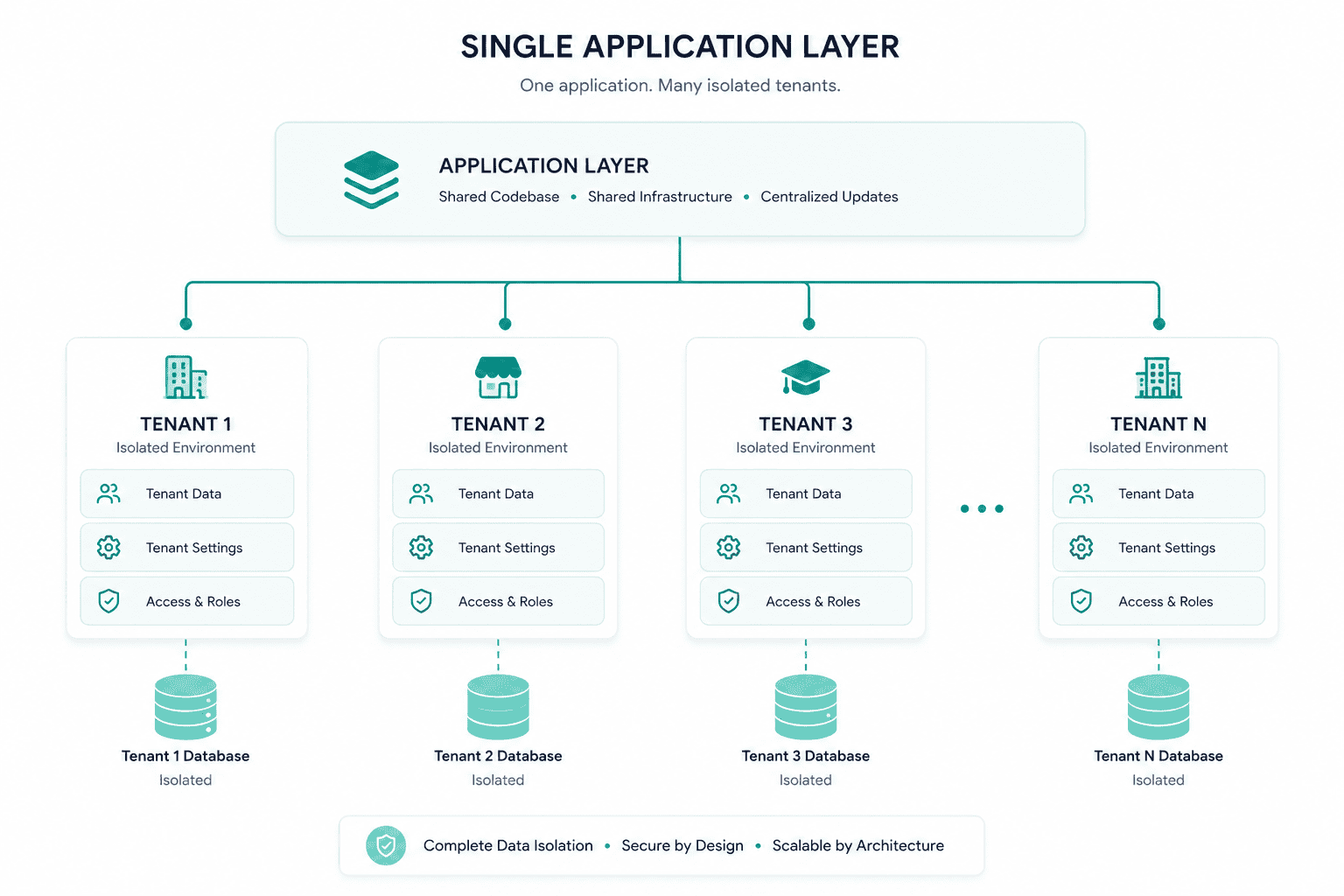
Multi-tenancy is the architecture that lets a single application instance serve many separate customers (tenants) while keeping their data properly isolated. There are three common approaches, and the right one depends on your actual constraints, not a general best practice:
| Approach | How it works | Best for |
|---|---|---|
| Shared database, shared schema | All tenants share the same tables, separated by a tenant ID column on every row | Fast to build, lowest infrastructure cost, works well for most early-stage B2B SaaS |
| Shared database, separate schemas | Each tenant gets their own schema within one database | A middle ground when some tenants need stronger isolation without full infrastructure duplication |
| Separate databases per tenant | Each tenant gets a fully isolated database | Enterprise customers with strict compliance requirements, or usage patterns that vary too wildly to share resources safely |
Most early-stage SaaS products are well served by the shared-schema approach, since it is the cheapest to run and the simplest to reason about. The mistake worth avoiding is choosing full per-tenant database isolation too early, since it multiplies your infrastructure and migration overhead well before you have the customer base to justify it.
Multi-tenancy also has direct implications for billing. If you are using Stripe or a similar provider for subscription billing, your tenant model needs to map cleanly onto how you represent customers, seats, and usage in your billing system. A common mistake is designing the tenant model and the billing model separately, then discovering they do not line up once real customers with real edge cases (a customer wanting to split one account into two, or merge two into one) start using the product. Deciding upfront how a "tenant" maps to a "billing account" avoids a genuinely painful migration later.
The Stack: What Actually Holds Up in Production
Framework choice generates a lot of debate that mostly misses the point. What actually matters is whether your stack lets you move quickly early on without locking you into decisions that are painful to reverse later.
A stack built around Next.js, with server-side rendering and edge deployment, has become a strong default for a genuine reason: it lets your marketing site, your authenticated application, and your API layer live in one coherent codebase, with the performance and SEO benefits of server rendering built in rather than bolted on. Paired with a properly indexed relational database and a background job queue for anything asynchronous, this combination handles the large majority of SaaS products without needing exotic infrastructure.
Where teams tend to overcomplicate things is reaching for a microservices architecture before there is any real reason to split the system apart. A single, well-structured application (sometimes called a modular monolith) is almost always the right starting point, and splitting services apart is a decision to make when a specific part of the system has genuinely outgrown the rest, not a default to start with.
On the database side, a relational database (Postgres is the common, well-supported default) handles the vast majority of SaaS data modelling needs cleanly, including multi-tenant patterns, without needing a specialised database engine. The cases where a different choice makes sense, a document store for genuinely unstructured data, or a dedicated time-series database for high-volume metrics, tend to be additions alongside a relational core rather than replacements for it. Choosing an exotic database because it looks impressive on a technology page, rather than because the data actually demands it, is a common way early-stage teams add operational complexity they do not yet need.
From MVP to Something That Scales
The honest path from MVP to a scalable product looks less like a rewrite and more like a series of deliberate upgrades, applied when the signal to upgrade actually appears:
- Launch with the shared-schema multi-tenant model, a synchronous request-response flow, and the simplest hosting setup that meets your uptime needs.
- Add a background job queue the first time a feature needs to happen without the user waiting, not before.
- Introduce caching at the specific point where a particular query or page is measurably slow, not as a blanket precaution.
- Split out a service only when one part of the system has genuinely different scaling needs from the rest, for example a reporting engine that runs heavy queries separate from your core application.
- Move toward stronger tenant isolation only when a specific customer's compliance requirements or usage pattern actually demands it.
The businesses that get this wrong tend to do one of two things: over-engineer for scale they do not have yet, burning months on infrastructure nobody is using, or ignore clear warning signs (slow queries, one tenant affecting another, a team afraid to deploy) until the product breaks under real load.
What SaaS Development Actually Costs in the UK
Realistic ranges, based on scope:
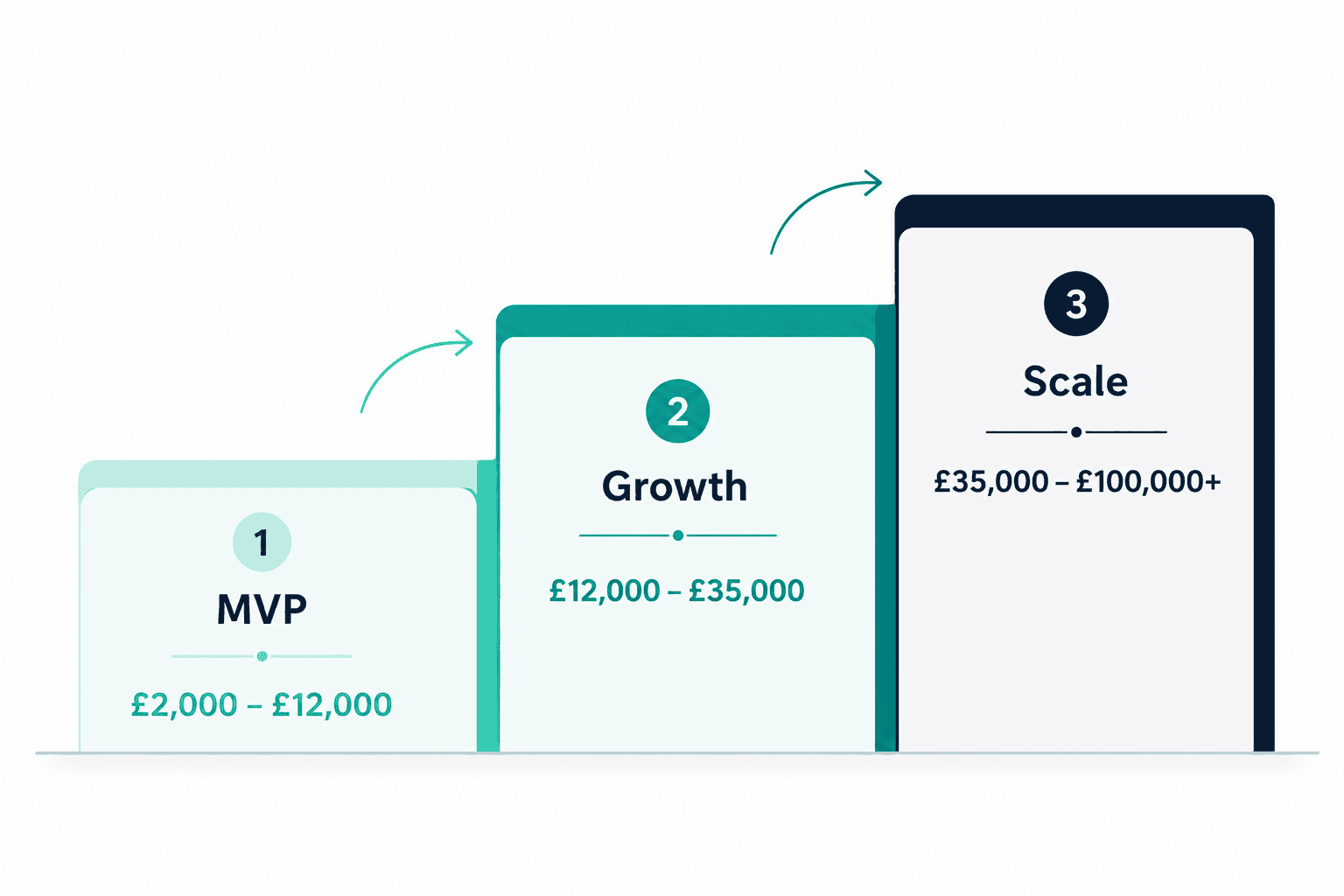
- A lean MVP (core workflow, basic auth, simple billing): typically in the low tens of thousands of pounds
- A fuller first version (multi-tenancy, role-based access, Stripe subscription billing, onboarding flows): meaningfully higher, often reaching well into five figures depending on integration complexity
- An established product scaling to enterprise customers (SSO, audit logging, stronger tenant isolation, compliance work): the cost driver shifts from initial build to ongoing engineering investment as requirements grow
The number that actually matters is not the headline figure but what is included in it. A quote that excludes billing integration, onboarding flows, or basic security practices will look cheaper and cost more once those gaps surface after launch.
Ongoing cost matters just as much as the initial build, and is where many founders underestimate the real total. Hosting, third-party API costs (email delivery, payment processing fees, monitoring tools), and ongoing engineering time for bug fixes and small feature requests typically add up to a meaningful recurring cost, often underestimated by teams focused entirely on the upfront build price. A realistic budget accounts for at least the first six to twelve months of this ongoing cost, not just the launch invoice.
A few of the most common, avoidable mistakes worth naming directly:
- Treating the MVP as disposable, then being surprised when it needs a full rebuild. An MVP built with reasonable architecture discipline can usually be extended rather than replaced. One built purely for speed, with no thought given to tenant isolation or data modelling, often cannot.
- Choosing a pricing model before the product's usage patterns are understood. Per-seat pricing, usage-based pricing, and flat-tier pricing each imply different things about what your system needs to track and bill accurately. Locking this in too early, then discovering it does not match how customers actually use the product, is a common and costly correction.
- Underinvesting in onboarding. A technically excellent SaaS product with a confusing first-run experience will lose users before they ever see its value. Onboarding is not a cosmetic afterthought, it is directly tied to activation and retention numbers that investors and customers both care about.
Security: What Actually Matters Early
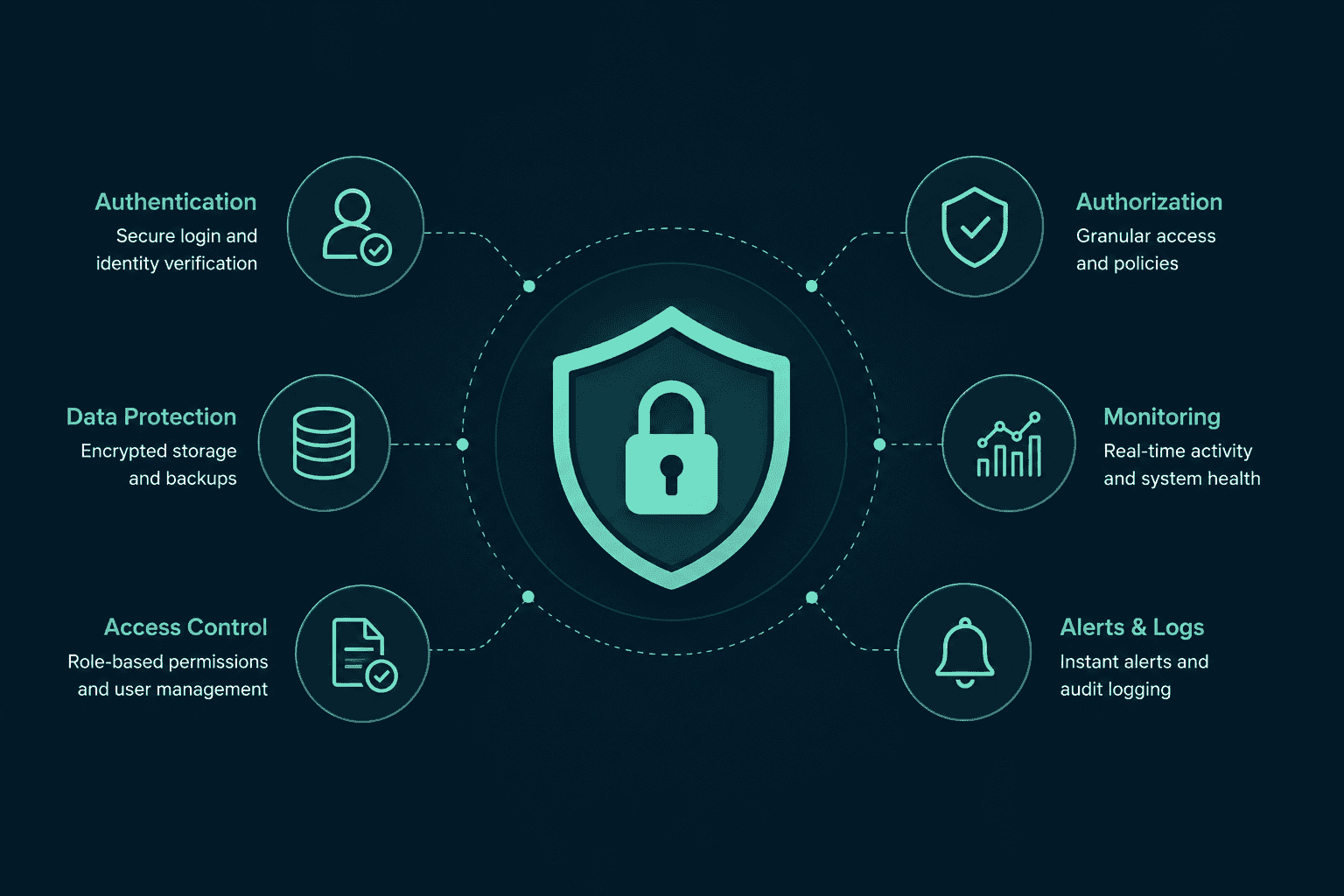
Early-stage SaaS security is less about a long compliance checklist and more about a small number of practices that genuinely reduce risk:
- Proper tenant data isolation, enforced at the database query level, not just in application logic that could be bypassed by a bug
- Encryption of data both at rest and in transit
- Role-based access control that is actually tested, not just designed
- A real, written incident response plan, even a simple one, rather than no plan at all
Formal frameworks like SOC 2 typically become relevant once enterprise customers start asking for them as part of procurement, not before. Building toward that certification too early, before you have customers requiring it, is usually time better spent elsewhere.
How to Tell If a Development Partner Actually Knows SaaS
Given how crowded the "SaaS development company UK" search results are with agencies making similar claims, a few direct questions cut through the noise quickly:
Ask how they would design your tenant model, specifically. A team that has genuinely built multi-tenant SaaS before will have an immediate, opinionated answer, shared schema versus separate schema versus separate database, and why, based on your actual constraints. A vague answer about "best practices" without engaging your specific situation is a warning sign.
Ask what happens when you need to add a new pricing tier six months after launch. If the answer involves touching code in a dozen different places rather than a configuration change, that tells you something about how the system was actually built the first time.
Ask for a real example of a SaaS product they have taken from MVP to meaningful scale, not just a list of technologies. The interesting part is not what they built at launch, it is what they changed as usage grew, since that is where the actual engineering judgement shows up.
Ask how they think about the line between over-engineering and under-engineering. A team that has shipped real SaaS products will have scar tissue from getting this wrong in both directions, and should be able to talk about it honestly rather than defaulting to "we always build for scale from day one," which is often a sign of inexperience dressed up as thoroughness.
In Practice
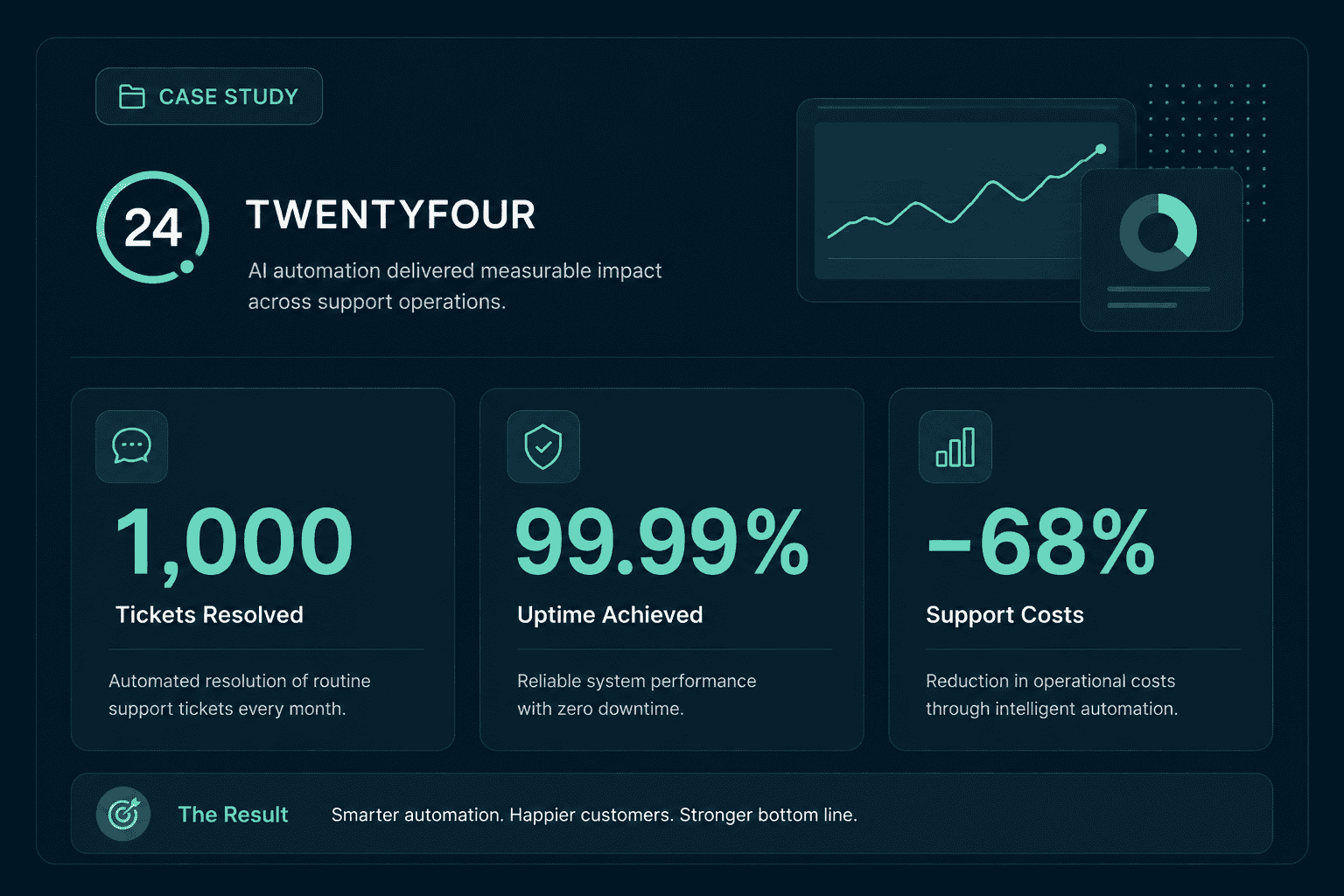
A growing customer base outpacing its original architecture, with usage spikes causing daily outages, was rebuilt on a multi-tenant architecture running on a horizontally scalable core, with isolated workloads and event-driven processing. The result was 1,000 concurrent users supported, 99.99% uptime, and a 68% reduction in latency. See the full case study. If you are weighing up whether your own architecture will hold up at real scale, our SaaS application development service covers exactly this kind of assessment and build.
That is the real difference between a SaaS product that survives its own growth and one that does not: not the framework on the label, but whether the architecture decisions underneath it were made deliberately, at the right time, for the right reasons.
FAQ
Questions, Answered.
Read next
More on SaaS Applications
How We Built a High Performance SaaS Platform for a UK Client
A real case study: how TwentyFour's SaaS platform was rebuilt to handle real growth, the architecture behind it, and the results after launch.
SaaS Development Cost: What to Budget at Each Stage
Real GBP budgets for SaaS MVP, growth, and scale stages, what team and infrastructure actually costs, and how to align spending with your funding stage.
Web App Security Essentials for B2B Products
The real security risks B2B web applications face in 2026, authentication and data protection done properly, monitoring, and where compliance requirements overlap with good engineering.