Resources
The Benefits of Custom Software Over Off the Shelf for SMEs
The real benefits custom software offers SMEs, fit, scalability, integration, ownership, and cost over time, plus an honest look at when off the shelf is genuinely the better choice.

Ahmad Saeed
Full-Stack Engineer, Devity Technologies
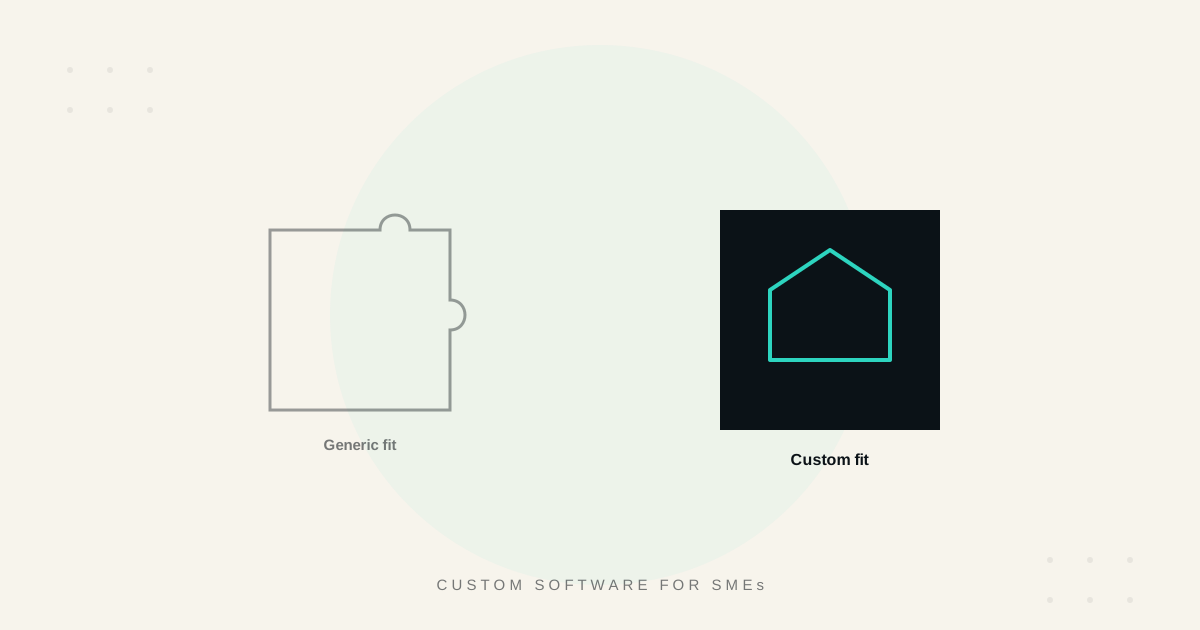
Off-the-shelf software solves a genuine range of business needs well, and for many SMEs, it remains the right, proportionate choice. But as a business grows and its needs become more specific, the benefits custom software offers become harder to ignore. This guide covers those benefits honestly, fit, scalability, integration, ownership, and cost over time, and closes with when off-the-shelf genuinely remains the better call.
| Benefit | What off-the-shelf offers | What custom software offers |
|---|---|---|
| Fit | A generic process most businesses adapt to | Software built around your actual workflow |
| Scalability | Pricing that scales with seats or usage | Lower marginal cost as you grow |
| Integration | Pre-built connectors, sometimes incomplete | Built precisely for your specific systems |
| Ownership | You operate inside the vendor's roadmap | Full control over code, data, and direction |
| Cost over time | Lower upfront, recurring subscription | Higher upfront, lower marginal cost |
Fit
The clearest, most immediate benefit of custom software is that it is built around how your business actually operates, not the other way around. Off-the-shelf tools are built to serve a broad range of businesses reasonably well, which means any single business, including yours, is working within compromises the tool made to stay generic enough for everyone else too.
A business with a genuinely unusual process, an unusual pricing model, an industry-specific workflow, a particular way of handling customers that competitors don't share, often finds itself building manual workarounds around an off-the-shelf tool's limitations, workarounds that become part of daily operations simply because the software was never built with that specific need in mind.
A concrete example makes this tangible: a business with a genuinely unusual pricing structure, tiered by a factor most off-the-shelf billing tools don't natively support, often ends up maintaining a parallel spreadsheet to calculate the correct amount before manually entering it into the software, a workaround that becomes so routine nobody questions it anymore, despite representing real, recurring manual effort that custom software built around the actual pricing logic would remove entirely.
Scalability
Custom software can be architected specifically for your business's actual growth trajectory, not a generic tier structure designed to serve the widest possible range of company sizes reasonably, but imperfectly, at every point along that range.
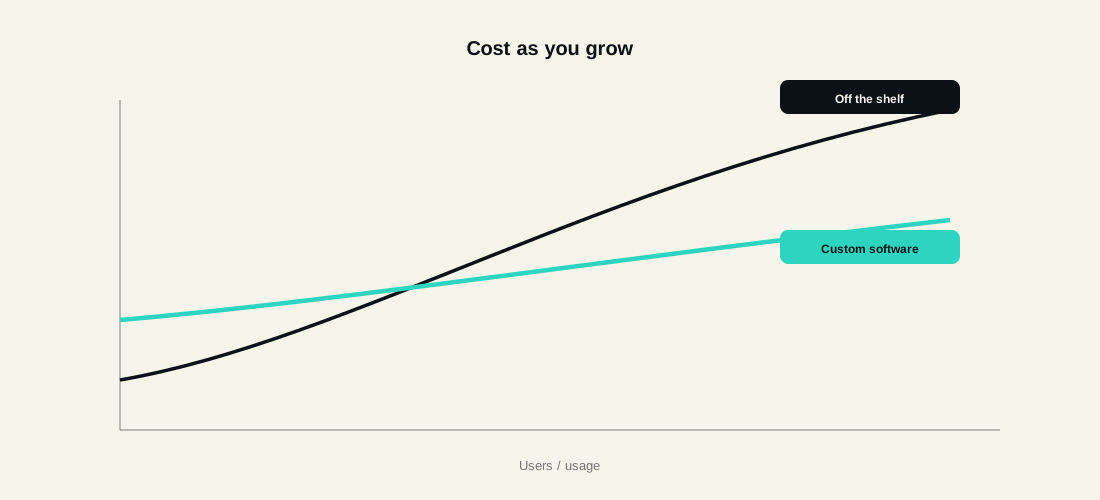
This matters directly for cost predictability as you scale. Off-the-shelf pricing frequently scales with seats or usage volume, a structure that feels trivial early on and can become a significant, recurring cost once your business has genuinely grown. Custom software's marginal cost per additional user or transaction is typically far lower, since you are not paying a vendor's margin on every unit of growth.
Integration
A growing business typically runs several systems that need to work together, accounting, CRM, inventory, customer communication, and off-the-shelf tools vary enormously in how well they actually connect to each other, sometimes requiring third-party middleware or manual data re-entry to bridge the gaps.
Custom software can be built to integrate precisely with your specific existing systems and workflows from the start, rather than hoping a pre-built integration happens to cover your particular combination of tools well. For a business running several disconnected systems already, this alone can eliminate a meaningful amount of manual, error-prone data entry between them.
Ownership
This is a benefit that becomes more valuable the longer a business relies on its software, and one easy to underweight early on when a subscription price feels like the only cost that matters.
Full control over the code and the data means no vendor dictating a pricing change, a feature removal, or a product direction shift that has nothing to do with your business's own priorities but affects your operations regardless. With off-the-shelf software, you are always operating inside someone else's roadmap, however good that roadmap happens to be today.
No risk of a vendor discontinuing a tool your business has come to depend on, a real, if underappreciated, risk with any off-the-shelf platform, particularly a smaller or newer one without a long track record of stability.
Cost Over Time
The honest, complete comparison here is not the sticker price of a subscription against a development quote, it is the total cost of ownership over a realistic multi-year horizon, covered in much more technical depth in our comparison of build versus buy.
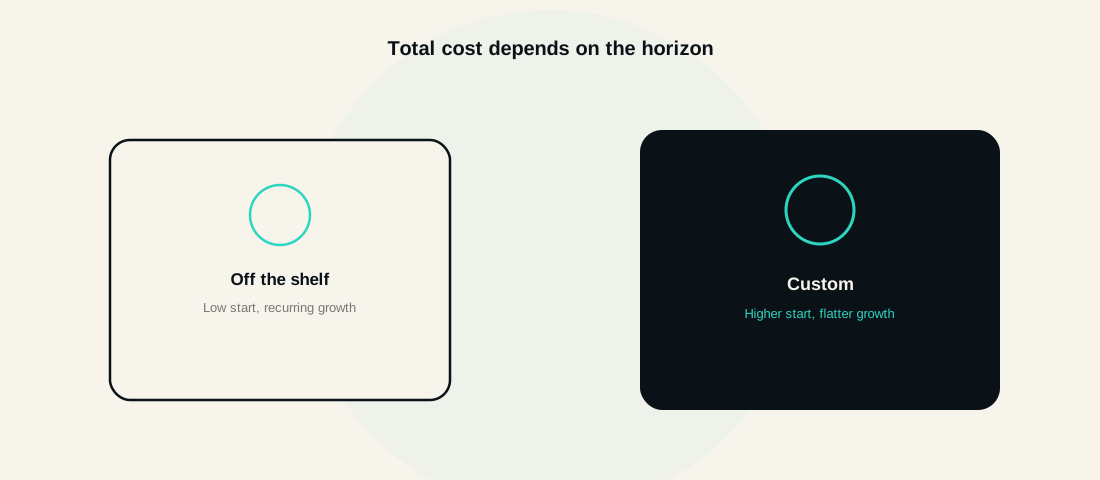
Off-the-shelf software carries a lower upfront cost and a recurring subscription that scales with your usage. Custom software carries a higher upfront cost and a lower marginal cost per additional user or transaction. Which one is actually cheaper depends entirely on your specific usage and growth trajectory, not a fixed, universal rule that favours one option in every case.
When Off the Shelf Is Genuinely Fine
Being honest here matters as much as making the case for custom software, since a balanced answer serves a reader far better than advocacy dressed up as an explainer.
Standard, widely shared needs, accounting, common project management workflows, email marketing, are almost always better served by an established, mature product that has already solved the problem thoroughly, built by a team specialising in exactly that.
Low, stable usage with no immediate plans for significant growth genuinely favours off-the-shelf, since the pricing risk that shows up at real scale simply doesn't apply if your usage stays modest.
No genuine differentiation in the specific workflow is the clearest signal of all, if your process for a given task looks like every other business's process, an off-the-shelf tool built by a team specialising in exactly that problem is very likely the smarter, more proportionate choice.
In Practice
Custom software earns its cost specifically where fit, scalability, integration, or ownership genuinely matter to your business, not as a default every SME should reach for regardless of actual need. Our web platform development service is where that conversation starts properly, with an honest read on whether your specific situation actually justifies the investment, not a sales pitch assuming it automatically does.
The SMEs that make this decision well are not the ones who always build custom or always buy off-the-shelf, they are the ones who honestly assessed which benefits genuinely apply to their specific business, and invested in custom software only where that investment would clearly pay for itself.
FAQ
Questions, Answered.
Read next
More on Web Platforms
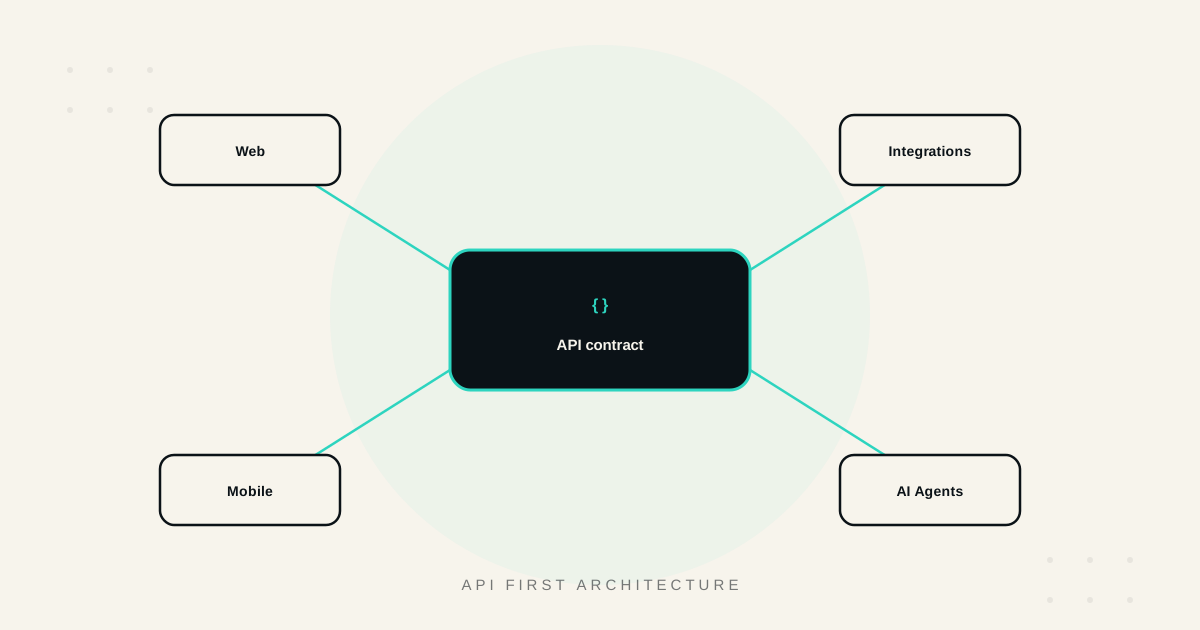
API First Architecture: Building Software That Scales and Integrates
What API-first architecture actually means, the real benefits, how it enables genuine integration and reuse, and when it matters versus when it's unnecessary overhead.
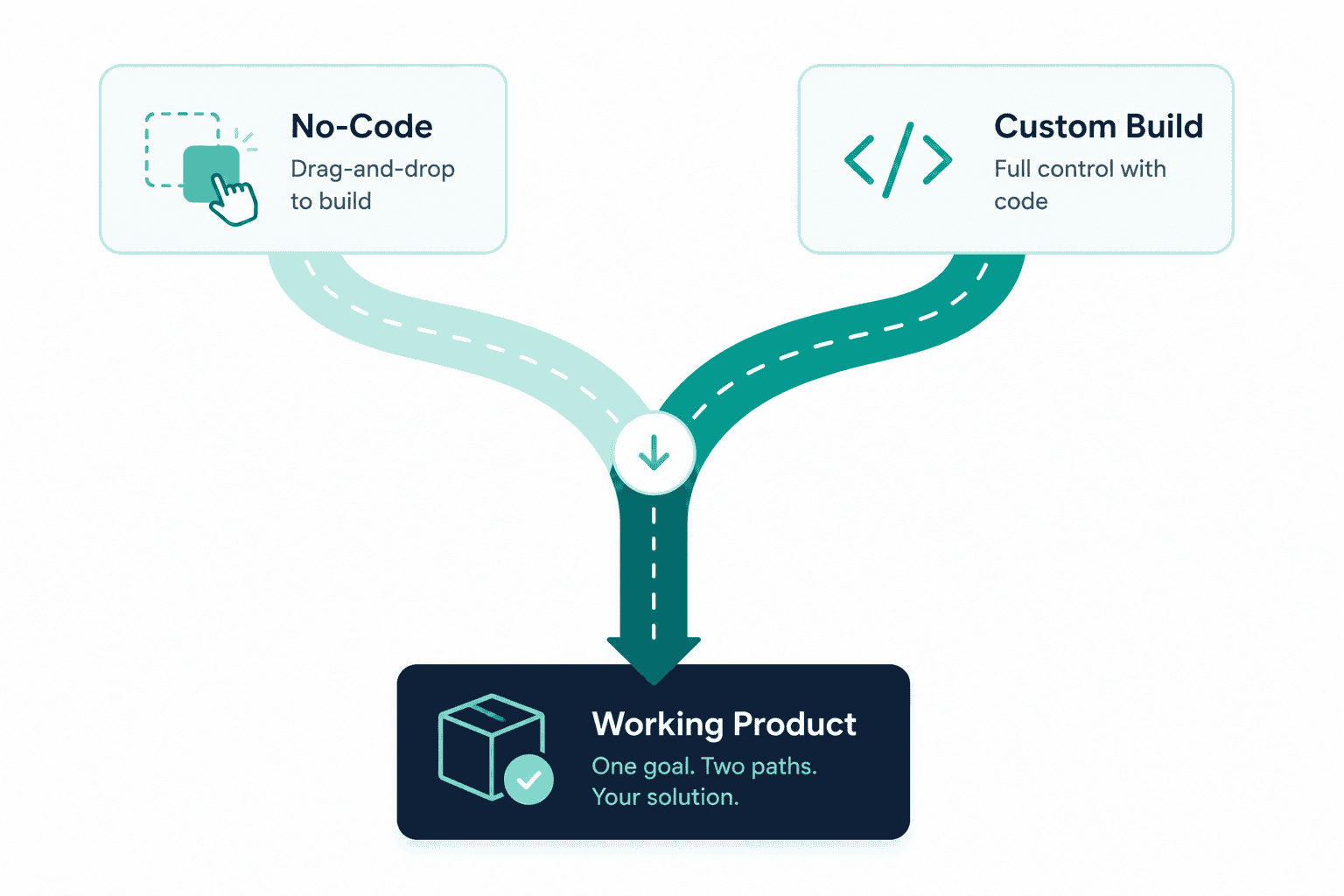
Build vs No Code for Web Apps: Where the Line Really Is
Where no-code web app builders genuinely excel, where they break down, and how to think about performance, ownership, and the migration path before you commit.
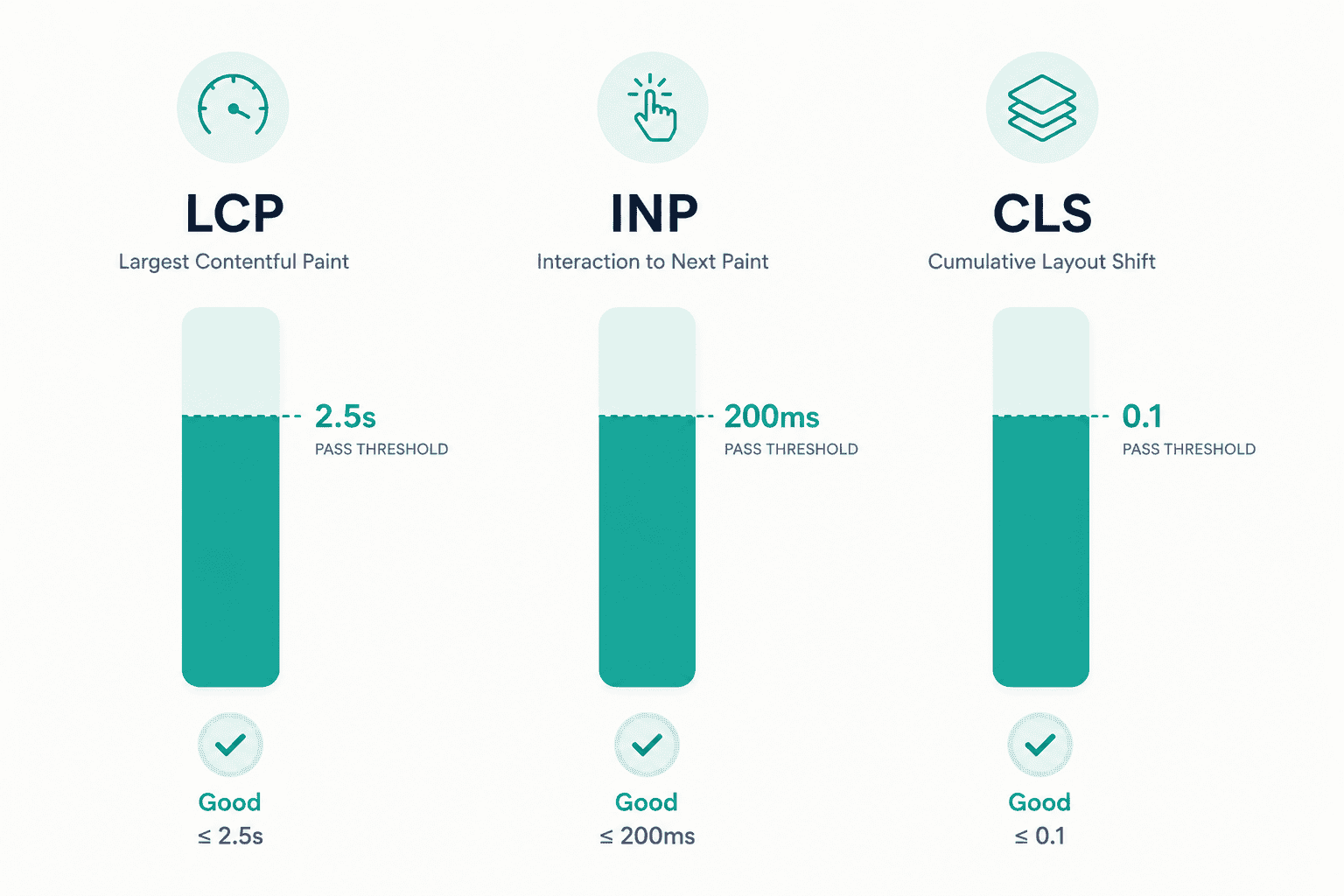
Core Web Vitals: A Practical Guide to a Faster, Higher Ranking Site
What LCP, INP, and CLS actually measure, the fixes that move each metric, how to measure them correctly, and the real business impact of getting them right.