
Resources
Red Flags When Hiring a Development Agency
The specific warning signs that predict a bad software agency experience, vague scope, no real proof, poor communication, lock-in tactics, and how to verify before you sign.

Ahmad Saeed
Full-Stack Engineer, Devity Technologies
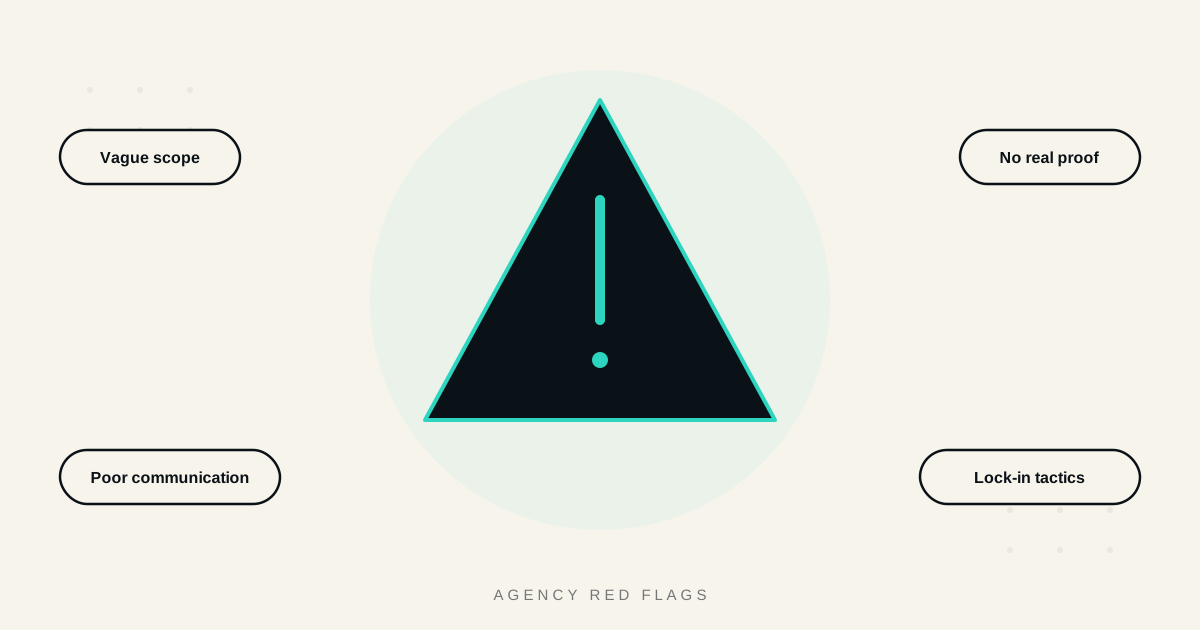
Most bad agency experiences are predictable in hindsight, the warning signs were there before the contract was signed, just easy to miss or explain away in the moment. This is a candid list, not a sanitised one, some of these signs show up in agencies of every size, including ones with genuinely impressive-looking websites. This guide covers the specific, concrete red flags worth watching for, vague scope, absent proof, poor communication, lock-in tactics, and exactly how to verify a claim before you commit budget to it.
Vague Scope
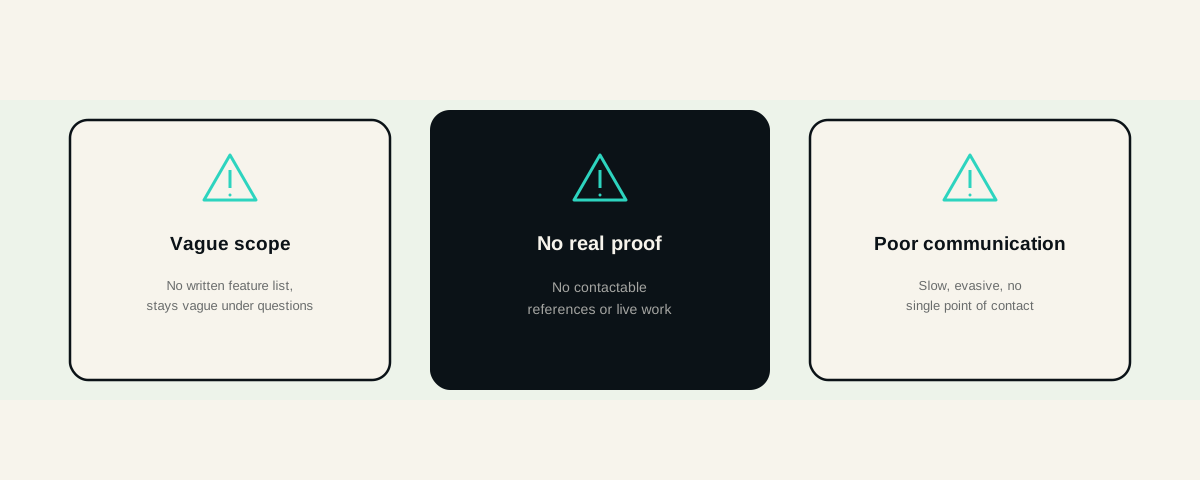
This is the root cause behind most of the disputes that follow. A proposal or conversation that stays at the level of "we'll build you a great product" without ever pinning down specific features, a defined timeline, and what is explicitly excluded is a genuine warning sign, not just an early-stage looseness that will naturally firm up later.
Push directly for specifics. A team that responds to a request for a written feature list with genuine clarity is behaving normally. A team that keeps the conversation vague even after you ask directly, deflecting toward reassurance rather than detail, is often avoiding a commitment they are not confident they can actually keep.
No Real Proof
A polished website and a confident sales conversation tell you very little about whether an agency can actually deliver. The absence of verifiable, specific proof is a red flag worth taking seriously.
A portfolio full of screenshots with no working links or client names attached is weaker evidence than it looks. Ask specifically to see a live product, or speak to a genuine, contactable reference, not just read a written testimonial that could have been written by anyone.
Case studies with vague, unquantified claims ("we helped them grow significantly") rather than specific, real numbers are a sign the agency either does not track outcomes carefully or is not confident enough in the real numbers to share them.
Reluctance to show real code or discuss technical specifics directly is a meaningful signal, particularly if you have any technical ability on your own side to evaluate what you are shown.
A quote significantly below what comparable agencies are proposing for the same scope deserves scrutiny rather than celebration. It usually means something has been quietly left out, testing, post-launch support, a realistic buffer for genuine unknowns, and those gaps tend to resurface later as change orders or a lower-quality result, not as real savings.
Poor Communication
How an agency communicates during the sales process is a genuine, reliable preview of how they will communicate once you are a paying client and the project gets genuinely difficult.
Slow, inconsistent responses before you have even signed anything rarely improve once the relationship is locked in, if anything, response times often get worse once the deal is closed and the sales pressure to be responsive has eased.
Answers that dodge direct questions, especially about pricing, ownership, or what happens when something goes wrong, are a clear pattern worth naming. A team confident in their own process answers these questions plainly, without hedging.
No single, clear point of contact, or a shifting cast of people you have never spoken to before suddenly appearing mid-project, signals a lack of internal process discipline that tends to show up in the actual work too.
Defensiveness when you ask a genuinely reasonable question. A team confident in their own process treats a direct question about timelines, past mistakes, or how they handle disagreement as normal, not as an accusation to push back against. Genuine defensiveness this early is a preview of how disagreements will likely be handled once real money and real deadlines are involved.
Lock-In
This is the red flag least visible upfront and most costly once discovered, usually well after the point where switching teams is easy.
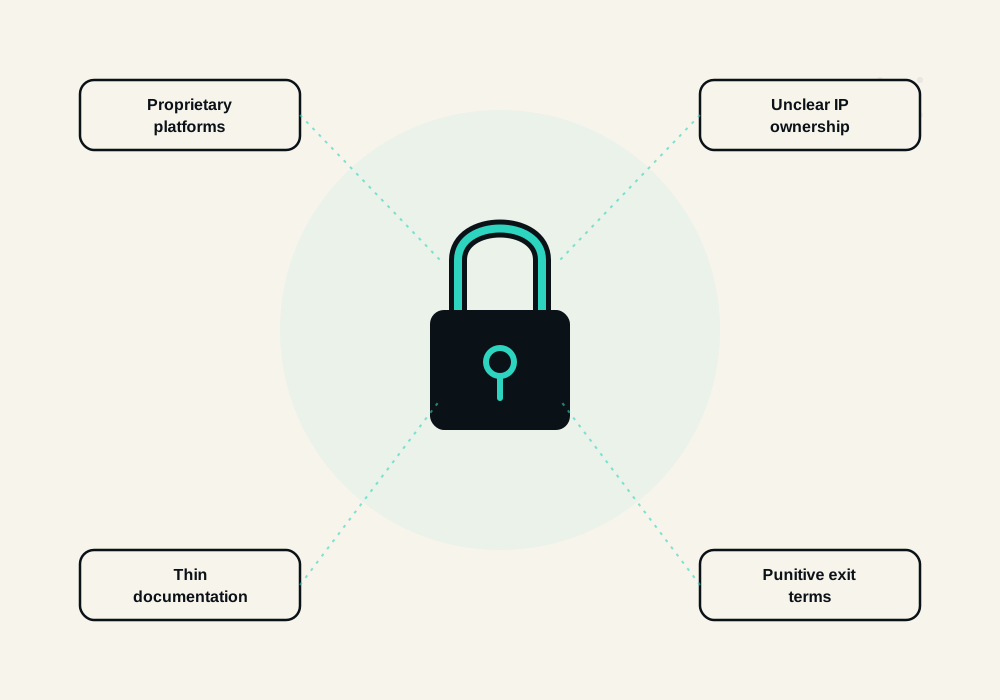
Proprietary platforms or tools you cannot use anywhere else mean your product's future is tied to that specific vendor indefinitely, not a genuine technical necessity in most cases, but a deliberate business choice on their part.
Unclear or restrictive terms about code and IP ownership are worth reading closely before signing, not after a dispute arises. The default expectation should be straightforward, you own everything, the code, the design, the documentation, once the project is paid for.
A system deliberately difficult to hand over to another team, thin or missing documentation, unusual architectural choices with no clear justification, is sometimes a genuine oversight and sometimes a deliberate strategy to make leaving expensive. Either way, the practical effect on you is the same.
Contract terms that make exit deliberately costly or unclear, beyond a reasonable notice period or standard termination clause. A long, punitive minimum commitment, or ambiguity about what happens to your data and access if the relationship ends, is worth reading closely and questioning directly before signing, not discovering only once you actually want to leave.
How to Actually Verify
Ask for a reference you can genuinely contact, not just a name on a case study page, and actually have the conversation, a real client will tell you far more in ten honest minutes than any polished pitch deck.
Ask to see something real, live code, a working product, a genuine technical walkthrough, rather than accepting a description of capability at face value.
Pay closer attention to how questions get answered than to what is being promised. Confidence and specificity are different things, a smoothly delivered but genuinely vague answer is still vague, and a team that answers your direct, uncomfortable questions clearly is telling you something real about how the rest of the relationship will go.
This checklist pairs directly with the fuller set of questions worth asking any prospective agency, covered in more depth in our guide on questions to ask before hiring a software development company.
In Practice
You can see how we handle scope, proof, and ownership directly on our work page, real case studies with named clients and specific, verifiable results, not vague claims. If you already have a proposal in hand and want an honest second opinion before you sign, our free technical audit is a genuinely useful, no-obligation way to get one.
The businesses that avoid a bad agency experience are rarely the ones who found the most polished pitch, they are the ones who noticed the vague answer, the missing reference, the evasive response to a direct question, and took it seriously instead of explaining it away because everything else about the conversation felt promising.
FAQ
Questions, Answered.
Read next
More on Choosing & Trust
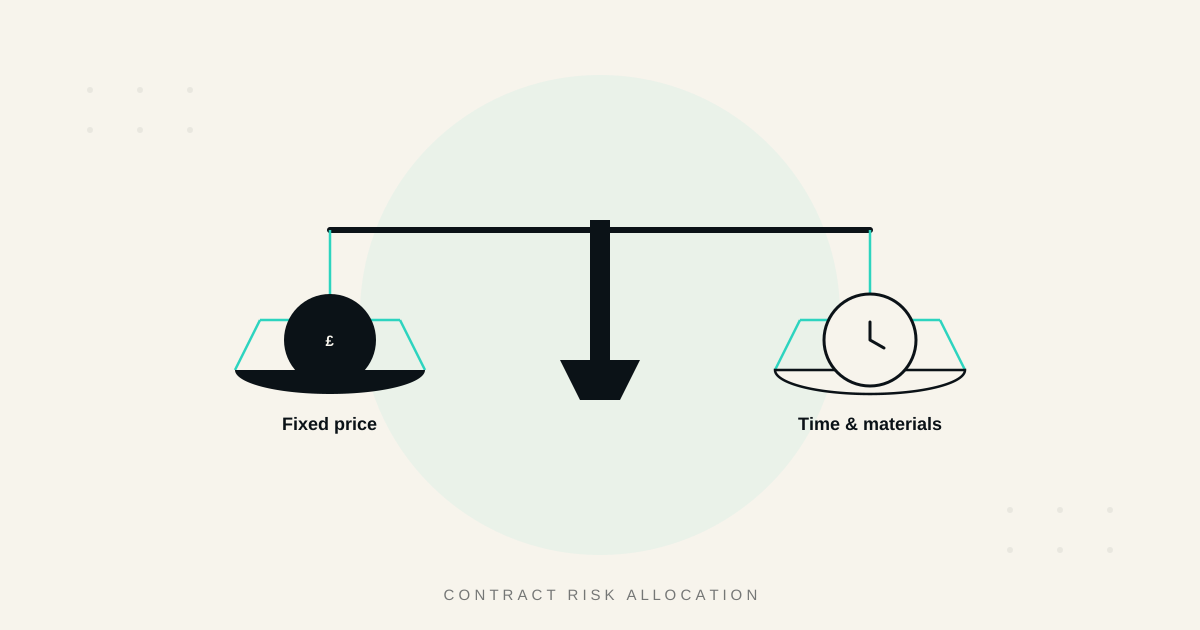
Fixed Price vs Time and Materials: Which Contract Protects You
How fixed-price and time-and-materials contracts actually work, who carries the risk in each, when each one genuinely fits, and why a hybrid is often the smarter choice.
How to Budget for a Software Project Without Nasty Surprises
A practical guide to budgeting a software project realistically, scoping for budget, genuine contingency, change control, phasing, and tracking spend as you go.

How to Vet a Remote or Offshore Development Team
A genuine due diligence framework for vetting a remote or offshore development team, references, trials, communication and timezone fit, and IP and security.