
Resources
10 High ROI Automations Every SME Should Consider in 2026
Ten concrete, high-ROI automations for UK SMEs, with real effort and payoff for each, plus how to prioritise and where to actually start.

Mohid Bhatti
AI Systems Engineer, Devity Technologies
Automation ideas are everywhere, but most lists either stay too abstract to actually act on, or push a specific tool rather than the underlying problem worth solving. This is a practical, shareable list of ten genuinely high-ROI automations for UK SMEs, each with an honest read on effort and payoff, followed by how to prioritise between them and exactly where to start.
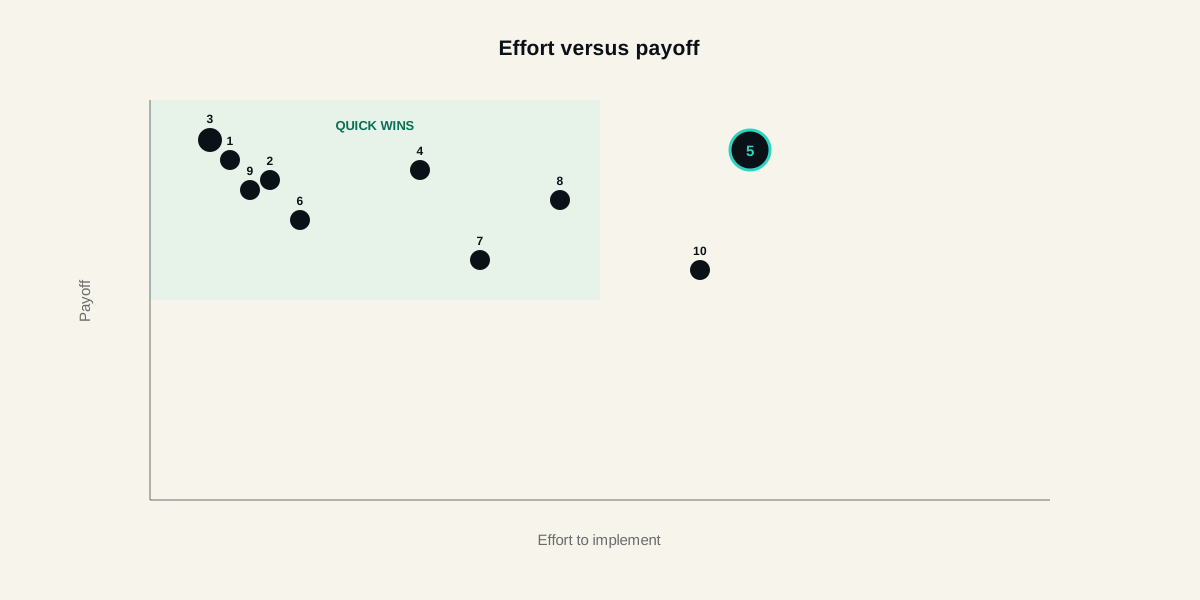
1. Invoice Matching and Processing
Effort: Low to moderate. Payoff: High. Checking supplier invoices against purchase orders and delivery records automatically removes one of the most repetitive tasks in accounts payable, and is typically the highest-volume, lowest-complexity starting point for a first automation project, covered in more depth in our guide to AI automation. A business processing a hundred invoices a month manually can easily lose several hours a week purely to data entry and matching, hours an automated system reclaims almost immediately once set up.
2. Bank Reconciliation
Effort: Low to moderate. Payoff: High. Automatically matching bank feed transactions to ledger entries, flagging only genuine discrepancies for human review, removes hours of manual line-by-line checking every month, with off-the-shelf accounting platform features already covering much of this for many businesses. The real value shows up specifically at month-end, when reconciliation pressure typically peaks and staff time is otherwise stretched thinnest.
3. Appointment Booking and Reminders
Effort: Low. Payoff: High. Automated confirmation, reminder, and rescheduling messages reduce no-shows directly and measurably, one of the fastest, cheapest wins on this entire list, and one that off-the-shelf tools already handle well for straightforward booking flows. For a service business where a missed appointment represents genuine lost revenue, even a modest reduction in no-show rate pays for the automation many times over within the first month.
4. Lead Qualification and Routing
Effort: Moderate. Payoff: High. Automatically checking an inbound enquiry against defined criteria and routing it to the right person or sequence saves real sales time and improves response speed, a genuine competitive advantage since faster response to a new enquiry consistently correlates with higher conversion. A lead qualified and routed within minutes rather than hours is meaningfully more likely to still be actively comparing options when your team actually reaches out.
5. AI Voice Agents for Inbound Calls
Effort: Moderate to high. Payoff: High for high call volume businesses. Handling booking requests, common questions, and initial triage without a caller waiting on hold, covered in depth in our guide to AI voice agents, is a strong candidate specifically for service businesses losing calls to poor availability, and a weaker one for low call volume businesses with little to gain from it. Every unanswered call during a busy period is a caller who may simply try a competitor next, this automation exists specifically to close that gap.
6. Document and Receipt Extraction
Effort: Low. Payoff: Moderate to high. A client or employee photographs a receipt or document, AI extracts and categorises the data, a person reviews before filing, replacing manual data entry from paper or forwarded emails almost entirely, with leading platforms now achieving very high accuracy on real UK-specific document formats. This is a small, easy first step for businesses not yet ready for a larger automation project, but genuinely valuable on its own.
7. Customer Support Triage
Effort: Moderate. Payoff: Moderate to high. Automatically categorising and routing support enquiries, resolving simple, common requests directly, and escalating genuinely complex cases to a human, reduces response time on the easy cases and frees staff time for the ones that actually need judgement. A support team spending most of its time answering the same handful of common questions repeatedly is exactly the pattern this automation targets directly.
8. Inventory and Stock Alerts
Effort: Moderate. Payoff: High for product businesses. Automated stock-level monitoring with proactive reorder alerts prevents the costly, common pattern of discovering a stockout only once a customer has already been affected, directly protecting revenue that would otherwise be lost to unavailability. A single missed sale from an unnoticed stockout can easily exceed the cost of the automation that would have prevented it.
9. Abandoned Cart and Follow-Up Sequences
Effort: Low. Payoff: High for ecommerce. Automated follow-up triggered by a specific customer action, an abandoned cart, a lapsed subscription, targets customers already close to converting, consistently one of the clearest, most measurable ROI categories in ecommerce automation specifically. This is often one of the very first automations an ecommerce business sets up, precisely because the connection between the trigger and the resulting revenue is so direct and easy to measure.
10. Internal Reporting and Anomaly Detection
Effort: Moderate to high. Payoff: High for data-heavy operations. Automated, real-time reporting with anomaly flagging catches an unusual pattern or a duplicate entry immediately, rather than at the next scheduled manual review, giving a business genuine, current visibility rather than a picture that is only accurate as of the last manual check. For a business making decisions based on financial or operational data, the gap between real-time visibility and a monthly snapshot can mean catching a problem while it is still small.
How to Prioritise
Score each candidate on the same three factors that determine a genuinely good automation candidate, high volume, high current manual effort, and low judgement required, the framework covered in full in our practical automation playbook. The items on this list that score highest across all three, invoice matching, bank reconciliation, and appointment reminders, are consistently the strongest starting points for most SMEs, regardless of industry.
A quick worked example: a growing service business processing forty invoices a week, reconciling accounts monthly, and taking bookings by phone might score invoice matching highest, since the volume is genuinely daily and the manual effort is easy to quantify precisely. The same business's customer support triage need might score lower right now simply because ticket volume is not yet high enough to justify the setup effort, a perfectly reasonable reason to leave it for later rather than a permanent no.
Where to Start
Pick one, not several. Piloting a single automation properly, with a clear success metric and a real, measured before-and-after, produces far better results and far more useful evidence than attempting multiple automations at once with limited internal capacity to actually manage and evaluate them all. Once that first pilot has genuinely proven itself, expanding to the next candidate on this list follows the same disciplined process, not a rushed rollout on the strength of one early success.
In Practice
Every one of these ten starts the same way, mapping the real process honestly before choosing a tool, covered directly in our AI automation service. If you want help figuring out which of these ten genuinely fits your business first, that conversation, and the process mapping behind it, costs nothing to start.
The SMEs getting real value from automation in 2026 are not the ones chasing every idea on a list like this at once, they are the ones who picked the single highest-scoring candidate for their specific business, piloted it properly, and let the real, measured result decide what came next.
FAQ
Questions, Answered.
Read next
More on AI Automation
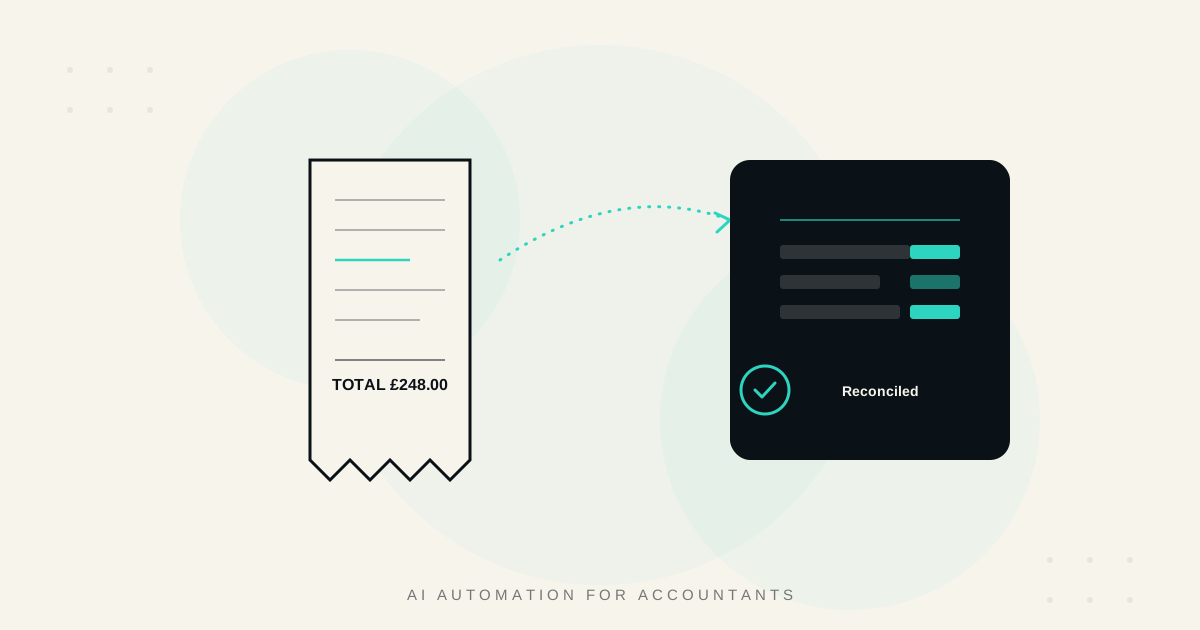
AI Automation for Accountants and Finance Teams
How AI automation actually applies to accounting firms and finance teams, invoice and reconciliation, document extraction, reporting, MTD compliance, and real ROI.

AI Automation for Professional Services Firms
Real AI automation for professional services, client intake, document workflows, reporting, genuine time recovery, and honest ROI.
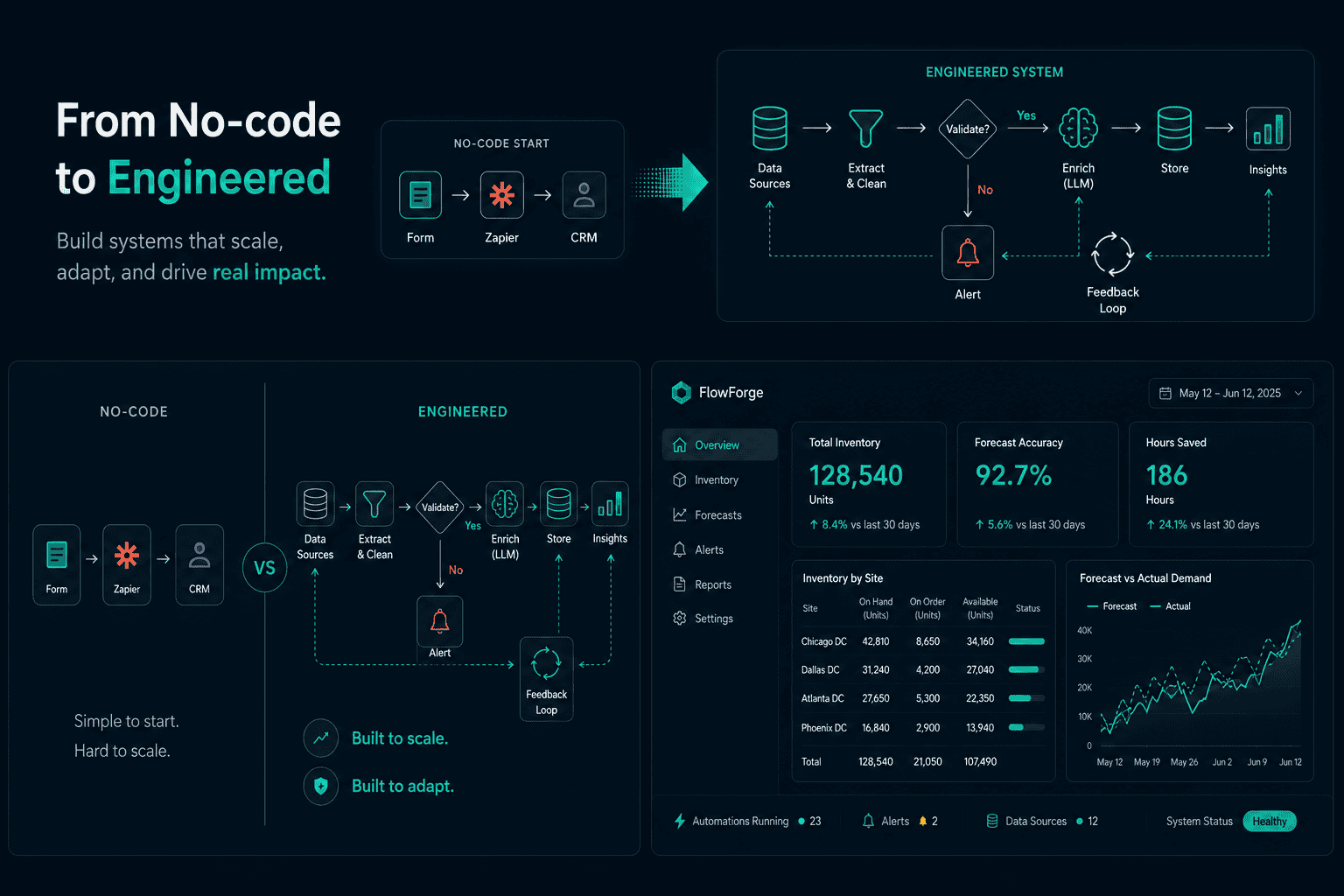
AI Automation for UK Businesses: The Complete 2026 Guide
What AI automation actually is beyond no-code tools, where it delivers real ROI, and how to choose a partner who can build it properly.