
Resources
What a Good Discovery Phase Looks Like (and Why It Saves Money)
What a genuine software discovery phase actually covers, the real deliverables you should expect, what it costs, and why it de-risks the entire build.

Ahmad Saeed
Full-Stack Engineer, Devity Technologies

Discovery gets treated as a box-ticking formality by some agencies and skipped entirely by others eager to start billing for development. Both are mistakes. A properly run discovery phase is one of the highest-leverage parts of a software project, cheap relative to the whole build, and directly responsible for whether the rest of the project goes smoothly or turns into a series of expensive surprises. This guide covers what discovery should actually cover, the real deliverables to expect, what it costs, and why it genuinely de-risks everything that follows.
With Discovery vs Without
| Skipping discovery | Running discovery properly | |
|---|---|---|
| Initial quote | Fast, but a guess | Slower, but grounded in real understanding |
| Scope clarity | Vague, discovered mid-project | Written and agreed before building starts |
| Where misunderstandings surface | Weeks into development, expensive to fix | During discovery, nearly free to fix |
| Technical risk | Discovered unexpectedly mid-build | Identified and planned for early |
| Reference point for disputes | Memory of a verbal conversation | A written brief both sides can check |
What Discovery Actually Covers
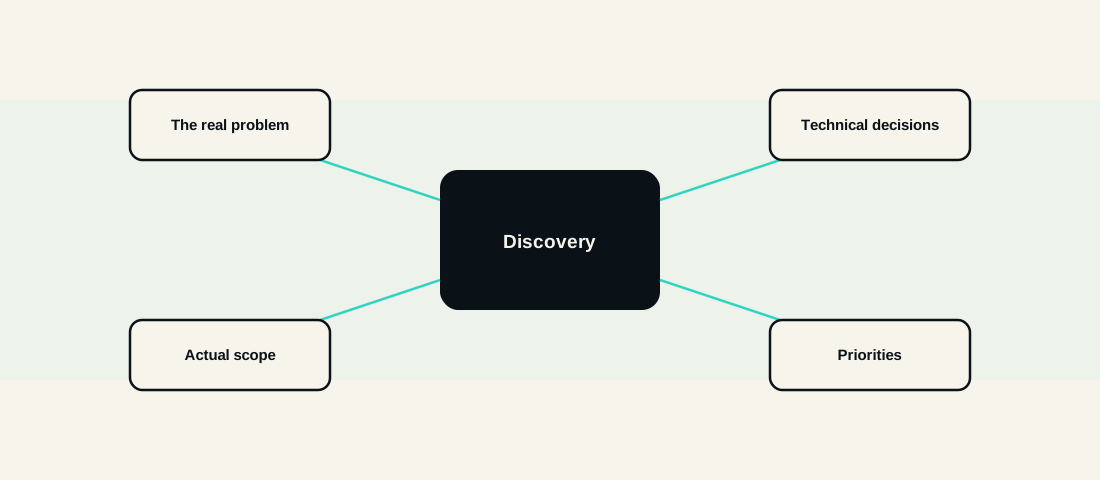
Understanding the real problem, not just the feature list someone arrived with. A good discovery process asks why a specific feature matters, what business outcome it is meant to produce, since the answer often reshapes what actually needs to be built, sometimes toward something simpler than originally imagined, occasionally toward something the client had not considered.
Mapping the actual scope, translating a general idea into a specific, written list of what is included in the first version and, just as importantly, what is deliberately excluded. This is where the vague, expensive ambiguity that causes most mid-project disputes gets resolved while it is still cheap to resolve.
Identifying key technical decisions early, architecture choices, integration requirements, and any genuine unknowns that need investigating before a reliable estimate can be given honestly. Surfacing these during discovery, when changing course costs almost nothing, is dramatically cheaper than discovering them three weeks into development.
Aligning on priorities, since not every feature in a full product vision needs to exist in the first version. Discovery is where a genuine, informed conversation about sequencing happens, what needs to exist for launch versus what can reasonably wait.
Surfacing disagreement between stakeholders early. Larger organisations in particular often arrive at discovery with different people holding subtly different, sometimes conflicting, ideas about what the project is actually for. A good discovery process draws this out and resolves it deliberately, rather than letting it surface for the first time mid-project when different stakeholders start reacting to a build that does not match what they individually assumed was being built.
The Deliverables
A genuine discovery phase produces something concrete, not a vague verbal summary of a conversation.
A written brief documenting the problem being solved, who it is being solved for, and the defined scope for the first version, specific enough that both sides could reasonably check any later disagreement against what this document actually says.
A real pricing range, grounded in the scope just defined, not a number pulled from a generic template before anyone understood the specific project. This is meaningfully more accurate than an estimate given during an initial sales call, precisely because it follows genuine understanding rather than preceding it.
Key architectural or technical decisions, documented and explained, not buried in a developer's head where they cannot be reviewed, questioned, or referred back to later if a disagreement arises.
A realistic timeline, broken into stages, based on the actual scope defined during discovery rather than an optimistic guess made before the work was properly understood.
A defined process for handling scope changes during the build, agreed while everyone is thinking clearly and calmly, rather than negotiated for the first time under the pressure of an actual mid-project change request, when both sides have more at stake and less patience for working it out from scratch.
What Discovery Costs
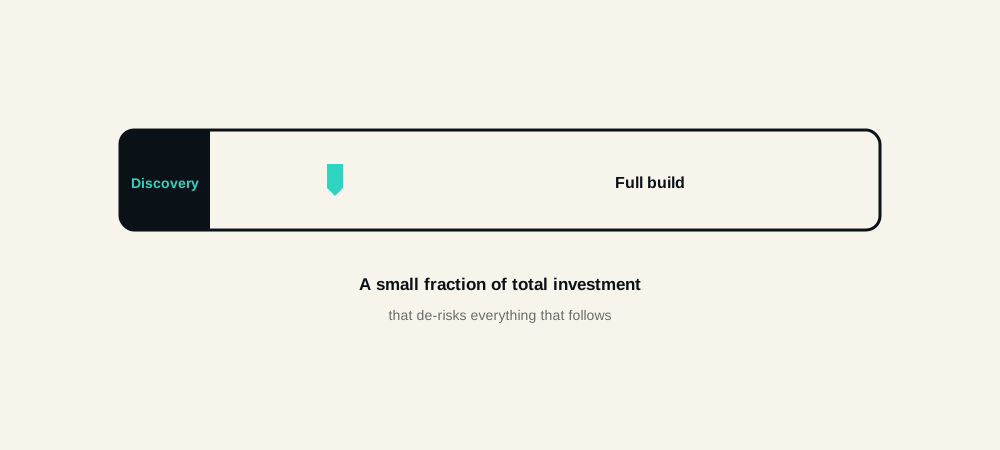
Discovery is typically priced as a small, fixed fee relative to the overall project, since its scope is genuinely well-defined and time-boxed, usually the cheapest way to get real clarity before a larger financial commitment. For most projects, a one to two week discovery phase represents a modest fraction of total project cost, a defensible, transparent number rather than the vaguer, harder-to-scope pricing a full build quote given without discovery tends to require.
This cost should be treated as separate from, and clearly explained ahead of, any decision about who ultimately builds the project. A discovery phase that produces a genuine, usable written brief has value even if you decide to take that brief to a different team afterward, which is itself a signal of whether an agency's discovery process is genuinely useful or just a sales funnel dressed up as a deliverable.
How It De-Risks the Build
This is the actual argument for paying for discovery, not the deliverables themselves but what they prevent.
Catching misunderstandings while they are nearly free to fix. A misunderstanding about scope discovered during a discovery conversation costs a few minutes of clarification. The same misunderstanding discovered three weeks into development costs real rework, on both sides, and often a strained conversation about who should pay for the correction.
Producing a genuinely accurate estimate. A price quoted before discovery is a guess dressed up as a number. A price quoted after discovery reflects an actual understanding of the work, which is exactly why it tends to hold up far better once development is actually underway.
Surfacing technical risk early. An integration that turns out to be more complex than assumed, or a requirement that conflicts with another, is far cheaper to discover and plan around during discovery than to hit unexpectedly mid-build, when the whole team's momentum and the project's timeline are already committed around an assumption that turns out to be wrong.
Giving both sides a genuine, shared reference point. A written brief means disagreements later have something concrete to check against, rather than each side relying on their own memory of a verbal conversation from weeks earlier, which is a common, avoidable source of disputes on projects that skipped this step.
In Practice
This is exactly how we run every engagement, our own process begins with a defined one-to-two week discovery phase producing a written brief and a real pricing range, before any development commitment is made. We also cover the closely related skill of writing your own requirements brief well, since a client who arrives with genuine clarity about their own problem gets more out of discovery than one who has not yet thought it through.
The projects that go smoothly are rarely the ones that moved fastest to development, they are the ones that spent a small, focused amount of time upfront making sure everyone genuinely agreed on what was being built, before paying to build the wrong thing quickly.
FAQ
Questions, Answered.
Read next
More on Choosing & Trust
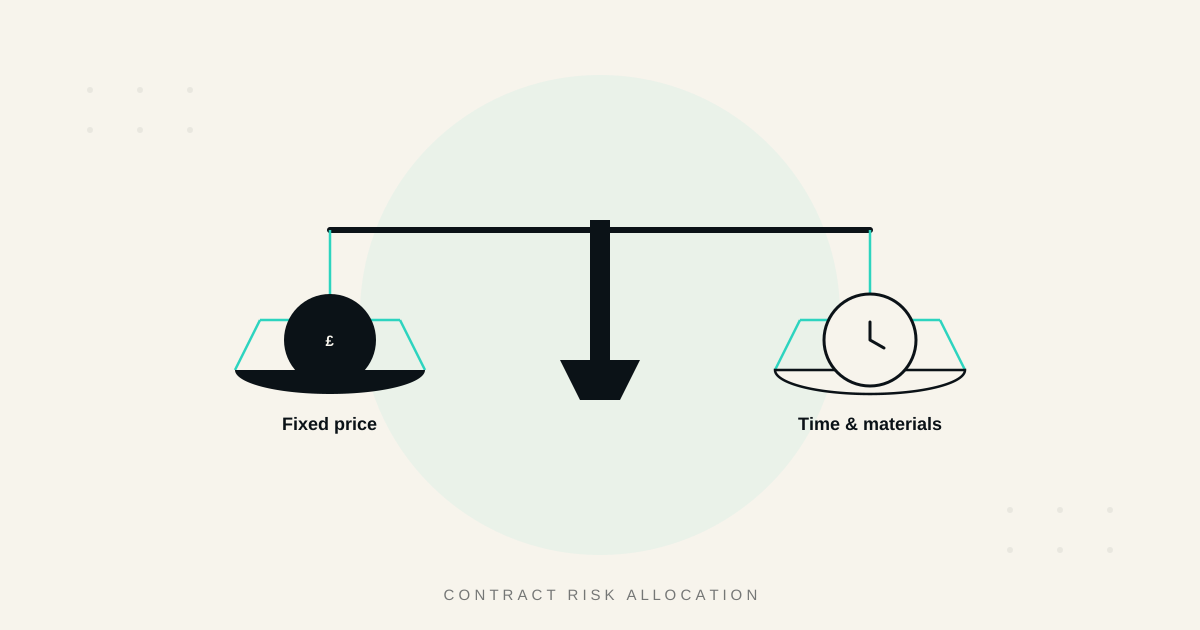
Fixed Price vs Time and Materials: Which Contract Protects You
How fixed-price and time-and-materials contracts actually work, who carries the risk in each, when each one genuinely fits, and why a hybrid is often the smarter choice.
How to Budget for a Software Project Without Nasty Surprises
A practical guide to budgeting a software project realistically, scoping for budget, genuine contingency, change control, phasing, and tracking spend as you go.
How to Vet a Remote or Offshore Development Team
A genuine due diligence framework for vetting a remote or offshore development team, references, trials, communication and timezone fit, and IP and security.