
Resources
Software Development for FinTech in the UK: A Practical Guide
A compliance-first guide to FinTech software development in the UK, FCA and GDPR requirements, security architecture, integrations, build considerations, and what real proof of experience looks like.

Ahmad Saeed
Full-Stack Engineer, Devity Technologies
FinTech software development gets pitched by agencies who mention FCA compliance on their website and describe payment features confidently, until a specific compliance question exposes how shallow that experience actually is. Ask how a team handled SCA exemption logic on a real payment flow, or their approach to audit trail architecture for a multi-currency platform, and watch what happens to the confidence in the room. Most agencies claiming FinTech experience have built financial products. Far fewer have genuinely built inside the specific compliance architecture that FCA-authorised firms actually operate under.
This guide leads deliberately with compliance and security, since in FinTech, these are not features added afterward, they are architectural decisions that shape the entire product from day one. It covers FCA and GDPR requirements, security architecture, integrations, build considerations, and what genuine proof of FinTech experience actually looks like.
Compliance: FCA and GDPR
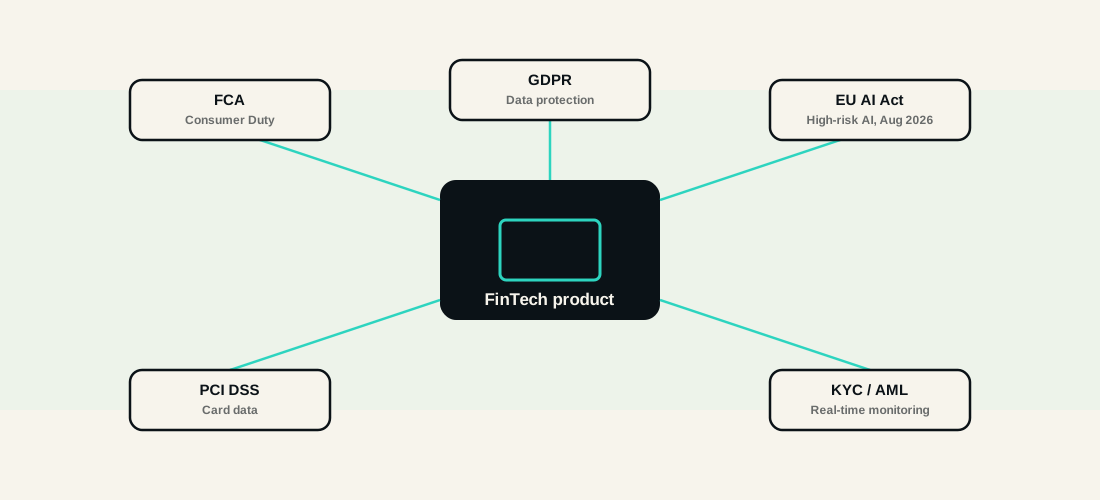
The Financial Conduct Authority and the Prudential Regulation Authority jointly regulate financial services in the UK, and for any product carrying out a regulated activity, FCA authorisation requirements are not optional, they are a foundational constraint the entire system needs to be architected around.
Consumer Duty outcome-testing is a specific, current FCA requirement worth understanding directly, it requires demonstrable evidence that a product actually delivers good outcomes for customers, not just that it technically complies with rules on paper. This has real architectural implications, systems need to capture and expose the data that proves outcomes, not just process transactions correctly.
UK GDPR applies to any personal data a FinTech product handles, and financial data specifically tends to be more sensitive and more heavily scrutinised than personal data in most other sectors. We cover UK GDPR requirements for automated systems in more depth in our guide to GDPR compliant AI automation, much of which applies directly to FinTech products using AI for underwriting, fraud detection, or risk scoring.
Real-time KYC and AML monitoring is increasingly the expectation rather than periodic batch checking, with a genuine need for explainable flags a compliance team can actually act on, not an opaque black-box score with no reasoning behind it.
The EU AI Act's high-risk provisions, which apply from August 2026, cover exactly the kind of AI functions common in FinTech, creditworthiness assessment, fraud detection, automated risk profiling, and are worth checking directly against any product with EU customer exposure, not assumed to be a purely EU-based company's problem.
The single most expensive mistake in FinTech development is treating compliance as something added after the product is built. Regulatory remediation after launch consistently costs several times more than building the architecture correctly from the start, since compliance shapes fundamental decisions, data flow, audit logging, how sensitive operations are structured, not surface-level features that can be bolted on later.
FinTech is also not one single category, and understanding which segment you are actually building for shapes which of these obligations apply most directly.
| Segment | Primary regulatory focus | Key architectural implication |
|---|---|---|
| Payments and BNPL | PCI DSS, SCA, PSD2 | Tokenisation and authentication flow design |
| Lending and credit | Consumer Duty, AI Act (if AI-driven) | Explainable decisioning and outcome evidence |
| Investment and wealth | Multi-currency audit trails, FCA conduct rules | Detailed, queryable transaction history |
| Cryptoasset services | Full FCA authorisation (transitioning from AML registration) | Governance and prudential architecture |
| B2B financial infrastructure | SOC 2, enterprise due diligence | Auditability and access control depth |
Security
Security in FinTech carries a higher bar than most software categories, both because the stakes of a breach are higher and because regulators and enterprise customers actively verify it, not just assume it.
PCI DSS applies to any product touching card data, and shapes a fundamental architectural decision, whether the product ever stores card details itself or tokenises everything through a payment processor, a decision with major implications for your compliance scope and ongoing audit burden.
SCA (Strong Customer Authentication) and its exemption logic deserve specific attention, since getting this wrong either creates unnecessary friction that hurts conversion, or creates a genuine compliance gap. A partner with real FinTech experience should be able to discuss exemption logic specifically, not just confirm that authentication exists somewhere in the flow.
SOC 2 has become a genuine baseline expectation, particularly for B2B FinTech products, enterprise buyers increasingly will not even evaluate a vendor seriously without it, making it closer to a prerequisite for the sales conversation than an optional certification.
Audit trail architecture needs to be designed in from the start, particularly for anything involving multi-currency transactions or investment activity, since demonstrating exactly what happened, when, and why is a genuine regulatory and dispute-resolution requirement, not just good engineering practice.
Data residency and encryption deserve the same rigour applied to any sensitive financial data, confirming where data is actually processed and stored, and that encryption is genuinely applied both at rest and in transit, not assumed simply because a well-known cloud provider is involved somewhere in the stack.
Integrations
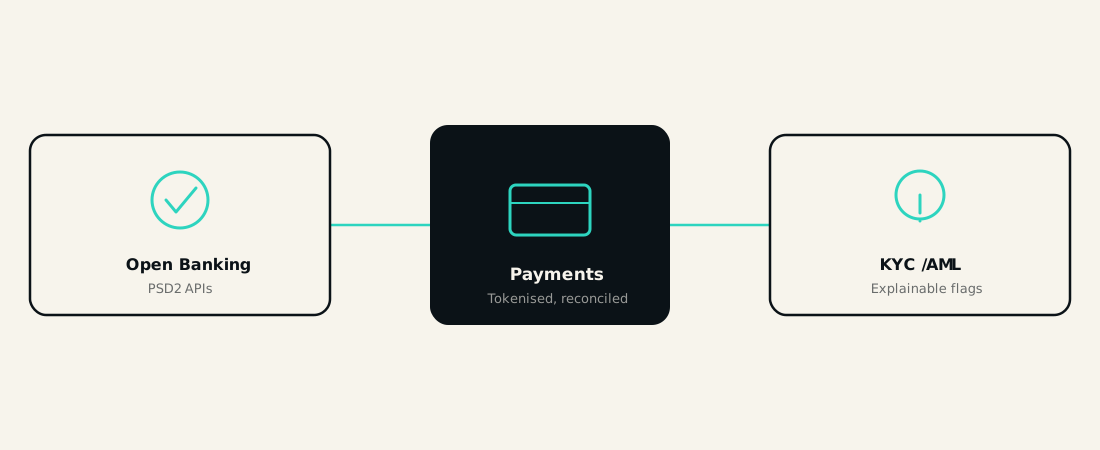
Open Banking APIs, built on the regulatory foundation of PSD2 and its evolution, are central to how modern FinTech products actually connect to banking infrastructure, and integrating with them properly, not just technically but with the correct consent and data-handling flows, is a genuine specialism.
Payment processing integrations need architecture decisions made deliberately around tokenisation, reconciliation, and failure handling, a payment that fails silently or reconciles incorrectly is a far more serious problem in FinTech than in most other software categories.
KYC and AML provider integrations typically sit alongside your own systems rather than being built from scratch, but integrating them well, with explainable, real-time results feeding into your own compliance workflow, is where genuine engineering depth actually shows.
Build Considerations
Compliance review before launch should involve a qualified compliance consultant, not just the development team, signing off that the product genuinely meets its regulatory obligations. For FCA-regulated activities, this is not optional, and for unregulated activities that still touch financial data, it is the kind of evidence institutional customers will expect to see.
Architecture decisions made with regulation in mind from day one, not retrofitted, are what separate a FinTech build that scales cleanly from one that requires expensive rework the first time a regulator or an enterprise customer's due diligence team asks a specific, pointed question.
A development partner who asks about your regulatory status in the first conversation, and has informed, specific views on how it shapes the build, not a generic development timeline, is a genuine signal of real FinTech experience versus a general software background dressed up for the sector.
Phasing the build around regulatory milestones, rather than treating compliance sign-off as a single gate at the very end, keeps a FinTech project moving without accumulating regulatory risk silently in the background. A properly run engagement checks compliance alignment at defined points throughout the build, not only once, right before launch, when discovering a gap is at its most expensive and disruptive to fix.
Proof
Given how many agencies claim FinTech experience without genuinely having it, verification matters more here than in most categories.
Ask for live case studies of regulated products in production, with real clients you can actually speak to, not a description of payment features built once. Ask specific, technical compliance questions directly, how a team handled SCA exemption logic, or audit trail architecture for a particular scenario, and watch closely whether the answer is specific or reverts to confident-sounding generalities. The gap between an agency that has genuinely built inside FCA-regulated constraints and one that has simply built payment features tends to become obvious the moment a real, specific question gets asked.
In Practice
FinTech is exactly the category where the architecture decisions made in discovery, not the interface built later, determine whether a product can actually operate as a regulated business. Our web platform development service treats compliance and security as core architectural requirements from the very first conversation, and we are direct about it when a specific regulatory question is genuinely outside what we can advise on without your own compliance counsel involved.
The FinTech products that scale successfully are rarely the ones that moved fastest to launch, they are the ones where compliance and security were treated as the foundation the whole build sat on, not a checklist addressed after the interface was already finished.
FAQ
Questions, Answered.
Read next
More on Web Platforms
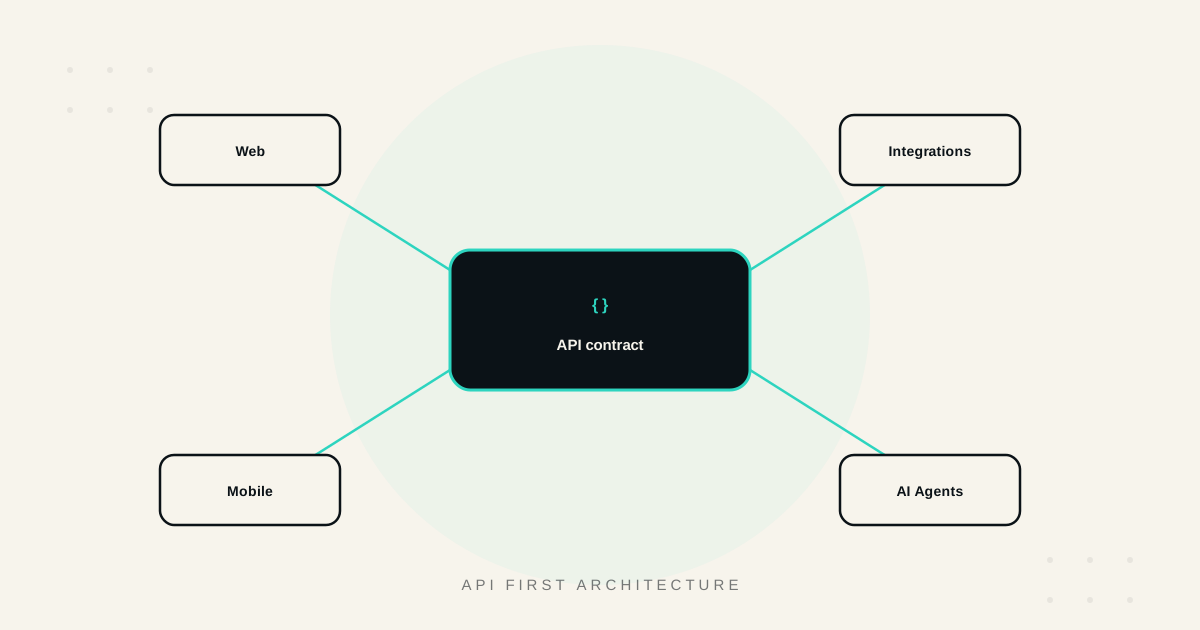
API First Architecture: Building Software That Scales and Integrates
What API-first architecture actually means, the real benefits, how it enables genuine integration and reuse, and when it matters versus when it's unnecessary overhead.
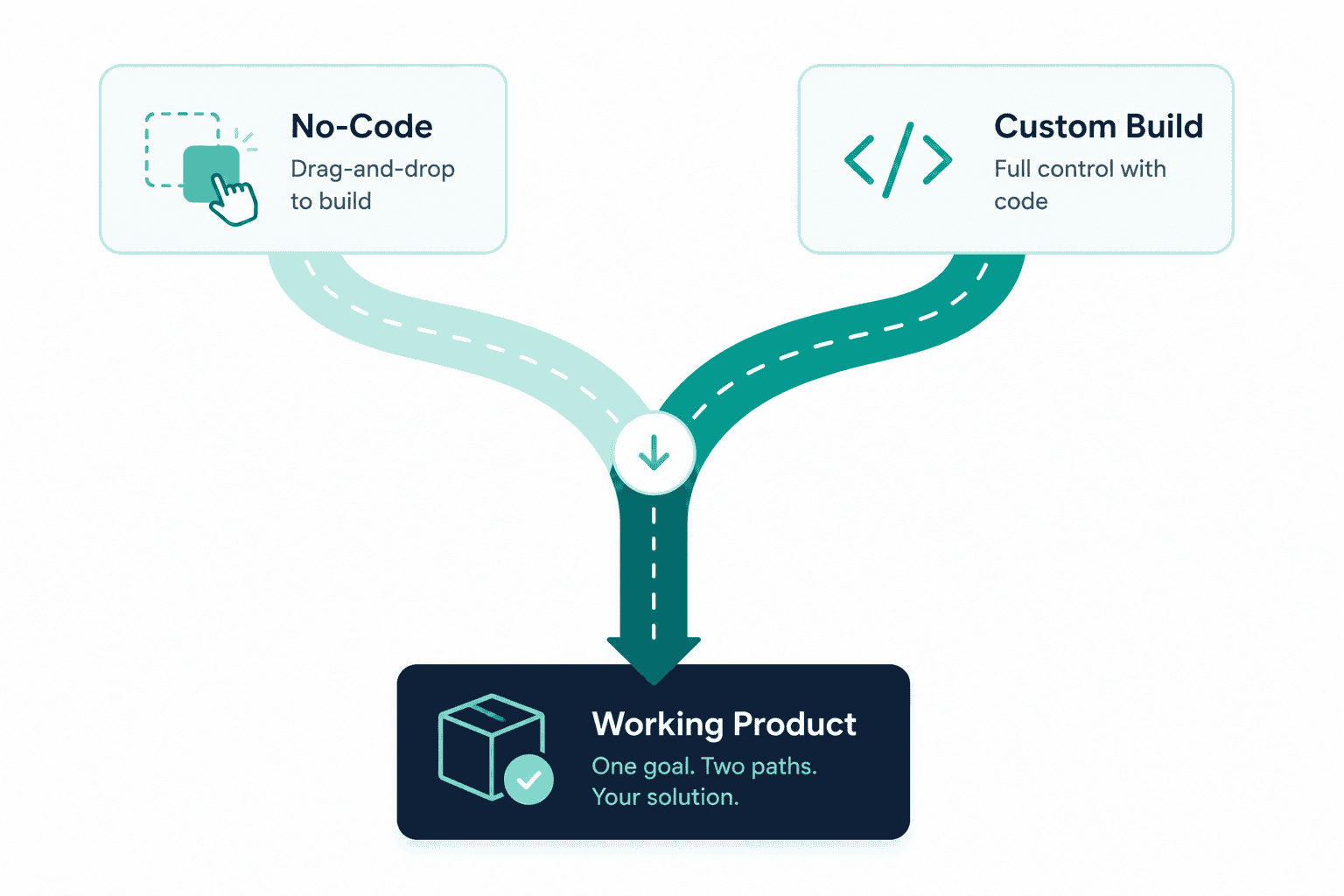
Build vs No Code for Web Apps: Where the Line Really Is
Where no-code web app builders genuinely excel, where they break down, and how to think about performance, ownership, and the migration path before you commit.
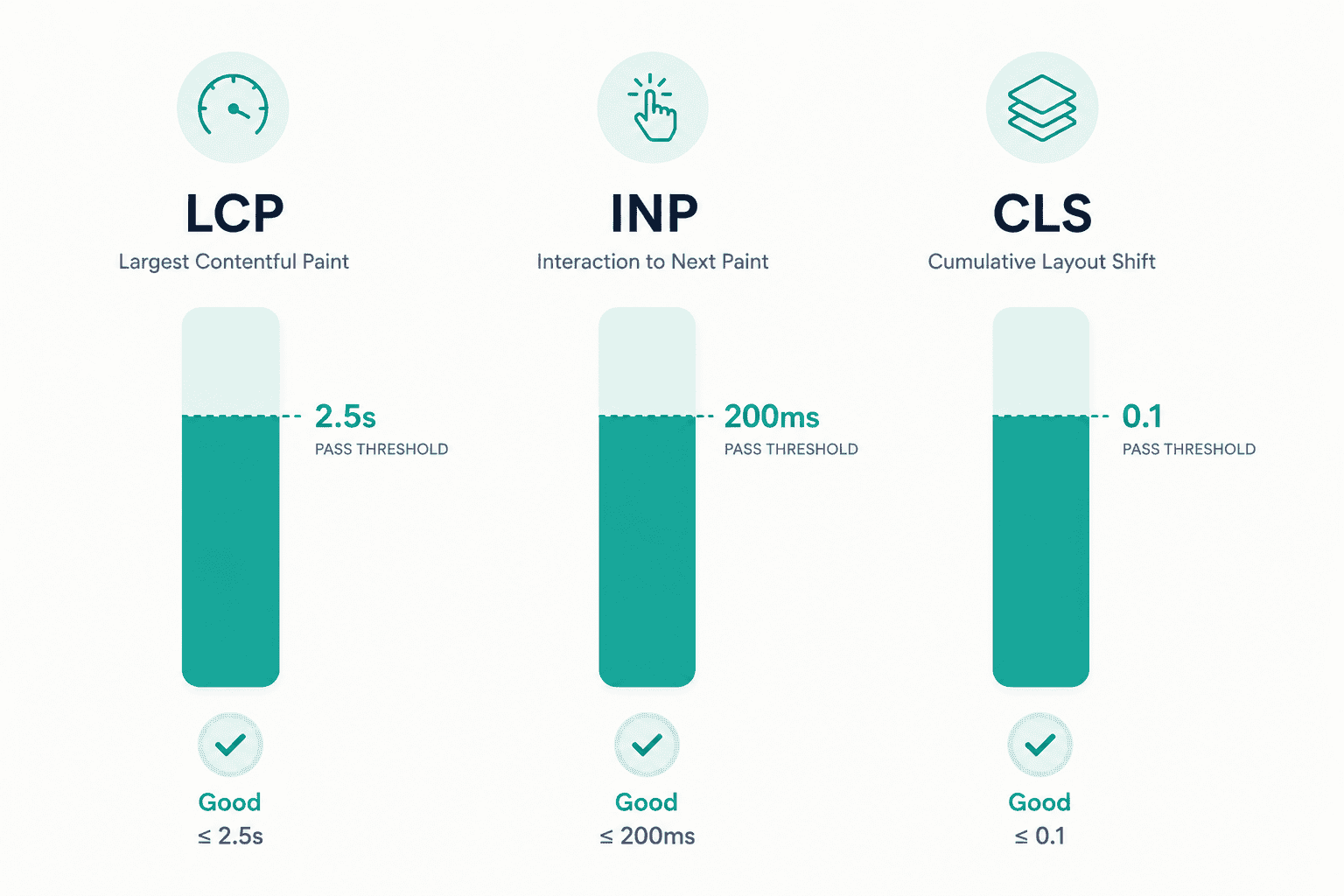
Core Web Vitals: A Practical Guide to a Faster, Higher Ranking Site
What LCP, INP, and CLS actually measure, the fixes that move each metric, how to measure them correctly, and the real business impact of getting them right.