
Resources
Software and Automation for Hospitality and Field Services
How scheduling, dispatch, customer communication, and voice agents combine to automate field service and hospitality operations, and the real ROI behind it.

Mohid Bhatti
AI Systems Engineer, Devity Technologies
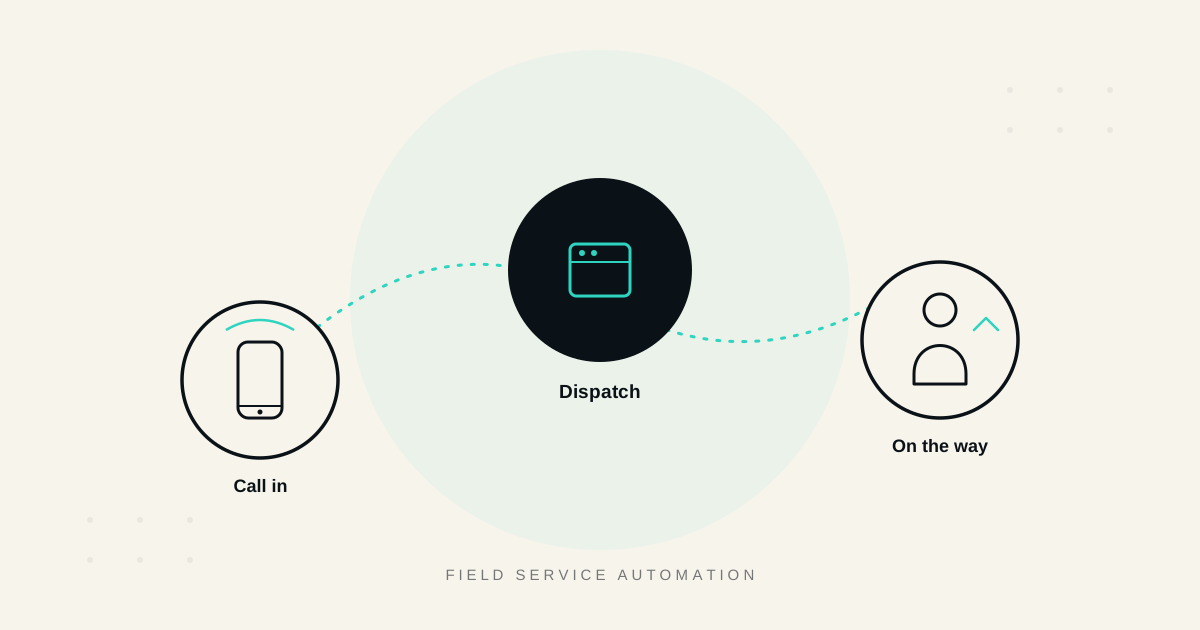
Field service and hospitality businesses run on coordination, matching a customer's need to the right person, at the right time, with the right information, and doing it fast enough that the customer does not go looking elsewhere. This is a genuinely high-ROI area for automation, and also one where off-the-shelf tools cover real ground before custom engineering becomes necessary. This guide covers scheduling, dispatch, customer communication, where voice agents fit specifically, and how to think about the real ROI.
Scheduling and Dispatch: Where Most of the Waste Lives
Manual scheduling, a whiteboard, a spreadsheet, or a phone-based dispatcher juggling multiple jobs at once, is where a meaningful share of a service business's operational cost quietly accumulates. Every scheduling conflict, every technician sent to the wrong job, every gap in the day nobody filled, is lost revenue that never shows up as a single dramatic failure, just a steady drag on efficiency.
Modern field service platforms address the basics well, matching technicians to jobs based on skill, location, and availability, and optimising routes to reduce windshield time between appointments. Where the real distinction now sits is between systems that merely assist a human dispatcher, suggesting a route or flagging a scheduling conflict for someone to review, and systems that act autonomously, reassigning a job or rebooking a cancellation without waiting for manual approval. Most off-the-shelf platforms remain primarily in the assisted category, which is a real, meaningful improvement over spreadsheets, but still leaves a human in the loop for every decision.
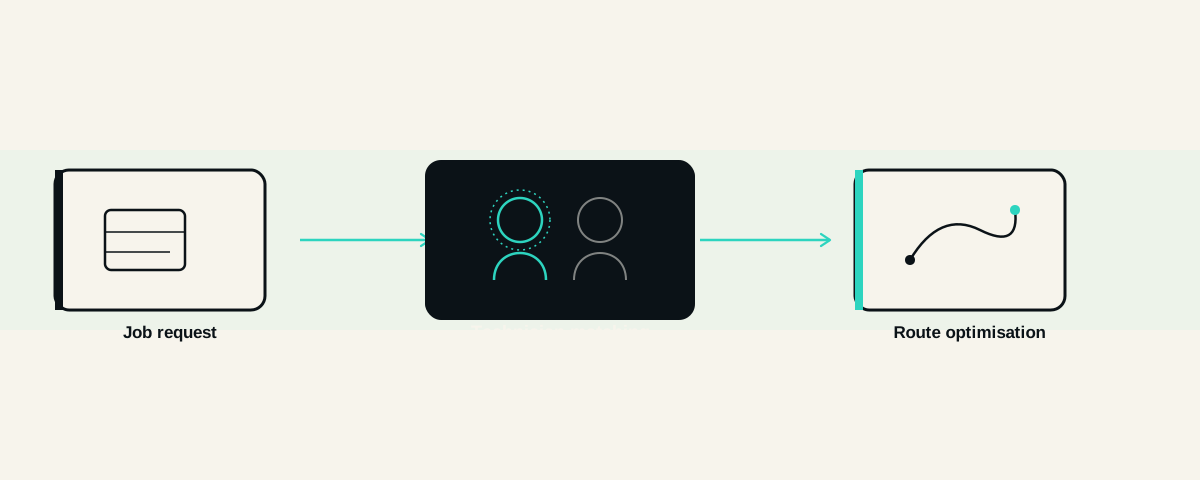
A concrete example makes the distinction tangible. An assisted system might flag that a technician has an unexpected gap between two afternoon jobs and suggest filling it with a nearby callout, leaving a dispatcher to review and confirm the change. An autonomous system checks the same gap, matches it against a queued job within range, confirms the technician's availability, and books it directly, notifying both the technician and the customer without anyone at the business needing to intervene. The difference is not marginal, it is the difference between a tool that reduces a dispatcher's workload and one that removes a category of decision from their day entirely.
Customer Communication: The Part Customers Actually Feel
A customer's experience of a service business is shaped less by how efficiently the backend schedules a job and more by how clearly and promptly they are kept informed, confirmation the moment a booking is made, a heads-up when a technician is genuinely on the way, and an easy path to reschedule without a phone call and a hold queue.
Automated communication, appointment confirmations, arrival windows, and post-job follow-ups, closes a gap that costs businesses real customer satisfaction even when the underlying job itself was completed well. A technician who arrives on time but with no advance notice creates a worse customer experience than one running fifteen minutes late with a proactive text update, the coordination and communication around the job matters as much as the job itself.
The underlying principle is that proactive communication beats reactive communication every time, even when the news is neutral or slightly inconvenient. A customer told in advance that a technician is running behind schedule tends to be more understanding than one who only discovers the delay by calling in to ask where their engineer is. Automating this specific pattern, proactive status updates triggered by real schedule changes rather than a customer having to chase for information, is often one of the simplest, cheapest automation wins available to a service business, and one of the most directly felt by customers.
Where Voice Agents Fit Specifically
This is the piece that ties field service and hospitality automation directly to voice, and it is worth covering in more depth than most field service content does. A meaningful share of service business calls are exactly the kind of structured, high-volume interaction a properly built voice agent handles well, an emergency callout, a booking request, a reschedule.
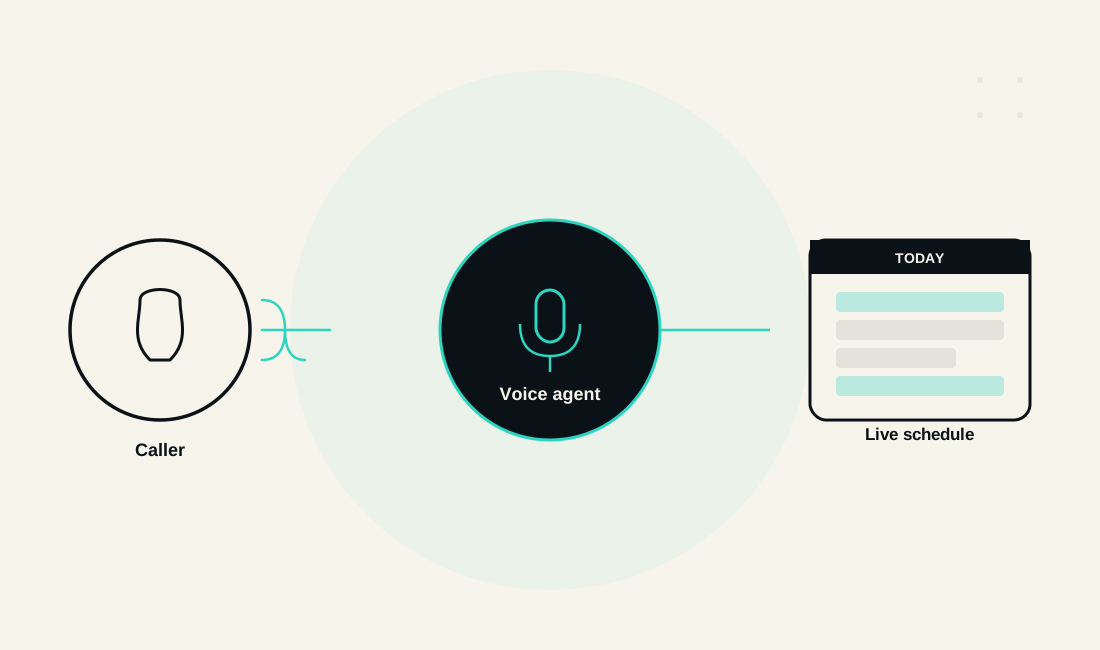
The genuine value shows up when the voice agent is integrated directly with the live scheduling system, not operating as a disconnected front door. A caller reporting a leaking boiler should have their call checked against real, current technician availability and booked directly into the schedule, or escalated immediately to a human dispatcher if the situation genuinely warrants it, not routed through a generic menu that has no visibility into what is actually happening on the ground that day. We cover this integration in more depth in our guide to AI voice agents for UK businesses, including the compliance obligations around call recording that apply directly to service businesses handling customer calls at volume.
For hospitality specifically, the same logic extends to guest requests, a call to the front desk about a maintenance issue or a housekeeping need follows the same underlying pattern as a field service callout, matching a request to the right available staff member, communicated clearly, without a guest waiting on hold or a request getting lost between shifts.
The Real ROI
Industry data on field service automation is consistently strong, businesses that properly automate scheduling and dispatch report meaningful reductions in administrative time and measurable gains in dispatcher productivity compared to manual, phone-and-spreadsheet coordination. The scale of the gain depends heavily on your starting point, a business still coordinating primarily by phone sees a far larger jump than one already running a modern platform without full voice integration.
The clearest way to calculate your own realistic ROI is the same honest approach that applies to any automation decision, calculate the actual cost of your current inefficiency, missed calls, double-booked technicians, dispatcher time spent manually coordinating what a system could handle directly, and compare that against the cost of a properly integrated solution, not just its subscription price, but the engineering cost of connecting it genuinely to how your business actually operates.
In Practice
Field service and hospitality automation is exactly the kind of deployment where the difference between an off-the-shelf platform and a properly integrated system shows up directly in how well voice, scheduling, and dispatch actually work together, rather than as three disconnected tools a dispatcher has to bridge manually. Our AI automation service covers this kind of integration directly, connecting voice agents, scheduling systems, and your existing back-office tools into one coherent workflow rather than a collection of separate subscriptions.
The service businesses seeing the strongest results are not the ones with the most expensive platform, they are the ones where scheduling, communication, and voice genuinely work together as one system, closing the gap between a customer's request and a technician actually being on their way, with nobody stuck manually bridging the pieces in between.
FAQ
Questions, Answered.
Read next
More on AI Automation
10 High ROI Automations Every SME Should Consider in 2026
Ten concrete, high-ROI automations for UK SMEs, with real effort and payoff for each, plus how to prioritise and where to actually start.
AI Automation for Accountants and Finance Teams
How AI automation actually applies to accounting firms and finance teams, invoice and reconciliation, document extraction, reporting, MTD compliance, and real ROI.
AI Automation for Professional Services Firms
Real AI automation for professional services, client intake, document workflows, reporting, genuine time recovery, and honest ROI.