
Resources
Progressive Web Apps vs Native: What B2B Should Choose
PWA strengths and real limits, native app strengths, honest cost and reach differences, and the decision factors that actually determine which fits a B2B product.

Ahmad Saeed
Full-Stack Engineer, Devity Technologies
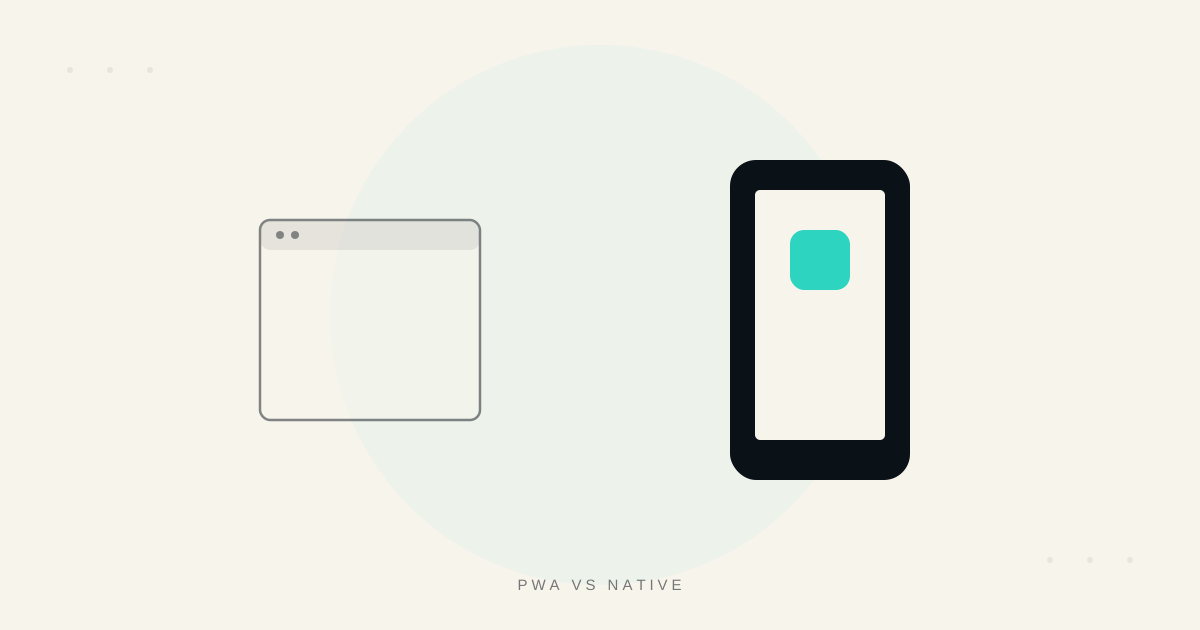
Progressive Web Apps and native apps both solve real problems well, and the right choice for a B2B product depends on genuine, specific factors rather than a general preference for one approach. This guide covers PWA strengths and real limits, native strengths, honest cost and reach, and the decision factors that actually matter.
| PWA | Native | |
|---|---|---|
| Codebases to maintain | One | Separate per platform, or one via React Native |
| Distribution | Instant, via browser | App store submission and review |
| Device access | Limited | Full |
| Best fit | Most B2B tools, employee-installed | Products needing deep hardware integration |
PWA Strengths and Limits
A single codebase reaches users across desktop and mobile, installable directly from a browser, without app store submission or review, a genuine advantage for speed to market and ongoing maintenance, one codebase to update rather than separate native builds.
PWAs have real, honest limits worth understanding upfront. Deep integration with certain device hardware, some background processing capabilities, and full offline functionality for complex, data-heavy applications remain genuinely stronger on native, a PWA that needs to fight against these limits is usually a sign native is the better fit.
Browser and platform support for PWA capabilities varies, and while support has genuinely improved, it's worth confirming the specific capabilities your product needs are well supported across the browsers your actual users rely on, not assumed uniformly available.
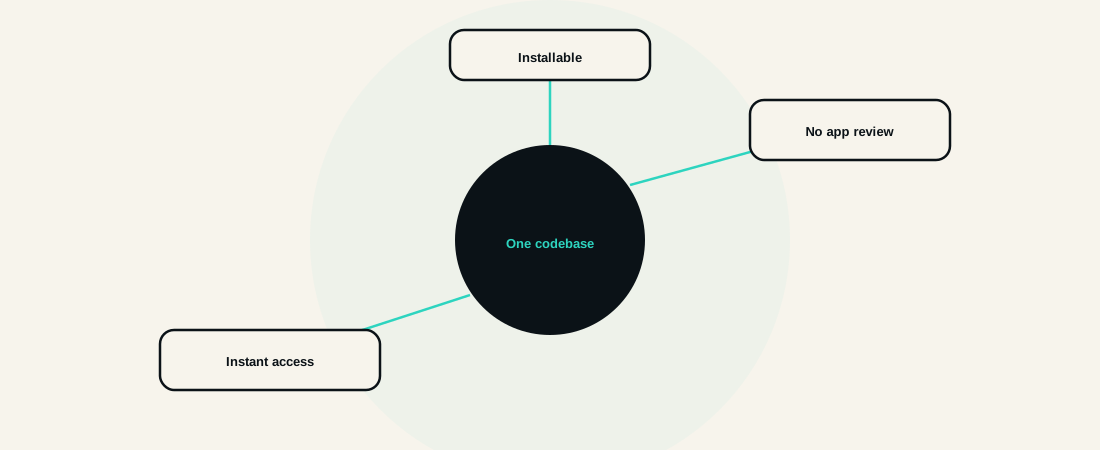
Native Strengths
Full access to device capabilities, camera, sensors, background processing, deep hardware integration, remains genuinely stronger on native, a real requirement for a product whose core value depends on capabilities a browser-based app cannot fully replicate.
App store presence offers real discovery and distribution value for products that benefit from it, though this matters considerably less for a B2B tool used by employees told to install it, than for a consumer product relying on organic app store discovery.
Performance for genuinely complex, graphics-intensive, or offline-heavy applications tends to be stronger on native, though for the large majority of standard B2B business applications, this gap has narrowed considerably and matters less than it once did.
Cost and Reach
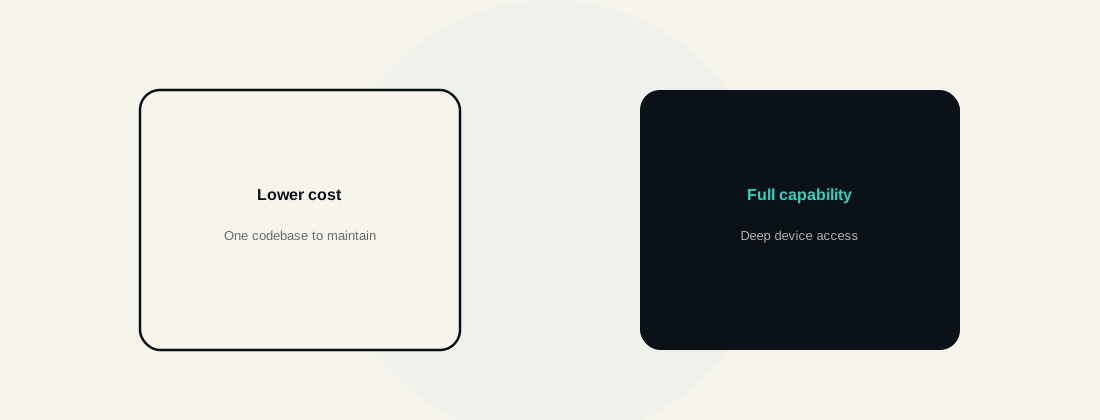
A PWA is generally cheaper to build and maintain, one codebase covering both desktop and mobile web, compared to native development, which typically means separate iOS and Android builds, or a cross-platform framework like React Native still requiring more specialised, separate app store submission and maintenance.
Reach differs meaningfully by context. A PWA reaches anyone with a browser instantly, no install friction beyond a single tap, native apps require an app store download, real friction for a first-time user, though native offers a more integrated, polished experience once installed.
Decision Factors
Does your product genuinely need deep device capability access? If the core value proposition depends on hardware integration a browser cannot provide, native is the right, non-negotiable choice, not a preference.
Does app store discovery genuinely matter for your specific product? A B2B tool where users are told to use it by their employer typically doesn't need this distribution channel the way a consumer app does, a real, honest factor worth weighing rather than defaulting to native for perceived legitimacy alone.
What's your realistic maintenance capacity? A PWA's single codebase is genuinely easier to maintain long-term for a smaller team, native's separate platform builds require either more resourcing or a cross-platform framework to manage that overhead sensibly.
How do your actual users access the product? A workforce primarily on desktop browsers during work hours, needing the tool available instantly without an install process, is well served by a PWA. A workforce genuinely mobile-first, needing offline access in the field or deep integration with a device's camera or sensors, points more clearly toward native or a genuine cross-platform mobile build.
In Practice
We help B2B clients make this decision based on their product's genuine, specific requirements, not a default preference for whichever approach sounds more current. Our web platform development and mobile application development services cover both paths directly, and the right conversation starts with your product's actual requirements, not an assumption about which technology is inherently better.
The B2B products that choose well are rarely the ones that defaulted to native for perceived polish, or to PWA for perceived cost savings, they are the ones that honestly matched the choice to their product's genuine device and distribution requirements.
FAQ
Questions, Answered.
Read next
More on Web Platforms
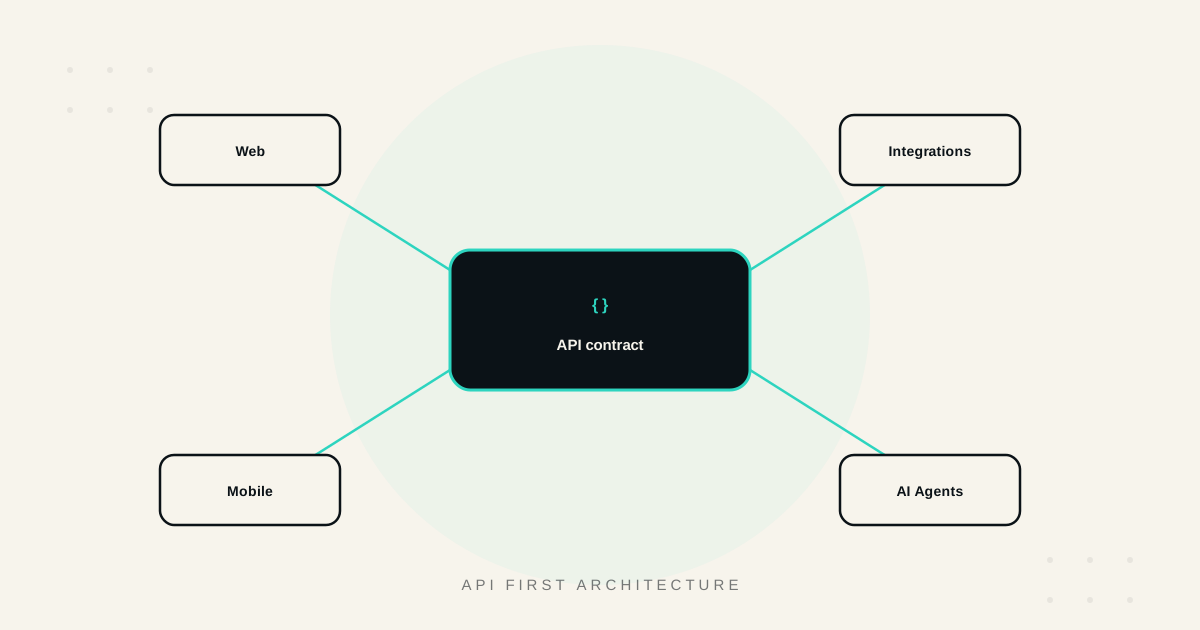
API First Architecture: Building Software That Scales and Integrates
What API-first architecture actually means, the real benefits, how it enables genuine integration and reuse, and when it matters versus when it's unnecessary overhead.
Build vs No Code for Web Apps: Where the Line Really Is
Where no-code web app builders genuinely excel, where they break down, and how to think about performance, ownership, and the migration path before you commit.
Core Web Vitals: A Practical Guide to a Faster, Higher Ranking Site
What LCP, INP, and CLS actually measure, the fixes that move each metric, how to measure them correctly, and the real business impact of getting them right.